
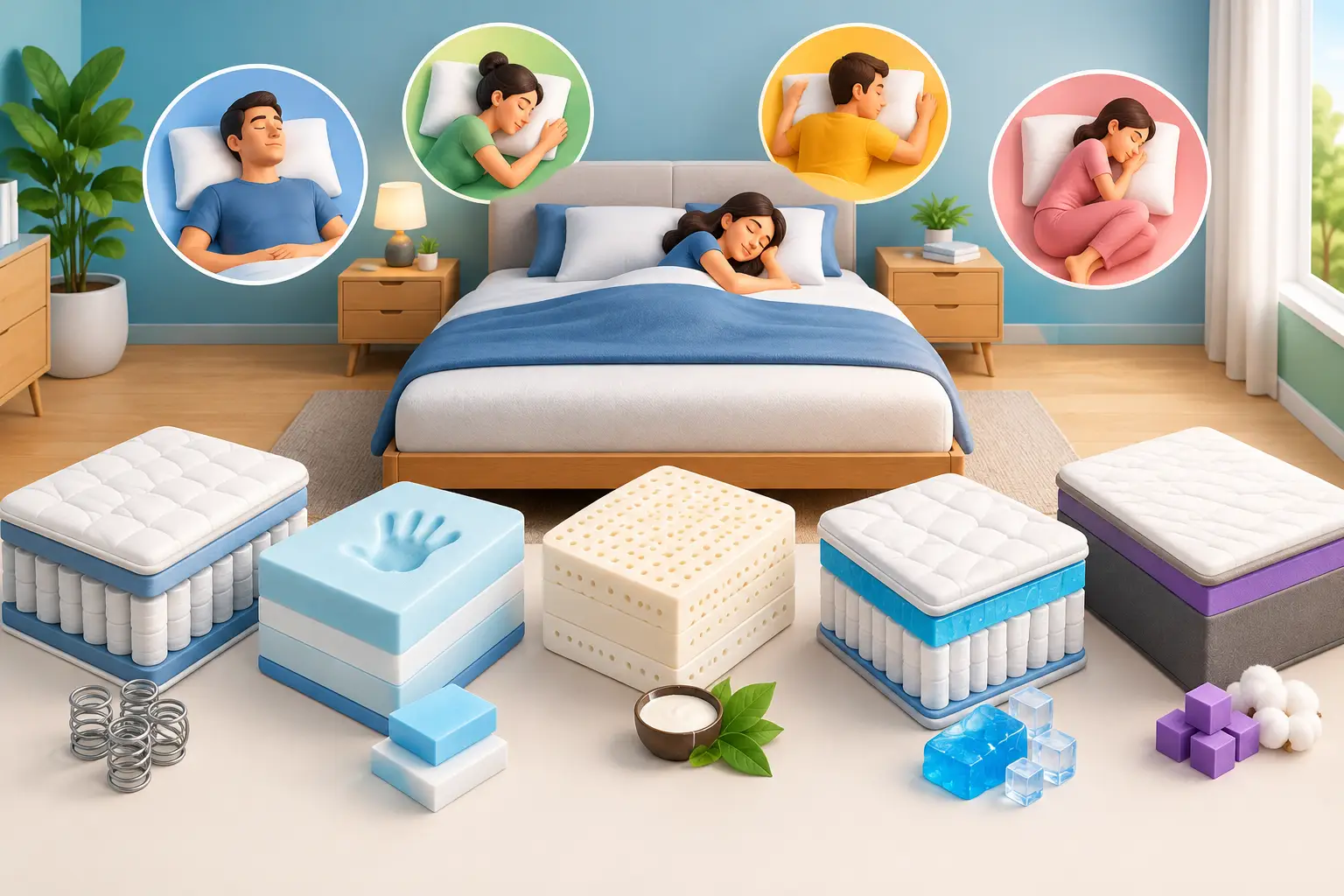
A mattress can look similar on the outside while feeling completely different after a few nights. The reason is what sits beneath the cover: the mattress materials that manage support, pressure relief, temperature, movement, and long-term shape. Choosing well is less about finding one “best” material and more about matching the construction to how you sleep, what your body needs, and the level of comfort you prefer.
A softer surface may feel inviting in a showroom, but it still needs a stable support system underneath. A firmer mattress may suit back sleepers, yet feel too hard if it has little cushioning at the top. Understanding the main materials helps you compare mattresses with confidence rather than relying on a quick first impression.
Most mattresses combine several layers. The comfort layer is closest to your body and affects initial softness, pressure relief, and temperature. The support core sits below it and keeps the mattress stable, helping maintain healthy alignment over time. Covers, quilted fibers, and edge-support components also affect the final feel.
The key is to assess the full construction. For example, memory foam over pocket springs performs differently from memory foam over a dense foam core. Neither option is automatically better. It depends on your sleep position, body type, whether you share the bed, and how much bounce or contouring you enjoy.
Pocket spring mattresses use individually wrapped coils. Because each spring can respond separately, the surface adapts more closely to body weight and sleeping position than a connected spring system. This can be especially helpful for couples, as movement on one side is less likely to travel across the bed.
Pocket springs usually provide a balanced feel: supportive, breathable, and easier to move on than deep-contouring foam. They work well for many back and combination sleepers who change position through the night. The comfort level depends on the number and design of the springs, plus the materials layered above them.
Bonnell spring mattresses use hourglass-shaped coils connected within one system. They create a firmer, more traditional mattress feel with noticeable responsiveness. This construction has long been valued for dependable support and ventilation.
Because the springs are connected, movement transfer is generally greater than with pocket springs. For a single sleeper, guest room, children’s room, or a buyer who prefers a stable, straightforward feel, a Bonnell spring mattress can be a sensible choice. The quality of padding above the spring unit matters greatly, since it determines how cushioned the surface feels.
Foam mattresses commonly use polyurethane foam in different densities and firmness levels. They can offer a supportive, quiet sleep surface without springs and are often chosen for their simple, consistent feel. High-quality foam layers can provide good body support, while softer foams add cushioning near the top.
Foam is not one single experience. A firmer foam core with a plush comfort layer feels very different from an all-foam mattress built for a firmer sleep surface. Foam can be a practical choice for sleepers who want less motion disturbance and a mattress without the bounce of springs. If you sleep warm, ask about the cover, ventilation, and any cooling layers included in the design.
Visco memory foam responds to body heat and pressure, gradually contouring around the shoulders, hips, and lower back. Its best-known benefit is pressure relief. Side sleepers often appreciate the way it cushions prominent pressure points, while couples may like its ability to reduce motion transfer.
The trade-off is feel. Traditional memory foam has a slower response, so some sleepers describe it as more enveloping than spring or latex mattresses. That can feel deeply comfortable to those who want close contouring, but it may not suit someone who prefers to move easily or sleep near the surface rather than in it.
Gel-infused memory foam is designed to retain the pressure-relieving character of visco foam while helping manage heat buildup. Gel particles or gel layers can help disperse warmth, particularly when combined with breathable covers and well-designed mattress construction.
It is a worthwhile option for sleepers who enjoy memory foam support but are concerned about sleeping warm. However, gel alone does not decide how cool a mattress will feel. The thickness of the foam, airflow through the mattress, room temperature, bedding, and mattress protector all play a part. Think of gel as one comfort feature within a complete system, not a guarantee of a cold sleep surface.
Latex has a naturally responsive, buoyant feel. It contours to the body, but usually with more immediate pushback than memory foam. Rather than allowing the body to sink gradually, latex supports the body with a lifted, resilient sensation.
This makes latex a strong choice for combination sleepers and those who want pressure relief without a slow-moving feel. Latex is also known for durability and breathability when used in a well-made mattress. Its distinct feel is not for everyone: sleepers who want a deep, plush hug may prefer memory foam, while those who value responsive support often find latex particularly comfortable.
The same top material can feel dramatically different depending on what supports it. A pocket spring mattress with a memory foam comfort layer often combines contouring with easier movement and better airflow than a deep all-foam design. A foam mattress with a latex comfort layer may offer quiet support with a more responsive surface.
Pay attention to the thickness and order of layers. A thin memory foam layer adds some pressure relief without dominating the overall feel. A thicker layer creates more contouring. Likewise, a spring system may feel firm when paired with minimal padding or medium-plush when paired with generous comfort layers.
Edge support deserves attention if you sit on the side of the bed while dressing, share the mattress, or want to use the full sleep surface. Reinforced perimeter support can make a mattress feel more stable at the edges, especially in spring and hybrid constructions.
Your usual sleep position gives a useful starting point, though personal comfort still matters.
Side sleepers typically need cushioning around the shoulders and hips. Memory foam, gel memory foam, latex, or a pocket spring mattress with a pressure-relieving comfort layer can work well. The goal is enough give at the surface to avoid pressure buildup, while keeping the spine level.
Back sleepers generally benefit from even support across the lower back and hips. Medium to medium-firm pocket spring, foam, latex, and hybrid designs are often good places to start. A mattress that is too soft may allow the hips to settle too deeply, while an overly hard surface can leave gaps under the lower back.
Stomach sleepers often prefer a more stable, firmer feel that prevents the midsection from dropping. Supportive foam, firmer spring systems, or responsive latex can be appropriate. The ideal choice varies with body weight and pillow height, so testing the full sleep setup matters.
Combination sleepers should consider responsiveness. Pocket springs and latex make it easier to change position, while gel memory foam may provide a useful middle ground for those who still want more contouring and motion control.
A mattress should work for the way the room is used, not only for one sleeper’s preferred softness. Couples may prioritize motion isolation, making pocket springs, foam, or memory foam appealing. Sleepers who get warm may lean toward breathable spring systems, latex, or gel-infused comfort layers.
For a frequently used guest room, a balanced foam or spring construction can offer a familiar, welcoming feel for different visitors. For a main bedroom, it is worth considering daily habits: Do you read or work in bed? Do you sit on the edge? Do you have different comfort preferences from your partner? These details point toward the right construction more effectively than a material name alone.
A mattress protector also matters. It helps maintain hygiene and protects the mattress from everyday spills and moisture, but a thick protector can slightly change the surface feel and airflow. Choose one that complements the mattress rather than masking the comfort you selected.
When trying a mattress, lie in your normal sleeping position for more than a few seconds. Notice whether your shoulders feel compressed, whether your hips sink too far, and whether your lower back feels supported. Roll over once or twice. If you share a bed, test how much movement you notice when the other person changes position.
Ask what is inside the mattress, including the support core and comfort layers. Terms such as “firm,” “orthopedic,” or “cooling” are helpful only when you understand the construction behind them. A qualified mattress consultant can narrow the choice based on your comfort preference, sleep position, and intended use, then explain the trade-offs clearly.
Towell Mattress ME offers a broad selection across foam, spring, latex, memory foam, and health-focused designs, making it easier to compare mattress types without forcing every sleeper into the same solution. Look for a mattress with clear warranty coverage and support from a team that can explain what you are buying.
The right mattress should feel dependable from the first night through years of regular use. Start with the material that fits your sleep habits, then let your body make the final decision: supported shoulders, balanced hips, easy movement, and a comfort level you look forward to at bedtime.
