
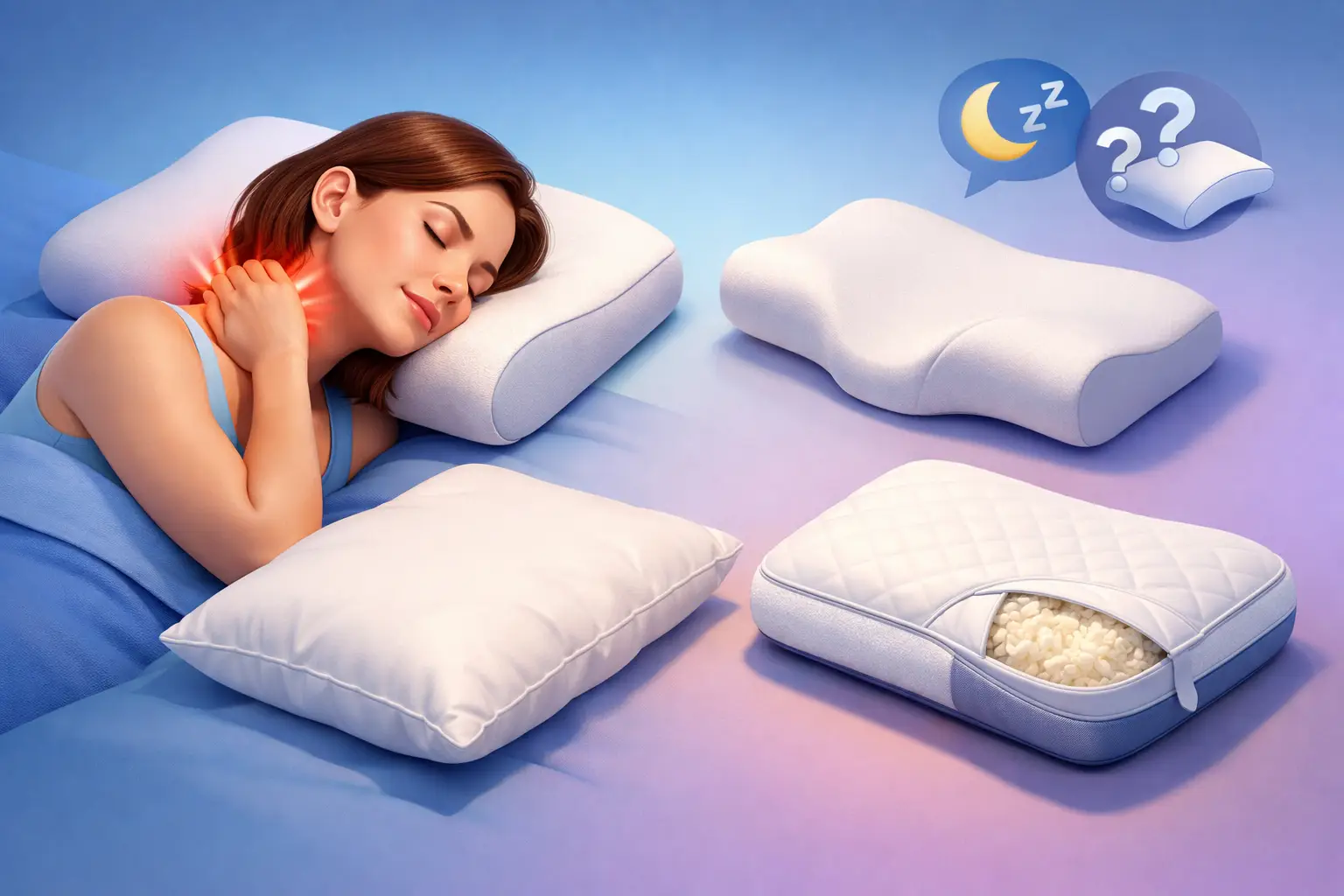
Waking up with a stiff neck usually means your pillow is not doing its job. If you are searching for how to choose pillow for neck pain, the right answer is not simply softer or firmer. It is finding a pillow that keeps your head, neck, and shoulders in better alignment through the night.
That sounds simple, but pillow fit is personal. Your sleep position, shoulder width, mattress feel, and even whether you move around at night all affect what will feel supportive. A pillow that relieves neck tension for one person can make it worse for another. The goal is not to chase trends. It is to match the pillow to your body and sleeping habits with the same care you would use when choosing a mattress.
The most important thing a pillow should do is keep your neck in a neutral position. That means your head should not tilt too far up, drop too far down, or twist to one side for hours at a time. When the pillow height or firmness is wrong, your neck muscles stay under tension instead of resting.
Think of your pillow as a support tool, not just a comfort layer. If it is too high, your chin may angle toward your chest. If it is too flat, your head can fall backward or sideways. Over time, that poor positioning can lead to soreness, morning headaches, shoulder tightness, or interrupted sleep.
This is why pillow selection should never be based on softness alone. A very plush pillow may feel comfortable for five minutes, then compress too much overnight and leave your neck unsupported. On the other hand, a pillow that feels firm in the showroom may hold alignment better for a full night.
Your sleeping position is usually the first thing a mattress consultant will ask, and for good reason. It is one of the clearest indicators of the pillow profile you need.
Side sleepers usually need a medium to high loft pillow because there is more distance between the mattress and the head. The pillow has to fill that gap and support the neck evenly. If the pillow is too low, the head drops toward the mattress and strains the neck and shoulders.
Shoulder width matters here too. Broader shoulders often need more height or a pillow with stronger structure. If your mattress is very soft, you may sink in more and need slightly less loft than you would on a firmer mattress.
Back sleepers generally do best with a medium loft pillow that supports the natural curve of the neck without pushing the head too far forward. Too much height is a common problem for back sleepers. It can force the neck into flexion and leave you feeling stiff by morning.
Some back sleepers prefer pillows with a contour shape or a slightly raised area under the neck. That can work well if it feels natural and not restrictive.
Stomach sleeping often puts the most stress on the neck because your head stays turned to one side. If you sleep this way, a very low loft pillow or even no pillow under the head may reduce strain. Some stomach sleepers place a pillow under the chest or pelvis instead to improve body alignment.
If neck pain is frequent and you are a stomach sleeper, it may be worth gradually training yourself toward side or back sleeping. A new pillow can help, but position matters just as much.
Loft is the height of the pillow. Firmness is how much it resists pressure. Both affect support, and they work together.
A high pillow that is very soft may flatten too much. A lower pillow that is very firm may keep its shape and still provide enough support. That is why there is no universal rule that says neck pain needs one exact loft or one exact feel.
When testing a pillow, pay attention to where your head settles after a few minutes, not just the first touch. Your neck should feel supported, not propped up. Your shoulders should feel relaxed, not crowded. If you feel pressure building at the base of the neck, the fit is likely off.
For many adults with neck pain, medium support is a practical starting point. But if you are a side sleeper or have a larger frame, you may need something firmer and taller. If you are smaller-framed or sleep on your back, slightly lower support may be the better match.
The fill inside the pillow changes how it responds over the course of the night. This is where personal preference and practical performance need to meet.
Memory foam is popular for neck pain because it molds around the head and neck and tends to hold shape better than basic fiber fill. It can provide steady support and reduce pressure points. The trade-off is feel. Some people like the contouring response, while others find it too dense or warm.
Latex pillows are supportive but more responsive than memory foam. They do not sink in as deeply, which can help some sleepers maintain alignment without feeling stuck. Latex also tends to be durable and breathable. If you want support with a little bounce, this can be a strong option.
These pillows can feel soft and familiar, and they are often easy to reshape. The issue is that lower-quality fills may compress quickly and lose support. For occasional neck discomfort, they may be acceptable. For ongoing pain, many sleepers need a more structured material.
If you sleep hot, cooling features can make a real difference in sleep quality. They do not fix neck alignment on their own, but they can help you stay asleep longer and avoid constant repositioning. The best cooling pillow is still the one that supports your neck correctly first.
A pillow does not work in isolation. Your mattress affects how deeply your shoulders and upper body sink, which changes how much pillow height you need.
On a softer mattress, your body settles in more, so the pillow often should be slightly lower. On a firmer mattress, your body stays more elevated, so you may need more loft to close the gap between your head and the sleep surface.
This is one reason shoppers sometimes replace pillow after pillow without success. The pillow may not be wrong by itself. It may simply not match the mattress underneath. Looking at both together usually leads to a better result and less trial and error.
Sometimes the problem is obvious. Other times it shows up in small patterns you have started to accept as normal. If you wake up with stiffness that improves as the day goes on, fold your pillow to get comfortable, or switch positions repeatedly trying to settle your head, your pillow may not be giving enough support.
Another clear sign is visible flattening or lumps. Pillows do not last forever. Even quality materials break down with use, and once support is gone, comfort tends to go with it. If your pillow has lost shape, it is not likely to help your neck recover overnight.
If you are choosing a new pillow for neck pain, take a few moments to assess more than softness. Lie in your usual sleep position. Notice whether your neck feels level and supported. If you are shopping in person, a consultant-led approach can save time because small adjustments in loft and feel often make a big difference.
You should also think practically. If you change positions often, a highly contoured pillow may feel too specific. If you prefer a simpler shape but still need support, a well-made foam or latex pillow with the right loft may be the better fit. If your pain is mild and your main issue is an old, flattened pillow, replacing it with a more supportive version of your current style may be enough.
For households buying across different comfort needs, this is where expert guidance adds value. A side sleeper with shoulder tension, a back sleeper with recurring stiffness, and a hot sleeper may all need different pillow constructions, even if they shop from the same category.
Not everyone needs a medical-looking contour pillow, but some sleepers benefit from a more engineered shape. If your neck pain is frequent, localized, or tied to posture issues, a contour design can help maintain support more consistently.
That said, specialized does not automatically mean better. Some people find shaped pillows difficult to adjust to, especially if they move around. The best option is the one you can sleep on comfortably for a full night while maintaining good alignment.
If pain is severe, persistent, or accompanied by numbness or headaches, it is wise to speak with a healthcare professional. A pillow can improve support, but it is not a substitute for medical evaluation.
Choosing the right pillow for neck pain is really about reducing strain while you sleep. Start with your position, account for your mattress, and focus on alignment over first-touch softness. When the fit is right, you should feel less effort in your neck, fewer wake-ups, and a better chance of starting the day without stiffness.
