
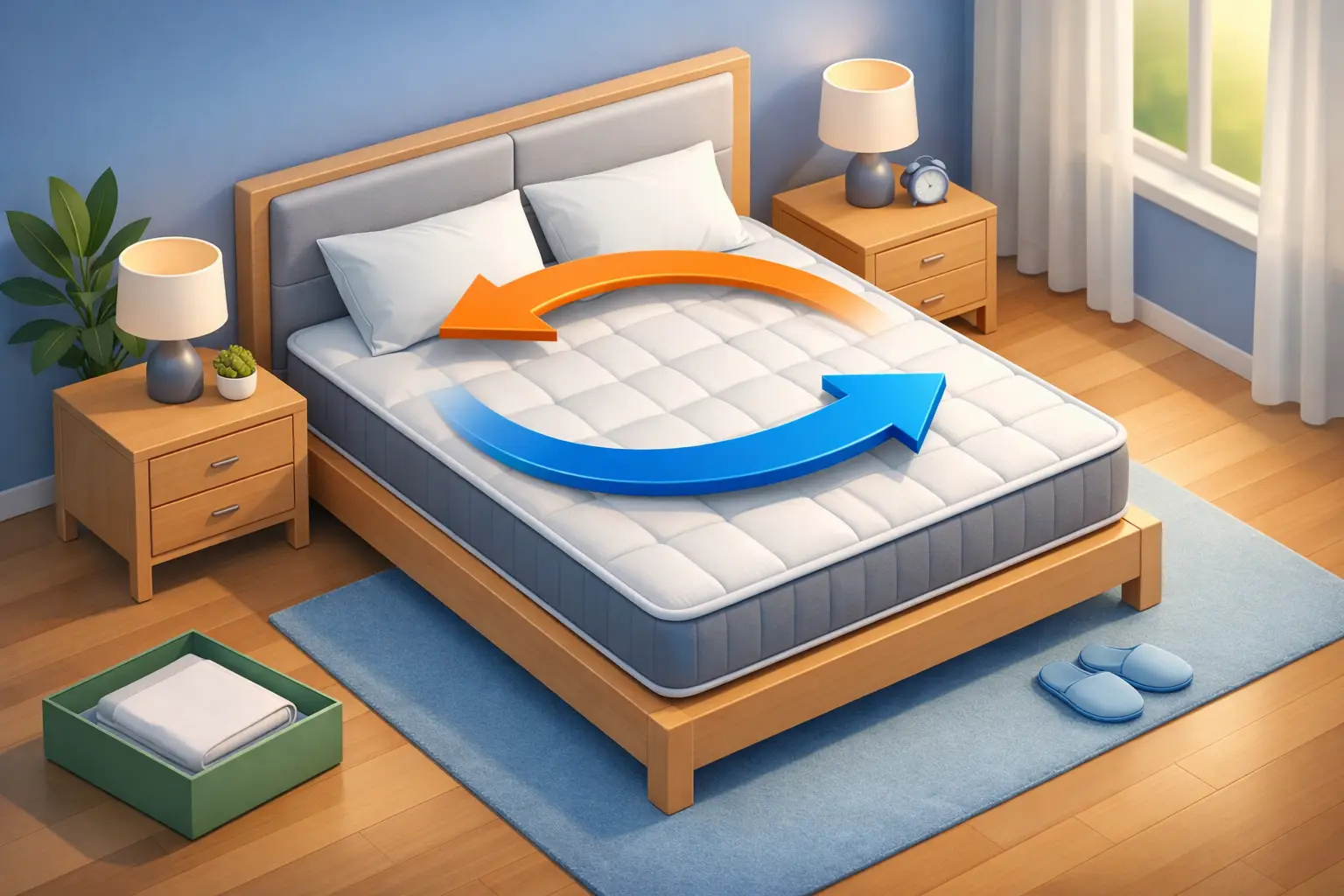
That slight dip where you sleep every night usually does not mean your mattress has failed. More often, it means it is carrying the same pressure in the same spot, night after night. If you are wondering how to rotate a mattress properly, the goal is simple – spread out wear more evenly so comfort and support stay more consistent over time.
Rotation is one of the easiest maintenance steps mattress owners skip. It takes only a few minutes, but it can help preserve the feel of the mattress, especially for couples, guest rooms, and family homes where the bed sees regular use. The key is knowing whether your mattress should be rotated, how often to do it, and how to move it safely without damaging the materials.
Rotating a mattress means turning it 180 degrees so the head end becomes the foot end. It does not mean flipping the mattress over unless the mattress is specifically designed to be double-sided.
That distinction matters. Many modern mattresses are built with comfort layers on top and support layers underneath. Foam, memory foam, gel memory foam, latex, pocket spring, and many hybrid designs are usually one-sided. Flipping those models can affect comfort and performance because the sleep surface is only on one side.
If you are not sure which type you own, check the product label or care instructions. A mattress with a pillow top or a clearly finished top panel should almost never be flipped. In most cases, rotating is the right maintenance step.
Before you start, clear the area around the bed. Remove pillows, sheets, and any mattress protector so you can grip the mattress more easily. If the mattress is large, especially a queen or king, two people are better than one. That is not just for convenience – it helps avoid bending the mattress sharply or dragging it against the bed frame.
Stand at one side of the bed and slide the mattress a few inches away from the headboard or wall. Then pivot it slowly so it turns end to end. Once the foot side is facing the head of the bed, center it back on the foundation or base. Keep the movement controlled. Folding, forcing, or twisting a mattress too aggressively can stress internal components, particularly in spring systems and dense foam constructions.
If the mattress feels heavy, move it in stages rather than trying to swing it in one motion. Small adjustments are safer than one rushed turn. After rotating, put the protector and bedding back on and check that the mattress edges sit evenly on the base.
For many mattresses, rotating every three to six months is a practical schedule. If the mattress is new, rotating it a little more often during the first year can be helpful because this is the period when materials are settling in and adapting to regular body weight.
That said, there is no universal rule. A guest room mattress used occasionally will not need the same rotation schedule as the primary bed in a busy household. A heavier sleeper, two sleepers sharing one side more than the other, or a mattress used every night may benefit from more regular rotation.
As a general guide, every three months works well for high-use bedrooms. Every six months is often enough for lighter or more balanced use. If the manufacturer gives specific care instructions, those should take priority.
Most mattresses benefit from rotation, but some show the difference more clearly than others.
Memory foam and gel memory foam mattresses can develop more noticeable body impressions if the same zones take repeated pressure. Rotating helps distribute that load. Latex mattresses are generally durable, but rotation can still support more even comfort over time. Pocket spring mattresses also benefit because individual spring zones can compress differently depending on sleeping position and body weight. Bonnell spring and traditional foam models can also wear unevenly, especially in homes where one side of the bed gets more use.
If you have a mattress with reinforced edge support, rotation can help if one person regularly sits on the same side to get in and out of bed. The same idea applies in children’s rooms, furnished apartments, and hospitality settings where regular use patterns can create predictable wear areas.
Sometimes the mattress tells you before the calendar does. If you notice a softer area where you usually sleep, visible body impressions, or a feeling that one side is more supportive than the other, it may be time to rotate.
You might also feel less balanced when lying down, especially if you tend to drift into the same spot every night. In some cases, sleepers assume they need a replacement when the issue is simply uneven wear. Rotation will not fix a mattress that is already worn out, but it can help if the comfort difference is still moderate and the mattress is otherwise in good condition.
Another common sign is when one partner complains about comfort while the other does not. Different body weights and sleep positions can create uneven pressure patterns. Rotating can make the surface feel more consistent again.
Not every mattress should be handled the same way. Some zoned mattresses are designed with specific support areas for the shoulders, hips, and legs. Rotating these may not be recommended if the zoning is directional. Adjustable bed-compatible models may also come with handling guidelines that matter.
Flipping is even more limited. Unless a mattress is clearly labeled as double-sided, do not flip it. A one-sided mattress flipped upside down can feel uncomfortable at best and perform poorly at worst. The support core is not designed to be the sleep surface.
If your mattress has a non-slip bottom fabric, a stitched pillow top, or care labels stating one-sided use, stick to rotation only. When in doubt, manufacturer guidance is the safest reference.
A properly rotated mattress will still struggle if the base underneath it is not supportive. Slats that are too far apart, a damaged foundation, or an uneven platform can all affect how the mattress wears. If one section of the bed frame sags, rotating the mattress may only move the problem around instead of solving it.
A mattress protector is also worth using. It does not affect rotation directly, but it helps keep the mattress clean and protected from moisture, which supports long-term performance. For family homes, this is especially useful.
It also helps to avoid sitting in the exact same edge spot every day for long periods. Mattresses are built for sleeping support, not as a permanent bench. Small habits like that can make a difference over time.
The easiest way to stay consistent is to tie mattress rotation to another household routine. Some people do it when changing seasonal bedding, while others pair it with a deep clean of the bedroom. What matters is keeping it regular enough that wear does not build up heavily in one area before you act.
If you recently purchased a new mattress and want to protect comfort from the start, ask for care guidance based on the mattress construction. That is especially helpful with specialty materials and layered designs. Towell Mattress ME often supports customers this way – matching the right product is important, but knowing how to care for it is part of getting lasting comfort from the purchase.
A mattress does a demanding job every night. Rotating it on schedule is a small step, but it is one of the most practical ways to help that comfort stay dependable longer.
