
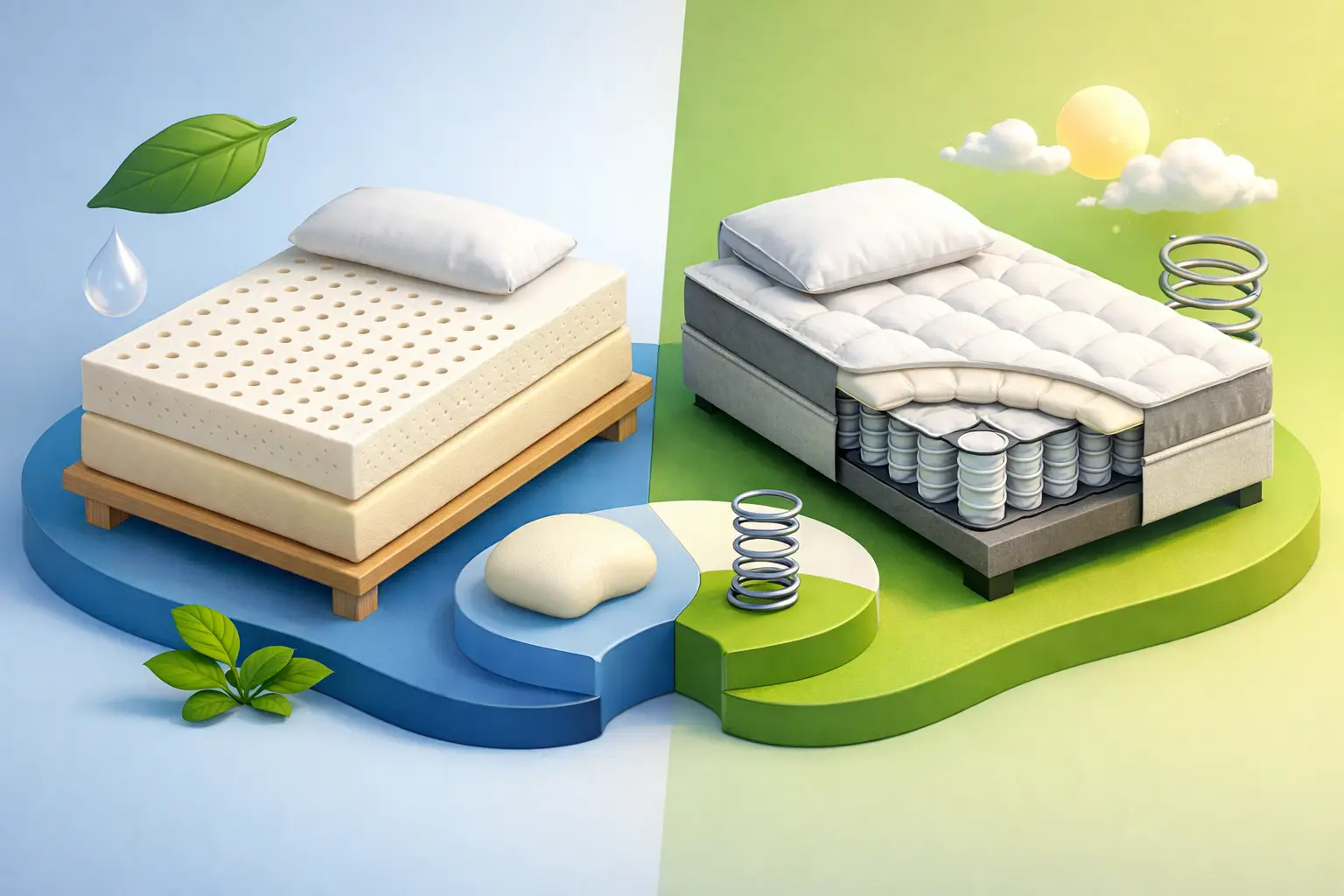
A mattress can feel perfect in a showroom for five minutes and completely different after a full night at home. That is why the latex vs spring mattress question matters so much. Both can be excellent choices, but they suit different sleep preferences, body types, and expectations around comfort, support, and long-term performance.
If you are trying to narrow down the right fit, the most useful starting point is not which mattress type is “best.” It is how each one feels, how it responds under your body, and how well it matches the way you sleep every night.
The biggest difference between a latex and spring mattress is what does most of the work inside. In a latex mattress, the comfort and support come primarily from latex foam. In a spring mattress, the main support comes from a coil system, which may be paired with foam, fiber, or pillow top layers above it.
That construction changes the sleep experience in noticeable ways. Latex usually feels buoyant, supportive, and pressure-relieving without a deep sink. A spring mattress often feels more lifted, structured, and responsive, especially if you prefer a traditional mattress feel.
This is why shoppers can test two mattresses with similar firmness labels and still describe them very differently. Firmness is only one part of comfort. The way a mattress pushes back, absorbs movement, and supports the body matters just as much.
Latex tends to contour gently rather than hug closely. You lie on it more than in it. For many sleepers, that creates a balanced feel – cushioned at the shoulders and hips, but still easy to move on when turning from side to side.
This makes latex appealing for people who want pressure relief without the slower, deeper sink associated with some memory foam designs. It can also suit combination sleepers who change position during the night and do not want to feel stuck in one spot.
Another reason shoppers consider latex is consistency. A well-made latex mattress often maintains a stable, supportive feel across the surface. If your priority is a mattress that feels substantial and resilient, latex usually stands out.
Spring mattresses vary more because there are different coil systems and comfort builds. A Bonnell spring model may feel firmer and more classic. A pocket spring design usually feels more refined because the coils can respond more independently to body weight.
In general, spring mattresses offer a familiar, supportive lift. Many people who grew up sleeping on innerspring beds still prefer that sensation. There is a sense of structure underneath you, and depending on the top layers, the mattress can range from firm and straightforward to plush and cushioned.
For sleepers who want strong support with a more traditional mattress profile, spring can be a very practical choice. It is also a broad category, which means there is usually more variety in comfort feel.
Support is not about choosing the hardest mattress in the room. It is about keeping your body in a more neutral position so your back, shoulders, and hips are not carrying strain for hours.
Latex can do this very well because it distributes body weight evenly and responds quickly where pressure is applied. Many sleepers describe it as supportive without feeling stiff. If you want comfort with a more balanced, floating feel, latex often performs well.
Spring mattresses can also provide excellent support, especially in well-designed pocket spring constructions. Coils create pushback and structure, and the best result comes when the spring unit and upper comfort layers work together. If the top is too soft for your build, you may sink too much. If it is too firm, pressure points may develop even if the coil support is strong.
This is where guided selection helps. The right support level depends on sleep position, body weight, and whether you prefer a flatter sleeping surface or a more cushioned one.
If you sleep on your side, pressure relief is often a deciding factor. The shoulders and hips need enough cushioning to avoid discomfort, but not so much softness that the spine falls out of alignment.
Latex usually performs well here because it compresses where needed and rebounds quickly. It eases pressure without a trapped feeling. It also tends to isolate movement better than traditional interconnected spring systems, though not always as much as dense memory foam.
Spring mattresses differ. Pocket spring models generally handle motion better than Bonnell spring designs because each coil can move more independently. Still, if you share the bed with a partner and one person is a light sleeper, latex may feel calmer and more stable through the night.
Durability matters because a mattress is not judged on day one. It is judged after months and years of regular use.
Latex has a strong reputation for resilience. It tends to hold its shape well and can remain supportive over time when the mattress is built properly. Shoppers who are focused on longevity often consider latex for that reason.
Spring mattress durability depends heavily on the coil system, the comfort layers above it, and the overall build quality. A strong spring unit can perform very well, but lower-quality upholstery layers may show wear before the coils do. That is why two spring mattresses can look similar on paper and still differ significantly in long-term comfort.
When comparing models, it helps to look beyond the category name. A mattress is only as dependable as the materials and construction inside it.
The better choice depends on what you value most at home.
If you want a responsive surface with gentle contouring, strong resilience, and a more premium, substantial feel, latex is often a smart fit. It can suit side sleepers, combination sleepers, and buyers who are prioritizing long-term comfort.
If you prefer a classic bed feel with noticeable lift and a wider range of comfort styles, a spring mattress may be the easier match. It works well for shoppers who want anything from a firmer support profile to a plusher pillow top feel, depending on the build.
For guest rooms, family homes, or shared sleep preferences, spring mattresses can also offer useful flexibility because the category includes many comfort constructions. For main bedrooms where the focus is a more specific support-and-pressure-relief balance, latex often appeals to shoppers who know exactly what feel they want.
Temperature is one of the most common comfort concerns, especially in warmer climates and bedrooms that run hot at night.
Latex is often favored by sleepers who want a less heat-trapping surface than some dense foams. Its structure can support airflow and a cooler-feeling sleep surface, depending on the cover and overall mattress design.
Spring mattresses also perform well here because coils naturally allow more open space for airflow inside the mattress. In many cases, both latex and spring can be good options for hot sleepers. The deciding factor becomes the full construction, not just the headline material.
A mattress should match how you sleep, not just how it sounds in a product category. Side sleepers usually need more pressure relief around the shoulders and hips. Back sleepers often do best with balanced support that keeps the midsection from dipping. Stomach sleepers typically need a surface that feels more level and supportive.
It also helps to think about motion sensitivity, ease of movement, mattress height preference, and whether you like a cushioned top or a cleaner, flatter feel. These details make the difference between a mattress that feels acceptable and one that feels right.
For many shoppers, the best route is to compare specific models with expert guidance rather than choosing based on material alone. That is where an experienced mattress consultant can reduce guesswork and point you toward the construction that fits your comfort preference and support needs.
A good mattress should feel right after the first night and still feel right well after that. If you are choosing between latex and spring, focus on the sleep experience you want to come home to – then choose the build that delivers it with confidence.
