
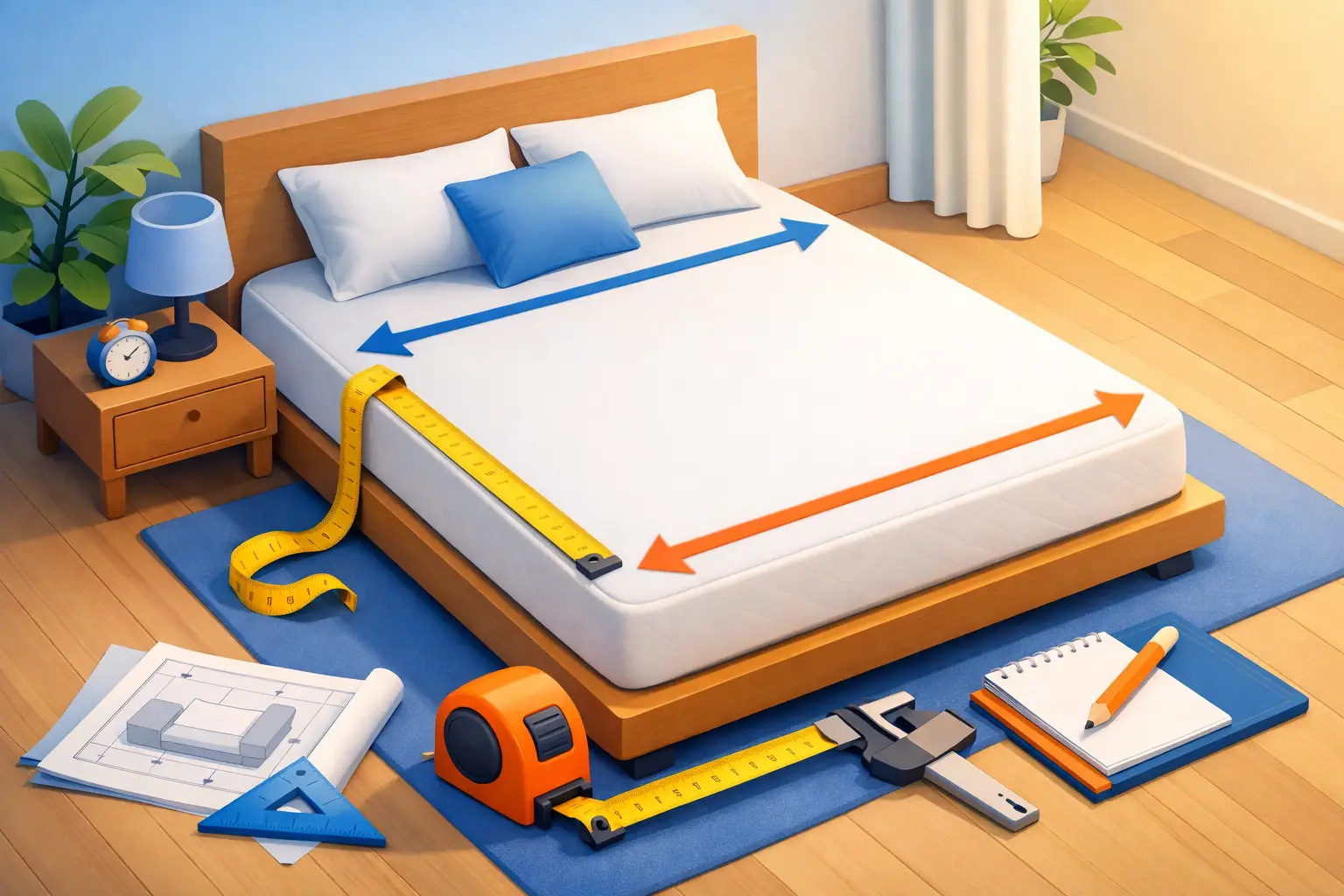
A mattress that is off by even an inch can create problems you feel every day – gaps in the bed frame, sheets that pull loose, or a new base that does not fit as expected. That is why knowing how to measure mattress size correctly matters before you replace a mattress, order a protector, or match it with a headboard, divan, or bed frame.
The good news is that measuring a mattress is simple when you do it the right way. The key is to measure the actual mattress, not the label, and to check width, length, and height carefully. In many homes, especially when a mattress has been in use for years, the stated size and the real size can differ slightly because of padding, edge shape, and normal settling.
Start with the mattress on a flat surface. If it is still on the bed, remove all bedding, pillows, toppers, and protectors so you are measuring only the mattress itself. A soft tape measure can work, but a steel tape measure usually gives a straighter and more reliable reading.
Measure the width first by going from side to side across the mattress at the widest point. Keep the tape straight and level rather than following the curve of the edge. Then measure the length from the head to the foot of the mattress. Again, measure in a straight line, not along the quilted surface.
Height is where many people make mistakes. Measure from the bottom edge to the highest point of the mattress, including any pillow top or euro top built into the mattress itself. Do not include a separate topper unless you are specifically buying deep-pocket sheets or a protector to fit over both pieces together.
It helps to measure twice. If the two readings are slightly different, use the larger one for accessories like protectors and fitted sheets. For bed frames and divans, accurate dimensions matter more, so recheck until you are confident the tape is straight and the mattress is sitting evenly.
Customers are often surprised when a mattress does not match its advertised size exactly down to the last fraction of an inch. In practice, a small variation can happen because upholstery layers compress differently, edges may be rounded instead of perfectly square, and handmade or heavily cushioned models do not always present a sharp measuring line.
This does not always mean there is a defect. It depends on the mattress construction. A tighter, firmer foam model may measure more precisely from edge to edge, while a plush pillow top or luxury build can show slight differences at the corners or upper comfort layers. What matters is whether the mattress fits the intended base and whether accessories are chosen with enough allowance for that build.
If you are measuring an older mattress, normal wear can also affect the result. Years of use may soften the edges or slightly reduce loft. That is another reason to measure the actual mattress in your home rather than relying on memory or an old product tag.
Many buyers assume standard sizes are enough. Often they are, but not always. A twin, full, queen, king, or California king should follow expected dimensions, yet there can still be small manufacturer tolerances. In the UAE and hospitality projects, sizing expectations can also vary depending on the bed setup or sourcing history.
If you are replacing only the mattress and keeping the same frame, verify both the internal frame dimensions and the mattress itself. If you are buying fitted sheets, mattress protectors, or encasements, height becomes just as important as width and length. A queen mattress with a tall pillow top may need deeper pockets than a lower-profile queen.
For guest rooms, children’s rooms, and hospitality properties, this step avoids operational headaches. Measuring once before ordering is much easier than dealing with a mismatch after delivery.
When people ask how to measure mattress size correctly, they usually think about width and length first. Those are essential, but height should never be treated as optional. Width tells you whether the mattress fits the frame side to side. Length confirms foot clearance and full support. Height determines whether fitted bedding will stay in place and whether the bed will sit at the comfort level you expect.
This is especially relevant for thicker comfort constructions such as memory foam, gel-infused memory foam, latex, and pillow-top spring mattresses. The sleep feel may be excellent, but a taller profile can change what accessories you need.
The most common mistake is measuring with bedding still on the mattress. Even a thin protector can affect the reading, and toppers can add several inches to the height. Another mistake is measuring the sleeping surface along its contours instead of measuring straight across.
Some people also measure only one side. That can be risky if the mattress has softened unevenly or is pushed tightly against a wall. It is better to pull the mattress into a clear space if possible and measure from edge to edge without obstruction.
Corner shape can create confusion too. If the corners are rounded, do not angle the tape diagonally to capture extra fabric. Measure straight across the main body of the mattress. For accessories, use the widest and longest realistic measurement, but keep it true to the mattress shape.
Finally, do not assume your old bed frame is standard just because the mattress size name sounds familiar. Frames, bases, and headboard setups can differ, especially if they were custom-built or purchased years ago.
If you are buying fitted sheets, mattress protectors, or encasements, take all three measurements and pay close attention to depth. A protector that is right in width and length but too shallow in height may pull at the corners and reduce comfort. A fitted sheet that is too deep can bunch and shift.
For adjustable bases, you also want to confirm that the mattress dimensions align with the platform and that the mattress type is suitable for articulation. Size is only part of the fit. Flexibility and construction matter too.
If you are selecting a new mattress and planning to keep existing bedding, measure your current accessories as a secondary check. This is not a substitute for measuring the mattress, but it helps identify where your current setup may already be stretched, oversized, or not quite right.
For frames and divans, measure the inside sleeping area where the mattress will sit. Do not measure the external dimensions of the bed and assume that gives you the mattress size. Decorative rails, upholstery, and headboard wings can make the outer dimensions much larger.
A very tight fit is not always ideal. If the frame leaves no room at all, installation can be harder and removing the mattress for cleaning or rotation becomes less convenient. On the other hand, too much extra space can leave visible gaps and reduce edge support near the sides.
A practical fit is one where the mattress sits securely without force and without noticeable movement in normal use.
If you are measuring a mattress for a replacement purchase, especially for a master bedroom, guest property, or hospitality setup, accuracy matters because comfort systems and support bases need to work together. If your mattress seems to fall between sizes, or the frame dimensions look unusual, it is worth getting advice before ordering.
This is where a consultant-led approach helps. A knowledgeable mattress advisor can help confirm whether the issue is the mattress, the frame, the bedding depth, or a size standard mismatch. For buyers who want less trial and error, that guidance can save time and prevent avoidable fit problems.
Towell Mattress ME works with a wide range of mattress constructions and sizes, so the goal is not just choosing a mattress that feels right, but making sure it fits your room, your base, and your bedding properly from the start.
A tape measure only takes a few minutes to use, but those few minutes can protect the comfort of your entire setup. Measure the mattress itself, check all three dimensions, and when something looks unclear, pause and verify before you place the order.
