
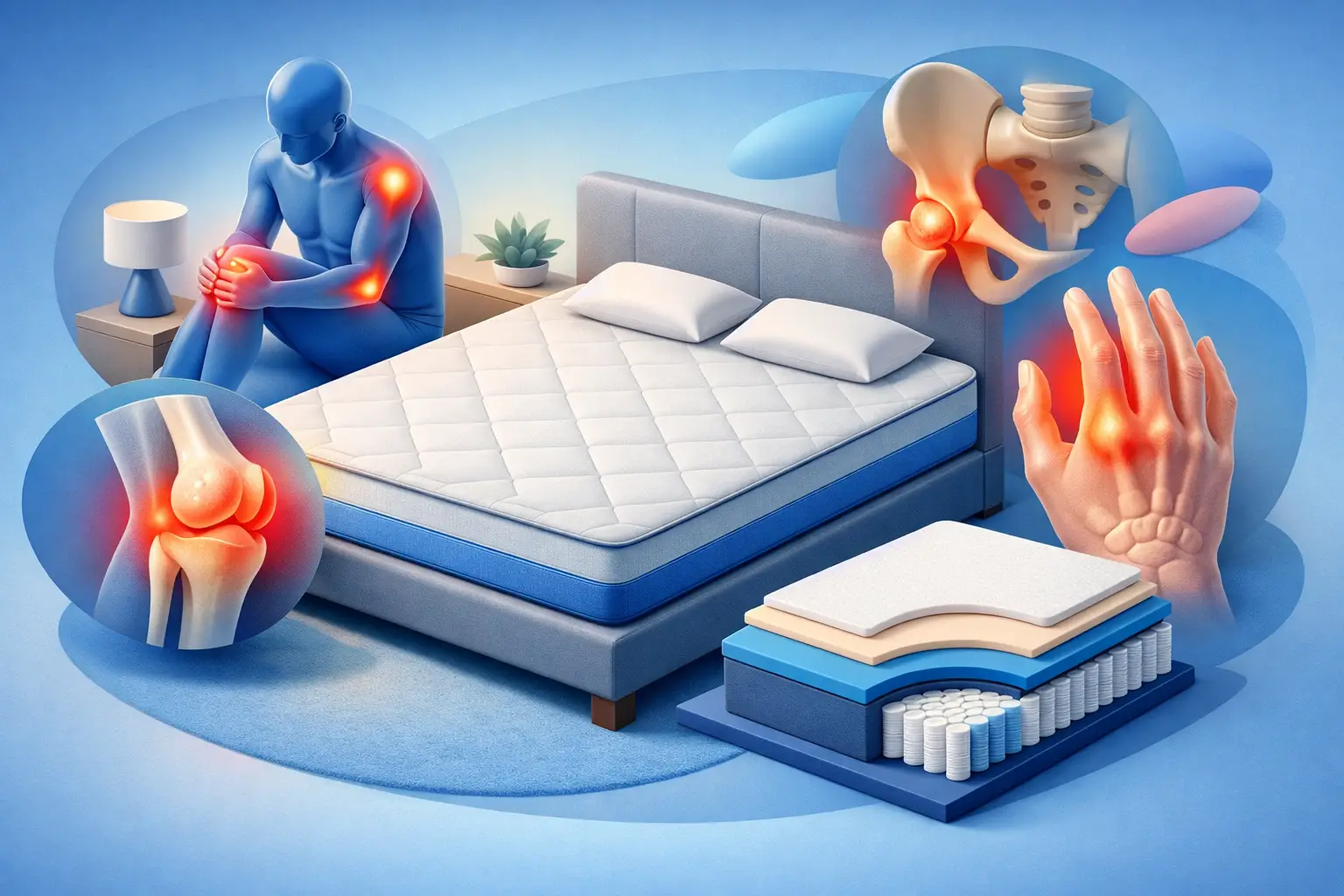
Waking up with stiff knees, sore hips, or aching shoulders usually means your mattress is no longer helping your body recover overnight. If you are searching for the best mattress for arthritis joint pain, the goal is not simply a softer bed or a firmer one – it is a mattress that keeps pressure off sensitive joints while still supporting your spine properly.
Arthritis pain tends to react badly to extremes. A mattress that feels too hard can create pressure points at the shoulders, hips, and lower back. One that feels too soft can let the body sink too deeply, which may strain the joints and make it harder to change position during the night. That is why mattress selection should be based on balance, not guesswork.
People with arthritis usually need two things at the same time – cushioning and support. Pressure relief matters because painful joints are more sensitive to surface tension. Support matters because poor alignment can increase strain across the back, hips, and knees.
A good mattress should contour enough to reduce pressure around the joints without swallowing the body. It should also respond in a way that keeps the spine in a neutral position. For side sleepers, that often means more give around the shoulders and hips. For back sleepers, it means enough support to prevent the pelvis from dropping. For combination sleepers, ease of movement becomes just as important as softness.
This is where materials and construction matter. Two mattresses can feel comfortable in a showroom for a few minutes, but perform very differently over a full night of sleep.
Memory foam is often a strong choice because it contours closely around the body and reduces sharp pressure at the joints. For many people with arthritis, especially in the shoulders, hips, or lower back, that cushioning can make a noticeable difference. The trade-off is that some memory foam surfaces can feel slower to respond, which may make movement harder for sleepers who already struggle with mobility.
Gel-infused memory foam can be a practical alternative if heat buildup is a concern. It offers a similar pressure-relieving feel while helping regulate surface temperature more effectively. For sleepers in warmer climates or for anyone who tends to sleep hot, this can improve comfort over the full night, not just at bedtime.
Latex is another excellent option for joint pain, especially for shoppers who want pressure relief without a deep sinking sensation. It tends to feel more buoyant and responsive than memory foam, which makes repositioning easier. That responsiveness can be helpful for arthritis sufferers who wake frequently and need to change sides or adjust their posture carefully.
Pocket spring mattresses can also work very well, especially when paired with comfort layers such as foam, latex, or memory foam. Because the coils respond more independently than traditional connected spring systems, they can provide more targeted support and better motion control. For couples, this matters. If one partner moves often during the night, the other is less likely to feel every shift.
Traditional Bonnell spring mattresses may suit some sleepers, particularly those who prefer a firmer and more familiar feel, but they are usually less effective at precise pressure relief. For arthritis pain, this type often depends heavily on the comfort layers above the springs.
There is no single firmness that suits every person with arthritis. Body weight, sleep position, and the location of your pain all affect what will feel supportive.
Side sleepers often do best with a medium to medium-soft feel, because the mattress needs to cushion the shoulders and hips. If the surface is too firm, those joints take too much pressure. If it is too soft, the spine may curve out of alignment.
Back sleepers usually benefit from a medium to medium-firm mattress that supports the lumbar area while still allowing a little contour around the hips and shoulders. This balance can reduce tension across the lower back and pelvis.
Stomach sleeping is generally the hardest position for arthritis and back pain, because it tends to increase strain through the neck and lower spine. If someone does sleep on their stomach, a firmer and more supportive surface is usually safer, but in many cases, adjusting sleep position can help as much as changing the mattress.
Heavier sleepers may need a slightly firmer build to avoid sinking too deeply, while lighter sleepers often need more surface cushioning to get the same pressure relief. This is why guided selection matters. The right mattress is not just about the label on the showroom floor. It is about how the internal structure matches your body.
When choosing the best mattress for arthritis joint pain, look beyond broad claims like orthopedic or medical support. Those terms can be useful, but they do not tell the whole story on their own.
Focus first on pressure relief. If your hips, shoulders, knees, or back are sensitive, the mattress should distribute weight evenly instead of concentrating force in one area. Next, consider support. A mattress should help maintain alignment from head to toe, especially if you already wake with stiffness.
Motion control is also worth attention, particularly for couples. Interrupted sleep can make pain feel worse the next day, so reducing disturbance matters. Edge support can help too. For people with arthritis, sitting on the side of the bed to get up or lie down is easier when the edge feels stable rather than collapsing under weight.
Responsiveness is another practical factor. Some very plush mattresses feel comfortable at first but can make movement difficult. If joint pain already slows down turning or rising, a mattress with a bit more lift and resilience may be a better everyday choice.
Finally, consider durability. A mattress that starts supportive but develops body impressions too quickly can stop performing well long before it looks worn out. Reliable construction and warranty coverage provide reassurance here.
Many shoppers with joint pain assume they need the softest surface available. Sometimes that helps, but often it creates a new problem. If the hips sink too far or the lower back loses support, pain can increase instead of improve.
The better approach is to choose comfort with structure. In practical terms, that often means a mattress with a supportive core and a pressure-relieving comfort layer on top. You want the body to settle in slightly, not collapse. This is especially important for older adults and anyone managing both arthritis and back pain at the same time.
Mattress shopping for arthritis is personal. Two people with similar symptoms may need very different constructions depending on body type, sleep position, and how easily they move during the night.
That is why consultant-led selection can save time and reduce buying stress. A knowledgeable mattress consultant can help narrow the options based on real comfort needs, whether that points toward memory foam, gel-infused foam, latex, pocket spring, or a health-focused mattress designed for a more supportive sleep surface. At Towell Mattress ME, that guided approach helps customers compare comfort and support across multiple mattress categories without making the process feel complicated.
It also helps to think beyond the mattress alone. A supportive pillow and a quality mattress protector can improve the overall sleep setup, especially when temperature control and hygiene are part of long-term comfort.
Start by identifying where your arthritis pain is most noticeable during sleep. Shoulder and hip pain often point toward a mattress with stronger pressure relief. Lower back or knee discomfort may suggest you need better alignment and a more supportive core.
Then think about how you sleep in real life, not how you think you should sleep. If you change positions often, choose a mattress that is easier to move on. If you share the bed, consider motion separation. If you sit on the edge to get dressed or stand up, edge support becomes more important than most shoppers expect.
A good mattress should feel comfortable in the first few minutes, but more importantly, it should make sense for the next several years. That means choosing a build that suits your body, supports your joints, and holds its shape well over time.
Better sleep with arthritis rarely comes from chasing the softest bed or the firmest one. It comes from finding the right balance – enough cushioning to calm sore joints, enough support to keep the body aligned, and enough guidance to choose with confidence.
