
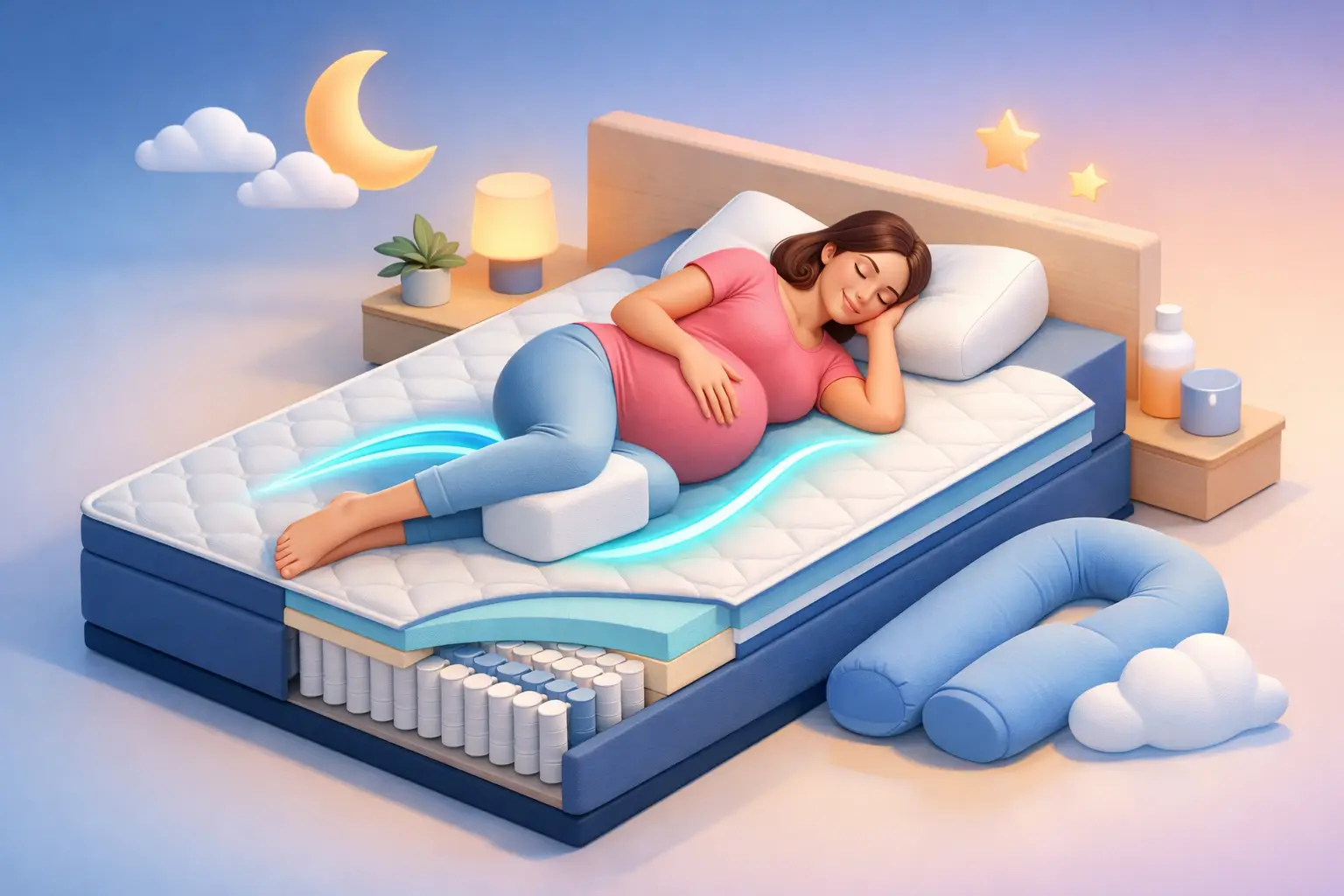
Sleep can get harder long before the baby arrives. As your body changes, a mattress for pregnancy comfort support stops being a nice-to-have and becomes part of how you rest, recover, and get through the day with less strain.
Pregnancy often changes what felt comfortable before. A mattress that once seemed soft and cozy can start to feel unsupportive at the hips, lower back, and shoulders. On the other hand, a surface that is too firm can create pressure points, especially when side sleeping becomes the safer and more comfortable position. The goal is not simply a softer bed. It is balanced support that keeps the body cushioned without letting it sink out of alignment.
The best fit usually starts with support. During pregnancy, weight distribution changes, and the lower back and pelvic area often need more stability. A mattress that holds the body evenly can help reduce the feeling of sagging through the middle, which is one of the most common complaints.
Pressure relief matters just as much. Side sleeping can place more pressure on the shoulders and hips, especially as pregnancy progresses. Materials such as memory foam, gel-infused memory foam, and certain latex designs can contour to these areas and reduce sharp pressure. That said, contouring should not be so deep that movement becomes difficult. Getting in and out of bed and changing sides during the night should still feel manageable.
Temperature can also become a bigger factor than many shoppers expect. Many pregnant sleepers feel warmer at night. In that case, highly heat-retentive surfaces may feel uncomfortable even if they are soft enough. Breathable constructions, airflow-oriented spring systems, gel-infused foams, and moisture-managing mattress protectors can make a noticeable difference.
For most people, medium-firm to firm is the safest place to start. That level often provides enough support for the back and hips while still offering comfort at the shoulders and sides. But firmness is not universal. Body type, sleep position, and whether you are dealing with back pain, hip discomfort, or swelling all change what feels right.
If you are a lighter-weight sleeper, a mattress that is too firm may feel hard at the shoulder and hip. If you are heavier or already noticing lower back strain, a mattress with a stronger support core may feel better over time. This is where construction matters more than the label alone. Two mattresses can both be called medium-firm and feel very different depending on whether they use foam, springs, latex, or a hybrid build.
A practical rule is simple: when lying on your side, your hips and shoulders should feel cushioned, but your waist and lower back should still feel supported. If the middle of the body dips, support is too weak. If the shoulder and hip feel jammed upward, the surface may be too firm.
Foam mattresses can work well when pressure relief is the main concern. They often create a more even, cradling feel that helps reduce discomfort around the hips and shoulders. Visco memory foam is especially useful for contouring, but some sleepers find traditional memory foam warmer and slower to respond when turning during the night.
Gel-infused memory foam can be a better option when you want that same contouring with improved temperature regulation. It can also feel slightly more responsive, which some pregnant sleepers prefer when movement becomes more frequent.
Pocket spring mattresses are often a strong choice for pregnancy because they combine support with more targeted response. Individual springs can adapt to pressure zones without creating the rigid feel of older spring constructions. A quality pocket spring model with a comfort layer on top often gives a good mix of pushback, airflow, and ease of movement.
Latex tends to suit shoppers who want support with a more buoyant feel. It contours, but not in the slow, sinking way of memory foam. That can be helpful if you want pressure relief but do not like the feeling of being hugged too tightly by the mattress. Latex also tends to perform well for breathability and long-term resilience.
Medical or health-focused mattresses can be worth considering if there is a specific concern such as back pain, posture support, or pressure management. The right one depends on the construction inside, not just the category name, so it helps to look closely at what is providing the support and comfort layers.
Sometimes the question is not which mattress to buy, but whether your current one is causing the problem. If you wake up with more stiffness than when you went to bed, notice visible body impressions, or feel like you are rolling into the center, your mattress may not be giving adequate support anymore.
Another sign is needing to constantly build a pillow structure just to get comfortable. Pillows can absolutely help during pregnancy, especially between the knees or under the belly, but they should improve a mattress that already supports you, not compensate for one that has broken down.
If turning over feels unusually difficult because the surface traps the body too deeply, that can also be a clue. During pregnancy, mobility on the mattress matters more than usual. A little contouring is helpful. Too much sink can make the night feel longer.
These details can sound secondary in the showroom, but they matter at home. Cooling is important because overheating can disrupt sleep fast. Breathable covers, open-cell foams, spring-based airflow, and cooling comfort layers are all worth paying attention to.
Edge support is easy to overlook until getting out of bed becomes more of a task. A mattress with a stable perimeter can make sitting, standing, and repositioning feel more secure. This is especially useful later in pregnancy when leverage and balance change.
Motion control matters if you share the bed. Frequent position changes, bathroom trips, or a partner getting in and out of bed can all interrupt sleep. Foam and pocket spring constructions typically do a better job of limiting disturbance than older interconnected spring systems.
The most reliable way to choose a mattress for pregnancy comfort support is to match the feel to your current needs, not what used to work before pregnancy. Start with your main complaint. If it is back strain, lean toward stronger underlying support. If it is hip and shoulder pressure, focus on comfort layers that cushion those zones. If heat is the problem, prioritize breathable materials.
It also helps to think beyond the next few months. A mattress should still be comfortable after pregnancy, when your sleep needs may change again. That is one reason balanced designs tend to make sense. Extremely soft beds can feel appealing for a few minutes, but they are often less dependable for alignment and long-term use.
Guided selection can make this process easier, especially when there are multiple constructions and comfort categories to compare. A consultant-led approach helps narrow the field based on sleep position, support needs, and comfort preference instead of relying on guesswork.
A mattress does most of the work, but the right accessories can help complete the setup. A supportive pillow can help keep the neck aligned as side sleeping becomes the norm. A quality mattress protector is also useful during pregnancy because it helps maintain hygiene and protects the mattress without changing the feel too much.
If your mattress is still structurally sound but just feels slightly too firm, a topper may offer some relief. But if the mattress is sagging or unsupportive underneath, a topper will not solve the real problem. Surface comfort and deep support are not the same thing.
If your mattress is already several years old, visibly dipping, or causing nightly discomfort, waiting may only extend poor sleep at a time when rest matters more. Pregnancy places different demands on the body, and support issues often become more obvious quickly.
A better mattress will not solve every sleep disruption that comes with pregnancy, but it can reduce avoidable discomfort. That alone can make bedtime feel less frustrating and mornings less sore.
The right choice is usually the one that feels supportive first and comfortable second, with enough cushioning to ease pressure and enough structure to keep your body steady through the night. If you are unsure where to begin, start with a medium-firm model in a breathable foam, latex, or pocket spring construction, then narrow it down based on how your hips, back, and shoulders respond. A good mattress should meet your body where it is now and still serve you well after this stage has passed.
