
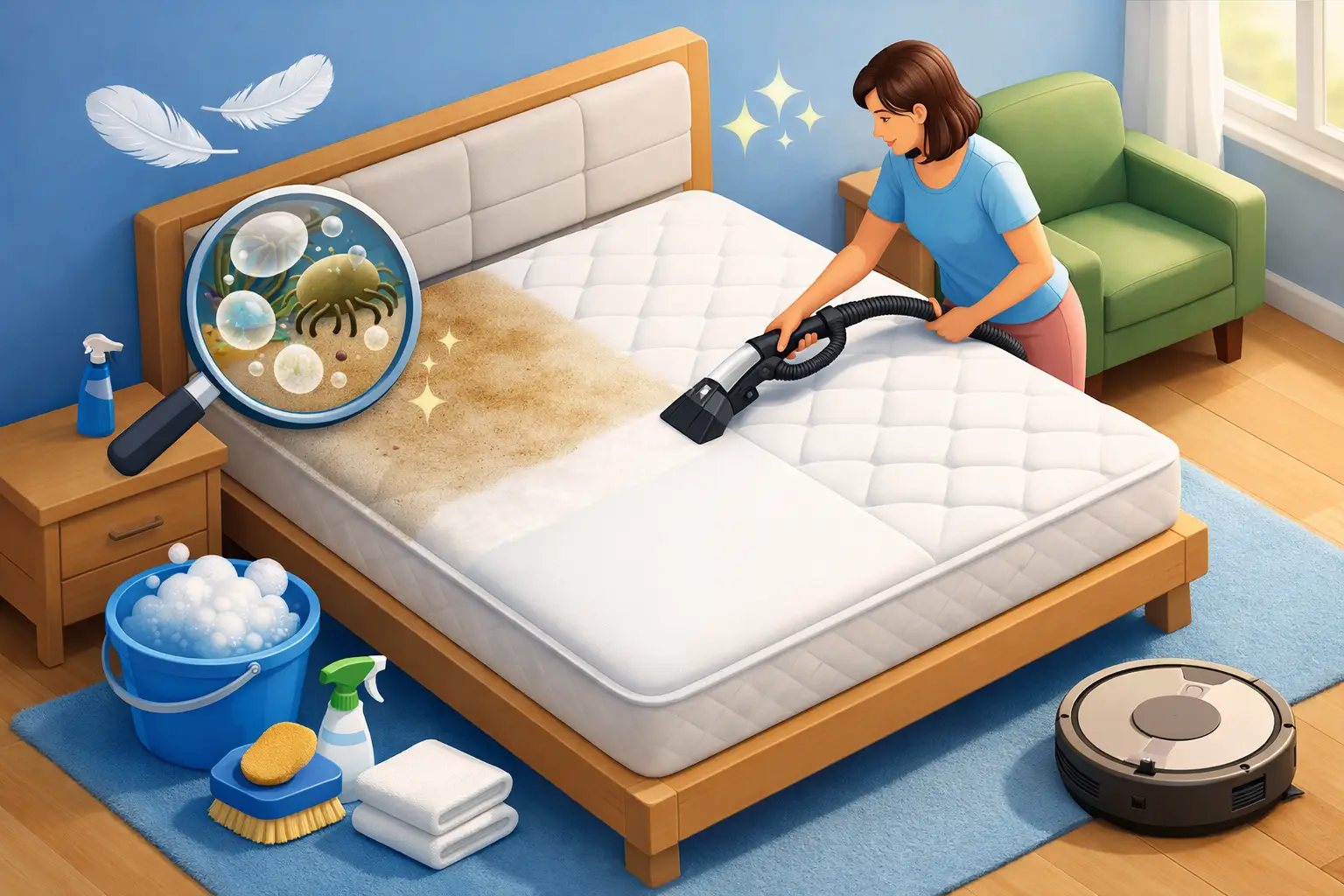
A mattress can look fine on the surface and still hold dust, sweat, body oils, and the occasional spill. If your bed has started to smell less than fresh, or you have noticed stains building up over time, a careful home clean can make a real difference without damaging the materials inside.
The key is to clean the mattress in a way that matches how it is built. Foam, memory foam, latex, and spring mattresses do not respond well to heavy soaking. In most cases, less moisture and more patience will give you the best result.
Before you start, strip off all bedding, including the mattress protector if you use one. Wash those separately according to their care labels. Then open windows or turn on a fan if possible. Good airflow helps the mattress dry faster, which matters because trapped moisture can lead to odor and mildew.
Start with a full vacuum using the upholstery attachment. Go slowly across the top, sides, seams, and piping. This removes dust, hair, skin flakes, and debris that settle into the fabric over time. If your mattress has deep quilting or a tufted top, spend extra time there.
After vacuuming, inspect the mattress closely under good light. You are looking for three different issues: surface dust, odor, and stains. Each needs a slightly different approach, and treating all of them the same way usually leads to overwetting or fabric marks.
If there are no major stains and the goal is simply to freshen the bed, sprinkle a light layer of baking soda over the surface. Leave it for several hours, or longer if the room is dry and ventilated. Baking soda helps absorb odor sitting near the surface. Once finished, vacuum it off thoroughly.
This step works well for routine care, especially in homes with children, pets, or high humidity. It is simple, low risk, and suitable for most mattress types when used lightly.
Mix a small amount of mild liquid detergent with water until you have a lightly soapy solution. Dip a clean white cloth into the foam, not the bowl of water itself, and blot the stain gently. The cloth should be damp, not wet. Work from the outside of the stain inward so it does not spread.
Then use a second cloth lightly dampened with plain water to blot away any soap residue. Follow that with a dry towel to absorb as much moisture as possible. Let the area air dry fully before making the bed again.
Blotting is better than scrubbing. Scrubbing can push the stain deeper into the mattress cover and may disturb the comfort layers underneath, especially on memory foam and pillow top models.
A light baking soda treatment is usually enough for everyday odor. If the smell is stronger, vacuum first, apply baking soda, and leave it on overnight if conditions allow. The room should be dry, with moving air. Vacuum again in the morning.
If odor keeps returning quickly, the issue may be more than surface buildup. In that case, check whether the mattress protector is still effective and whether the mattress is drying properly after cleaning or exposure to humidity.
Different stains respond differently, and using the wrong method can set the mark further.
Older sweat stains can be stubborn. A mild detergent solution is the safest first step. Blot gently and repeat rather than using a harsh cleaner all at once. You may lighten the stain without removing it completely, and that is a realistic outcome for older marks.
Treat these as soon as possible. First blot with a dry cloth to remove excess liquid. Then use a mild soap solution in small amounts. Avoid soaking the area. If sugar or milk was involved, be extra careful to remove residue, since leftover residue can create odor later.
These are more difficult because they involve both stain and odor. An enzyme-based cleaner can help, but only if the mattress care label allows it and you use a very small amount. Test a hidden area first. Foam and memory foam mattresses are especially sensitive to overuse of liquid products, so apply cleaner to a cloth rather than pouring it directly on the bed.
If the stain is large or has gone deep into the mattress, full removal at home may not be realistic. In some cases, replacing the protector and reassessing the mattress condition is the more practical option.
A lot of mattress damage happens during cleaning, not during daily use. The most common mistake is using too much water. Mattresses are layered products, and once moisture moves below the cover, it can take a long time to dry.
Avoid steam cleaning unless the manufacturer clearly says it is safe. Heat and moisture can affect foams, adhesives, and fabric finishes. The same caution applies to strong bleach, aggressive stain removers, and heavily scented sprays. These may leave residue, discolor the fabric, or trap odor under the surface instead of removing it.
It is also best not to use a hair dryer on high heat. Gentle airflow from a fan is safer and more consistent.
Not every mattress should be treated the same way. Construction matters.
These should be cleaned with the lightest touch. Vacuuming, baking soda, and careful spot blotting are usually the safest methods. Foam absorbs moisture easily, and if it gets too wet, drying can be slow.
Latex is durable, but it still should not be saturated. Use minimal moisture and avoid harsh chemicals. Spot cleaning and good ventilation are the priority.
These often allow a bit more airflow internally than solid foam models, but that does not mean they should be soaked. Surface cleaning, odor control, and quick drying are still the best approach.
These need extra attention in seams and stitched areas because dust and debris collect there. They can also hold moisture in the top comfort layers, so drying time matters.
For most homes, vacuuming the mattress every few months and freshening it as needed is a sensible routine. Spot clean immediately after spills. If you live in a humid environment or the bed gets heavy daily use, more frequent care may help maintain freshness.
Rotating the mattress on the schedule recommended by the manufacturer can also help with even wear. While rotation does not clean the mattress, it supports longer-term comfort and can make regular inspection easier.
The most effective protection is a quality mattress protector. It adds a practical barrier against sweat, spills, dust, and daily wear before they reach the mattress itself. That matters because surface fabrics can often be cleaned, but inner comfort layers are much harder to restore once they absorb moisture or odor.
Wash the protector regularly and replace it when it stops performing well. For family homes, guest rooms, and hospitality settings, this simple step reduces maintenance and helps protect the condition of the mattress over time.
If you are replacing an older bed or adding better protection to a newer one, Towell Mattress ME offers mattress protectors and a broad range of mattress types designed for different comfort preferences and support needs.
Sometimes the mattress is telling you more than the stain is. If there is persistent odor, visible sagging, deep staining, or wear that affects comfort, cleaning may improve the surface but not the sleep experience. In those cases, it makes sense to think beyond maintenance and consider whether the mattress is still giving proper support.
A clean mattress should also be a comfortable one. If home care restores freshness but the bed still feels tired, that is useful information. Good mattress care helps extend product life, but it cannot reverse every sign of age.
A careful cleaning routine, done with light moisture and the right expectations, goes a long way. Treat stains quickly, keep airflow moving, and use a protector so the next cleanup is easier than the last.
