
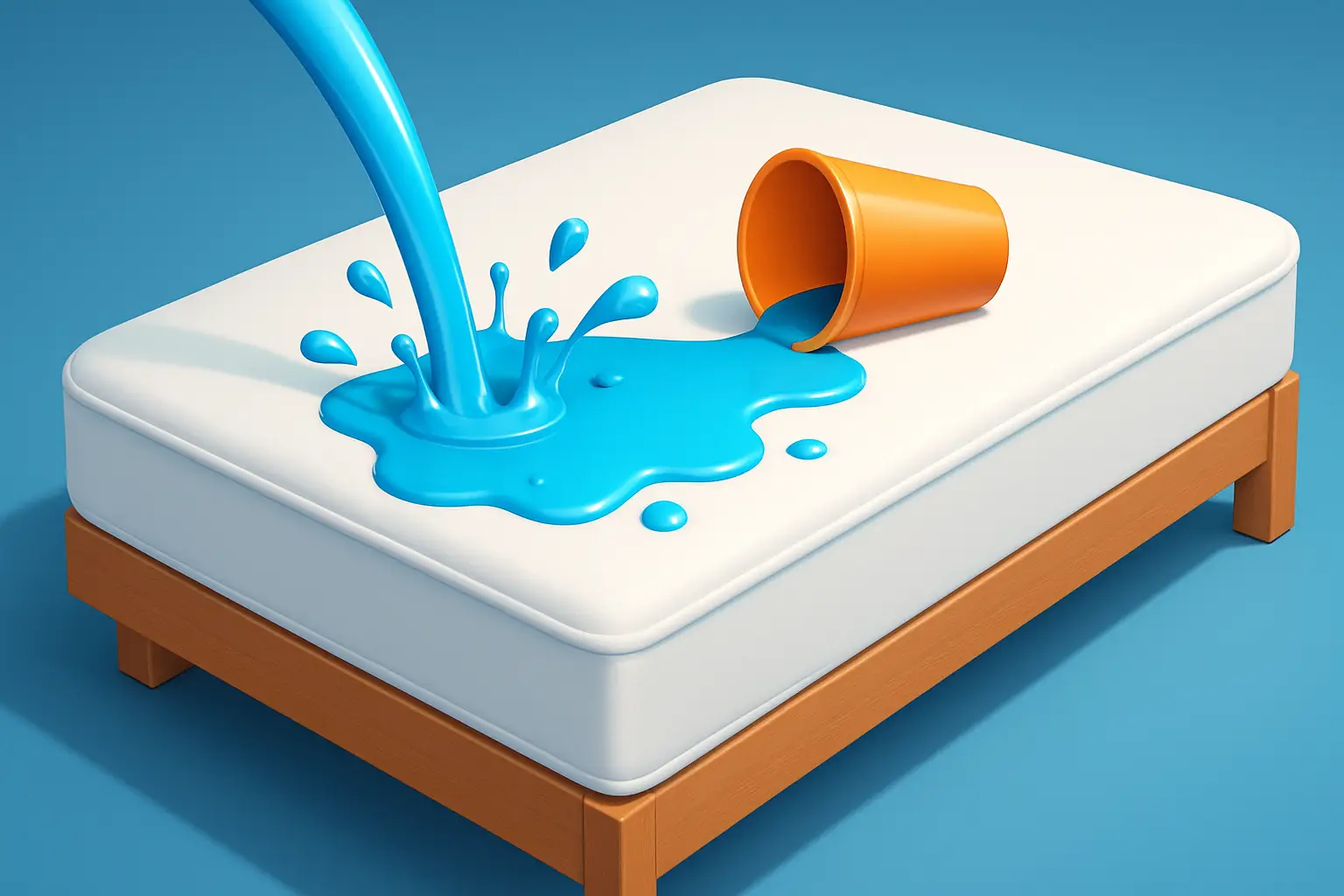
A spilled cup of tea, a sweating night, a child climbing into bed after a bath, a pet that claims your mattress as their own – most mattress “mysteries” start the same way: moisture meets fabric. The problem is not the mess you can see. It’s what you can’t.
Moisture that reaches the mattress core can lead to stains, odor, and premature breakdown of foams and fibers. If you care about comfort and durability (and if you want your warranty to stay on your side), a waterproof barrier is one of the simplest protections you can add.
When people search for “mattress protector waterproof,” they’re usually trying to solve one of two problems: preventing accidents from reaching the mattress, or blocking everyday humidity and sweat from slowly soaking in. A truly waterproof protector uses a membrane or coating that stops liquid from passing through, even under pressure.
Here’s the key nuance: “water-resistant” is not the same as waterproof. Water-resistant fabrics may slow down a spill, but they can still let moisture through once liquid sits, spreads, or gets compressed by body weight. For family beds, guest rooms, and hospitality use, that difference is the whole game.
The other part people miss is coverage. A fitted-sheet style protector that wraps the top and sides protects against side spills and sweat migration. A thin “pad” that only sits on top can still allow moisture to run off the edge and reach the mattress.
You don’t need a dramatic accident for moisture to become a problem. Night sweats, humidity, and small spills add up. Over time, moisture can contribute to discoloration and odors, and it can affect how materials feel.
Foam and memory foam are especially worth protecting because they can absorb and hold moisture more than traditional innerspring layers. Latex is naturally more resilient, but the cover and comfort layers above it can still stain. And if your mattress has a plush quilted top, it can act like a sponge.
From a practical standpoint, a protector also reduces the need for aggressive spot cleaning, which is where many mattresses get damaged. Scrubbing, soaking, and using harsh cleaners can break down quilting and adhesives. A removable protector turns a high-stakes cleanup into a normal laundry cycle.
The most common worry is heat. People avoid waterproof protectors because they remember older styles that felt like plastic and trapped warmth.
Modern protectors are usually built with a soft textile face (often terry or a smooth knit) bonded to a thin waterproof membrane, typically polyurethane (PU). PU can block liquid while still allowing some water vapor to pass through, which helps with temperature regulation. That said, not all membranes are equal. Thicker or lower-quality membranes can feel less breathable and may crinkle.
If you sleep hot, the goal is not to skip waterproofing. It’s to choose a protector that balances three factors: a quiet membrane, a breathable surface fabric, and a fit that stays taut without bunching.
Most waterproof protectors fall into a few construction types. The right pick depends on who uses the bed and how sensitive they are to texture and temperature.
Terry protectors have a looped cotton or cotton-blend surface. They’re popular because they feel familiar, like a towel-soft fitted sheet, and they add a touch of cushioning. This style works well for family beds and everyday protection.
The trade-off is that terry can hold a bit more heat than a smooth knit, and it may take longer to dry after washing.
Knit protectors feel closer to a regular fitted sheet. They’re a strong choice if you want the protector to “disappear” under your sheets with minimal texture. Many hot sleepers prefer this style because it tends to breathe better than terry.
The trade-off is less surface absorbency, so puddles may sit on top until you remove the bedding. It still protects the mattress, but cleanup can feel messier in the moment.
A quilted protector adds padding, usually polyester fill, on top of the waterproof layer. People choose these to soften a mattress or reduce the feel of seams and quilting beneath.
The trade-off is heat retention and bulk. Quilted styles can also affect the “true feel” of a mattress, especially memory foam and latex where pressure relief depends on direct contact.
Even the best membrane won’t help if the protector shifts, bunches, or pops off the corner.
Start with depth. Measure your mattress height from the bottom edge to the top surface, including any pillow-top. Then choose a protector with a pocket depth that matches or slightly exceeds that measurement. A protector stretched to its limit is more likely to ride up, and it can feel tighter across the surface.
Next, look at the elastic. Full-perimeter elastic usually holds better than corner-only straps, especially for active sleepers.
Finally, consider how the protector interacts with your sheets. If your fitted sheet is already a tight fit, adding a thick protector may make everything feel strained. In that case, a smooth, lower-profile waterproof protector is usually the cleaner solution.
A good waterproof protector should be quiet. Crinkling typically comes from a stiff membrane or a poor bond between layers.
If you’re sensitive to texture, prioritize a protector with a soft top fabric and a thin, flexible membrane. Also wash it once before first use. Many protectors soften noticeably after the first wash and dry.
If you’ve had a protector that felt clammy, that’s often a sign of low breathability or a protector that’s too thick for your sleep temperature. Switching to a smooth knit with a quality membrane can be a meaningful improvement.
It depends on your household and how “high consequence” moisture is.
For kids, potty training, or frequent night accidents, you want true waterproofing, a secure fitted style, and easy washability. Some families keep two protectors per bed so one can go back on immediately while the other is in the laundry.
For adults dealing with night sweats or humidity, waterproof still matters, but breathability becomes the deciding factor. A smooth knit waterproof protector typically feels cooler and less textured.
For guest rooms, a waterproof protector is a low-cost way to keep the mattress looking new. Guests may not report minor spills, and stains can become permanent if they sit.
For hospitality, durability and fast turnover matter. You want a protector that stands up to frequent washing, dries efficiently, and maintains its waterproof performance over time.
Most waterproof membranes fail early because of heat and harsh chemicals, not because of normal use.
Wash with mild detergent and avoid bleach unless the product label explicitly allows it. High heat is the bigger issue. Hot water and high-heat drying can cause membranes to crack or delaminate over time.
Use warm or cool cycles when possible, and dry on low to medium heat. If you can line-dry occasionally, even better.
Also, skip fabric softeners. They can leave residue that reduces absorbency on the surface fabric and can affect breathability.
If you want a protector you’ll actually keep on the bed, focus on a few practical checks.
Confirm it’s labeled waterproof (not just resistant). Verify the pocket depth fits your mattress height. Decide whether you prefer terry softness or smooth knit coolness. And if you’re buying for a premium mattress, consider how much loft you’re adding – the protector should protect, not change the comfort you paid for.
If you want guided help matching a protector to your mattress type and sleep preferences, our Mattress Consultants at Towell Mattress ME typically treat it like any other comfort decision: protect the investment, keep the feel, and stay within budget.
A mattress protector isn’t a glamorous purchase, but it’s one of the few sleep accessories that can prevent a problem you can’t fix later. Choose waterproof protection that fits correctly and feels comfortable enough to leave on every night – your mattress will last longer, and your future self will deal with fewer surprises.
