
If you are comparing pocket spring vs hybrid mattress differences, you are already asking the right question. These two mattress types can look similar on a product page, but they do not feel the same in daily use, and the right choice depends on how you sleep, how much support you need, and what kind of comfort you expect night after night.
A lot of shoppers assume a hybrid is simply another name for a pocket spring mattress. It is not. Both may use individually wrapped coils, but the comfort build above those coils changes the experience in a meaningful way. That is where most buying mistakes happen.
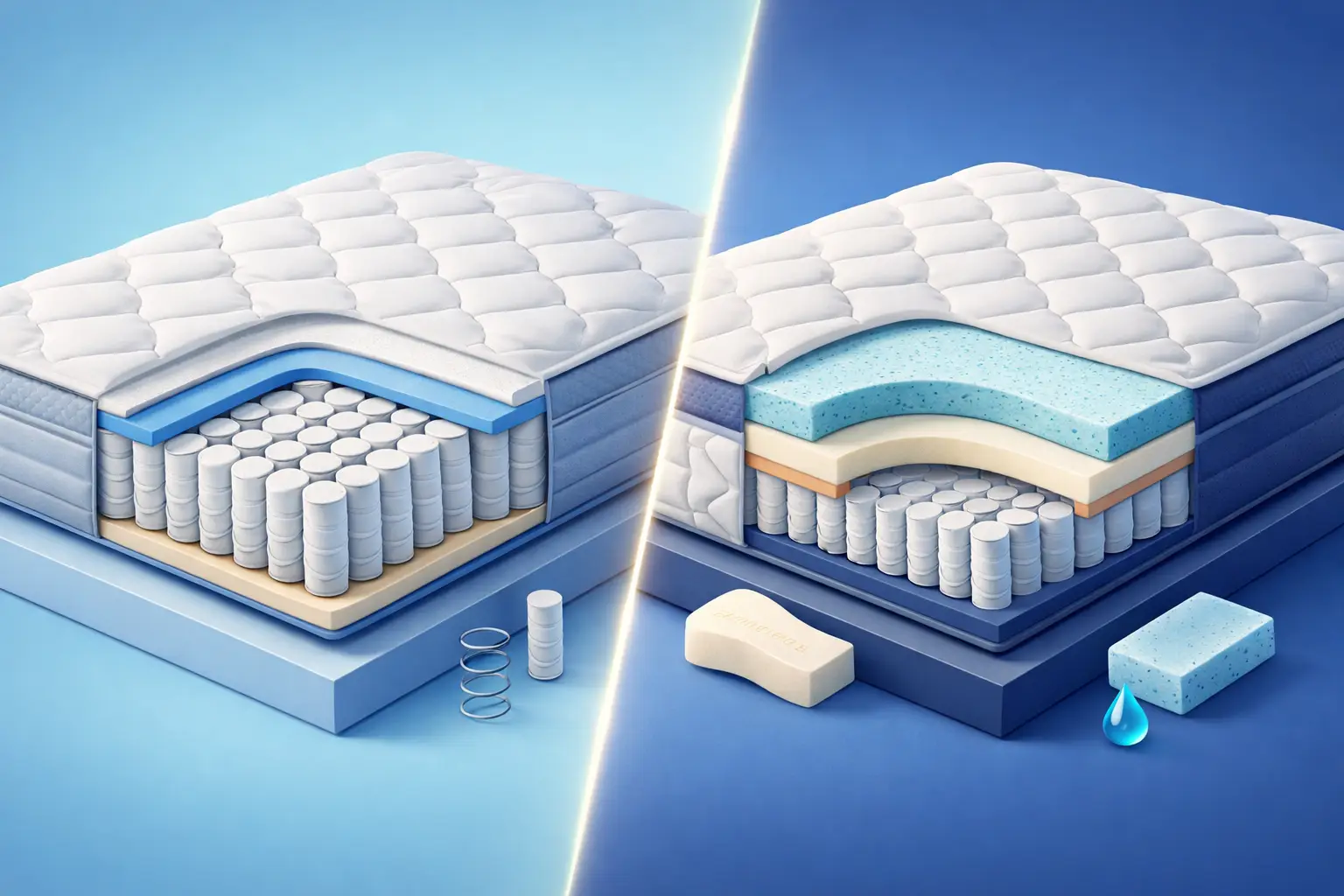
A pocket spring mattress is built around individually wrapped coils that move more independently than traditional open-coil systems. This gives it targeted support, reduced motion transfer, and a more responsive feel. The layers above the springs are usually thinner and more straightforward, so you feel more of the spring system doing the work.
A hybrid mattress also uses a spring support core in many cases, often pocketed coils, but adds more substantial comfort layers on top. These may include memory foam, gel-infused memory foam, latex, or other cushioning materials. The goal is to combine the support and airflow of springs with the pressure relief and contouring of foam or latex.
That single construction difference affects comfort, pressure relief, heat management, edge support, body contouring, and how the mattress responds when you move.
Pocket spring mattresses usually feel more lifted and more responsive. When you lie down, the springs compress in the areas carrying weight while the rest of the surface stays more stable. Many sleepers describe this as supportive without feeling stuck.
This construction often works well for people who prefer a traditional mattress feel with better motion isolation than older innerspring designs. It can also be a practical choice for combination sleepers because the surface is easier to move across. If you turn from your back to your side during the night, a pocket spring mattress usually keeps that movement natural.
Another benefit is airflow. Since springs create open space inside the mattress, heat tends to dissipate more easily than in all-foam builds. In warmer climates or for sleepers who naturally run hot, that matters.
That said, not every pocket spring mattress feels the same. The coil count, spring gauge, and the comfort layers above the springs all influence the final result. Some feel firmer and flatter. Others add enough cushioning to soften the surface without becoming deeply contouring.
A hybrid mattress generally feels more layered. You still get support from the spring base, but the upper comfort materials create a more cushioned and body-conforming surface. Depending on the materials used, a hybrid can feel plush, balanced, or more pressure-relieving than a standard pocket spring model.
This is often where side sleepers notice a difference first. Shoulders and hips usually press more deeply into the mattress, so the added foam or latex layers in a hybrid can help spread pressure more evenly. For many people, that leads to a more comfortable surface, especially if they have sensitive joints or wake up with pressure points.
Hybrids can also feel more refined in terms of motion control. If one partner moves frequently, the upper foam layers absorb some of that movement before it reaches the other side of the bed. That does not mean every hybrid isolates motion perfectly, but in many cases it performs better than a simpler spring-led design.
The trade-off is response. Some hybrids, especially those with thicker memory foam layers, feel slower when you move. If you like a mattress that feels quick and buoyant, a hybrid may feel slightly more cushioned than you want.
One of the most common misunderstandings in mattress shopping is treating support and firmness as the same thing. They are connected, but they are not identical.
Support is about how well the mattress keeps your spine in a healthier position. Firmness is about how hard or soft the surface feels. A hybrid can feel softer at the top and still provide strong support because the coil system underneath is carrying the load. A pocket spring mattress can feel firmer on the surface but may not relieve pressure as effectively for certain body types.
This matters if you are buying based on comfort labels alone. A back sleeper may prefer the cleaner, more supportive feel of a pocket spring mattress. A side sleeper may still need the deeper cushioning of a hybrid, even if both mattresses are rated medium.
This is one of the clearest pocket spring vs hybrid mattress differences.
Pocket spring mattresses usually offer lighter contouring. You get support where your body presses down, but the mattress does not usually hug the body to the same extent. For sleepers who prefer a flatter, more on-top-of-the-bed sensation, that can be a strong advantage.
Hybrid mattresses usually offer better pressure relief because the comfort layers do more of the shaping around the body. This can be especially helpful for shoulders, hips, and lower back areas. If you often wake with soreness or numbness, the added cushioning in a hybrid may be worth serious consideration.
Still, more contouring is not automatically better. Some sleepers feel more comfortable on a surface with less sink and a more straightforward support response. That is why personal preference matters as much as construction.
For couples, motion transfer can heavily influence satisfaction. Pocket spring mattresses already perform better than older connected-coil designs because each spring works more independently. But hybrids often go a step further when thicker foam layers absorb movement at the surface.
Edge support depends on the overall build, not just whether the mattress is pocket spring or hybrid. Some models use reinforced perimeter coils, which can make sitting or sleeping near the edge feel more stable. This is useful for couples sharing the bed or anyone who wants to use the full sleep surface.
Temperature regulation is often where pocket spring mattresses hold a natural advantage. Their simpler, more breathable build tends to trap less heat. Hybrids can still sleep cool, especially when they use gel-infused foams, breathable fabrics, or latex, but thicker comfort layers may retain more warmth than a spring-dominant design.
If you sleep on your back or change positions often, a pocket spring mattress may feel easier to live with. It tends to provide a responsive, balanced surface that supports movement without too much sink.
If you sleep on your side, a hybrid often delivers better comfort at the pressure points. The added comfort layers can reduce shoulder and hip strain while still keeping the body supported from underneath.
If you share a bed, a hybrid may offer an advantage in motion isolation, especially if your partner moves frequently. If you prioritize airflow and a more traditional supportive feel, a pocket spring mattress may be the better fit.
Body weight also plays a role. Heavier sleepers may benefit from a well-built hybrid or a stronger pocket spring design, depending on the firmness level and coil structure. What matters is not just the category, but whether the mattress construction is matched to your support needs.
Product names can make these categories sound more different or more similar than they really are. The best way to shop is to look past the headline and focus on what is inside the mattress.
Check whether the support core uses pocketed coils. Then look at the comfort layers above it. If those upper layers are relatively modest, you are likely looking at a pocket spring feel. If there are thicker layers of memory foam, gel foam, latex, or other cushioning materials, you are moving into hybrid territory.
It also helps to think about the problem you are trying to solve. If your concern is movement from a partner, pressure on your shoulders, or wanting a more cushioned sleep surface, a hybrid may align better. If your concern is a cleaner supportive feel, easier movement, and stronger airflow, a pocket spring mattress may make more sense.
A guided selection process is useful here because comfort is personal. At Towell Mattress ME, that consultant-led approach helps narrow choices based on sleep position, support preference, and mattress feel instead of guesswork.
There is no universal winner between these two mattress types. A pocket spring mattress often suits sleepers who want responsive support, breathability, and a less enveloping feel. A hybrid often suits sleepers who want stronger pressure relief, more cushioning, and better motion absorption.
The right decision comes from matching mattress construction to your actual sleep habits, not just the label. When you focus on feel, support needs, and how the mattress will perform over time, the choice becomes much clearer. Buy for the way you sleep now, and your mattress is far more likely to feel right long after delivery day.
