
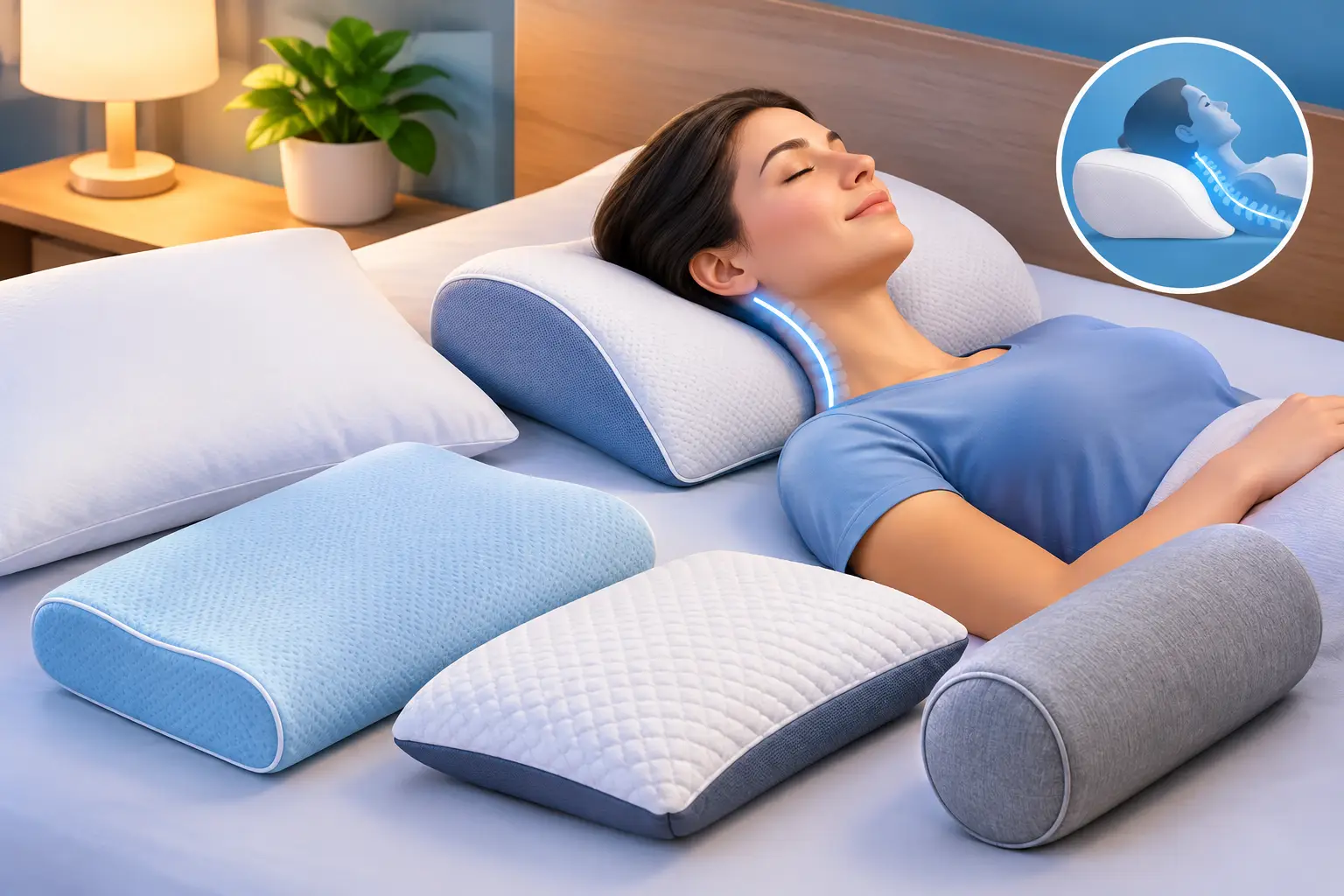
Waking up with a tight neck, sore shoulders, or a headache that fades only after you get moving is often a pillow-fit problem. The best pillows for neck stiffness do not simply feel soft or luxurious at first touch. They hold your head at a height that keeps your neck in line with the rest of your spine for the way you actually sleep.
A pillow can feel comfortable for ten minutes in a showroom and still be the wrong choice after seven hours. Your sleep position, shoulder width, mattress firmness, and preference for a plush or supportive feel all affect the right fit. The goal is not to force your neck into a perfectly flat position. It is to give it steady, even support without pushing your head too far forward, backward, or sideways.
The most useful pillow for a stiff neck balances three things: loft, firmness, and pressure relief. Loft is the pillow’s height. Firmness determines how much that height changes once your head rests on it. Pressure relief helps reduce uncomfortable pressure around the head, jaw, shoulders, and upper back.
When these elements are wrong, your neck muscles may spend the night working to stabilize your head. A pillow that is too high can tilt the chin toward the chest. One that is too low can allow the head to drop backward or sideways. A pillow that begins at the right height but compresses too much can create the same problem by morning.
The best choice depends on your body and sleeping habits. There is no single pillow material or shape that works equally well for every sleeper, which is why matching the pillow to your position matters more than following a one-size-fits-all recommendation.
Side sleeping creates the largest gap between the mattress and the head because the shoulder sits between them. Most side sleepers need a medium-high or high-loft pillow with enough structure to prevent the head from dipping toward the mattress.
A firmer foam, latex, or adjustable-fill pillow often works well because it can maintain its shape through the night. The right height should leave your nose roughly in line with the center of your body, rather than angled down toward the bed or up toward the ceiling. Broad-shouldered sleepers and those using a softer mattress may need more loft, since the shoulder can sink deeper into the sleep surface.
If you switch between side and back sleeping, an adjustable pillow is especially practical. You can remove fill until it supports your neck without feeling overbuilt when you roll onto your back.
Back sleepers generally need less height than side sleepers, but they still need more support than a flat, worn-out pillow can provide. A medium-loft pillow with gentle contouring can support the natural curve at the base of the neck while keeping the head from tipping forward.
Memory foam and contoured cervical designs are common choices here. They may feel firmer than traditional fiber-filled pillows, but their slower response can help keep the head stable. If you prefer a more traditional pillow shape, look for one that has resilient fill and does not flatten quickly under the weight of your head.
A back sleeper should be able to lie comfortably without feeling the chin press toward the chest. If your neck feels stretched or your throat feels compressed, the pillow is likely too high.
Sleeping on your stomach naturally rotates the neck to one side, so this position can contribute to stiffness even with a good pillow. If you cannot comfortably change positions, choose a soft, low-loft pillow that keeps additional neck bending to a minimum. Some stomach sleepers are most comfortable with an extremely thin pillow or no pillow under the head, while using a small pillow under the hips to reduce strain in the lower back.
A thick foam pillow is usually not a good match for stomach sleeping. It can lift the head too high and increase rotation through the neck. The trade-off is that a very low pillow may not give enough cushioning if you also sleep on your side, making a low-profile adjustable design a better compromise for combination sleepers.
The fill affects both the feel of the pillow and how consistently it supports you through the night.
Memory foam is a strong option for sleepers who want close contouring and reliable shape retention. Solid memory foam pillows can feel stable and supportive, while shredded memory foam options offer more adjustability. Some sleepers find foam retains warmth, so gel-infused foam or breathable covers can be helpful if you tend to sleep hot.
Latex pillows are responsive, resilient, and supportive without the slower sink of memory foam. They are often a good choice for people who dislike the feeling of being cradled too deeply. Latex can suit side and back sleepers who want the pillow to bounce back when they change position.
Fiberfill and down-alternative pillows have a familiar, softer feel. Higher-quality versions can work well for stomach sleepers or anyone who prefers a plush surface, but they may need more frequent fluffing and replacement. For neck stiffness, avoid a soft fill that collapses completely, especially if you sleep on your side.
Feather and down pillows can be adjusted by redistributing the fill, but they may not provide consistent support for every sleeper. They are best for those who like a moldable pillow and are willing to reshape it as needed. A supportive inner core paired with a softer outer layer can offer a useful middle ground.
Pillow shopping should not be separated from mattress support. On a firm mattress, your shoulders stay more elevated, so you may need a slightly higher pillow for side sleeping. On a plush mattress, your shoulders and hips sink in, reducing the gap your pillow has to fill.
This is why a pillow that worked on an older mattress may no longer feel right after changing your sleep surface. It is also why testing a pillow while lying flat on a display bed that feels very different from your own can be misleading. Consider your mattress construction, its comfort level, and how much your shoulders settle into it.
If your mattress is sagging around the shoulders or hips, even an excellent pillow may struggle to keep your spine aligned. In that case, the issue may be the combined sleep system rather than the pillow alone.
Look for patterns rather than judging one uncomfortable night. If stiffness is strongest in the morning and improves as the day goes on, your pillow setup deserves attention. Frequent pillow folding, stacking two pillows, or placing an arm underneath your pillow are also signs that the height or support is not right.
You may need a replacement if the pillow stays compressed after use, develops uneven lumps, or no longer returns to its original shape. A pillow can look clean and still be past its useful support life. Regularly washing the cover and using a protector helps maintain hygiene, but it will not restore flattened fill.
When testing a new pillow, give your body several nights to adjust unless it creates immediate discomfort. Start with your normal sleep position and pay attention to how your neck feels on waking, not just how plush the pillow feels at bedtime.
Begin with your primary sleep position, then narrow the selection by loft and fill. Side sleepers should prioritize height and stability. Back sleepers should look for medium loft with neck support. Stomach sleepers should keep the profile low and soft. Combination sleepers often get the most flexibility from adjustable-fill options.
If you are unsure between two heights, choose the option that can be adjusted rather than guessing. A mattress consultant can also help assess the relationship between your mattress comfort level, body frame, and pillow needs. At Towell Mattress ME, guided selection is designed to make that decision clearer, particularly when neck comfort and long-term support are the priority.
Persistent neck pain, numbness, weakness, pain after an injury, or stiffness accompanied by severe headaches should be discussed with a qualified healthcare professional. A supportive pillow can improve sleep posture, but it is not a substitute for medical care when symptoms are ongoing or severe.
The right pillow should disappear into your routine: your head feels supported, your shoulders can relax, and you wake ready to move instead of trying to loosen your neck before the day begins.
