
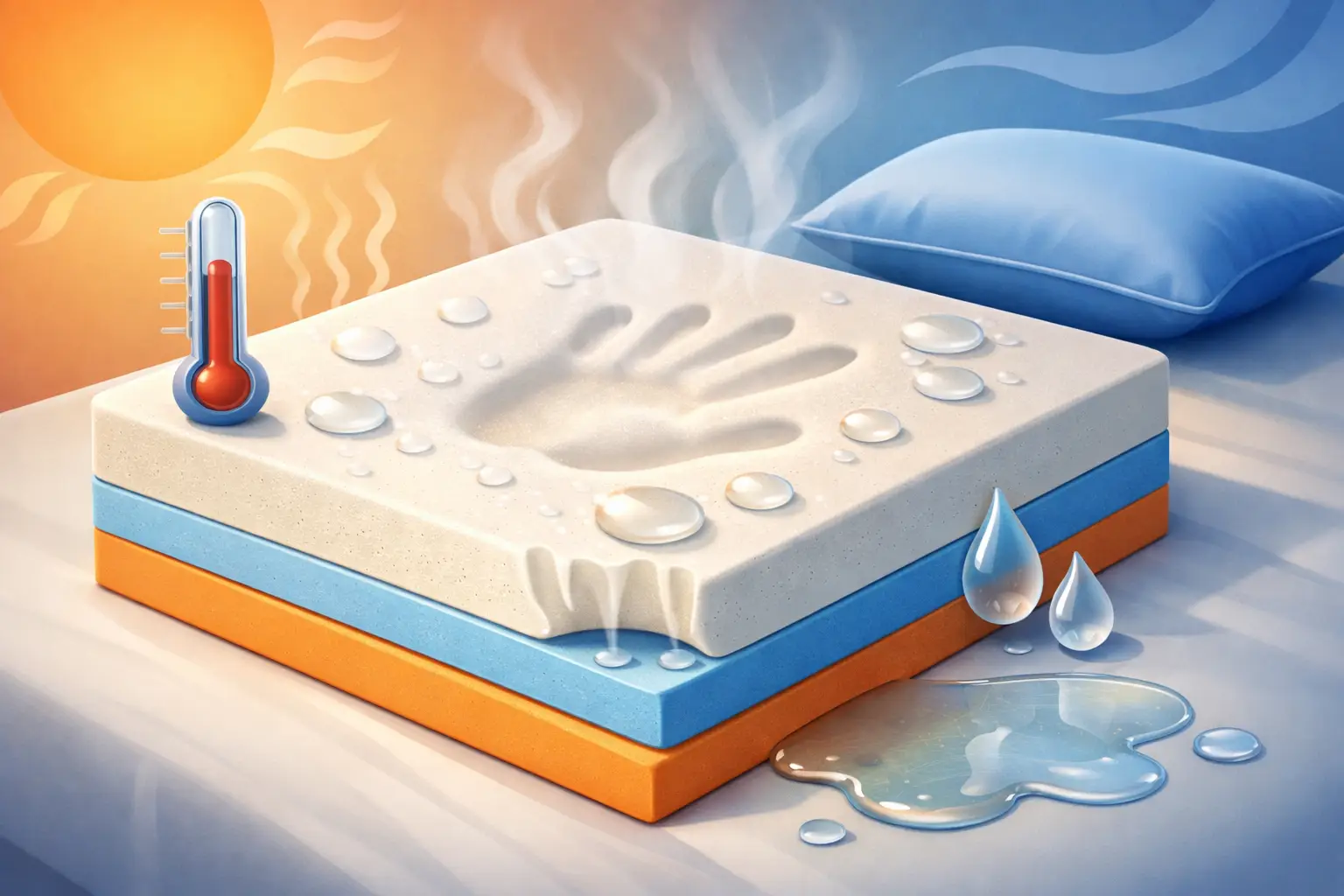
If you wake up with a damp neck, a warm back, or that familiar feeling of having slept too hot, you are asking the right question: is memory foam good for sweating? The short answer is, sometimes – but not always. Memory foam can feel very comfortable because it cushions pressure points and reduces motion transfer, yet traditional versions are known for holding more heat than other mattress materials.
That does not mean every memory foam mattress sleeps hot. Construction matters. So does the climate in your room, the type of cover on the mattress, your body temperature, and even the protector and sheets you use. For many sleepers, the real answer is not whether memory foam is good or bad for sweating in general, but which type of memory foam is built to handle heat better.
Memory foam has a mixed reputation for hot sleepers because of how it is designed. It responds to body heat and pressure, then molds around the sleeper. That close contouring is what many people love. It can help with side sleeping comfort, reduce pressure at the shoulders and hips, and create a more supported feel.
The trade-off is airflow. Traditional memory foam is denser than many other mattress materials, and when it hugs the body closely, less air moves around you. Less airflow can mean more heat retention. If you already tend to sweat at night, that can become noticeable.
So, is memory foam good for sweating? Standard, older-style memory foam often is not the best fit for people who sleep hot. Newer memory foam designs can be much better, especially when they include cooling features and are paired with breathable support layers.
Heat buildup on a mattress usually comes from more than one source. Memory foam gets most of the blame, but the full picture is a little broader.
First, dense foam absorbs and stores heat more easily than spring systems with open air channels. Second, deep contouring can increase contact between your body and the mattress surface, leaving less room for air circulation. Third, some mattress covers and protectors trap warmth even if the comfort layer underneath is designed to sleep cooler.
This is why one memory foam mattress can feel warm while another feels balanced. The foam itself matters, but the overall mattress design matters just as much.
A memory foam comfort layer over a supportive coil unit often sleeps cooler than an all-foam build. Coils create space for air to move through the mattress. The same is true when the foam is not excessively thick or overly dense.
Open-cell foams, perforated latex-like transition layers, and breathable knit covers can also improve temperature regulation. If a mattress combines several of these features, it may suit a sleeper who likes the feel of memory foam but worries about overheating.
A mattress cannot work alone. If your bedroom stays warm, your bedding is heavy, and your protector is waterproof but not breathable, even a cooling mattress may still feel hotter than expected.
For people in warmer climates, this matters even more. Air conditioning, sheet fabric, and room ventilation all affect whether a mattress feels comfortable through the night.
Not all memory foam is the same. If you want the pressure relief of foam without as much heat buildup, there are several features worth looking for.
Gel-infused memory foam is a common improvement. The gel is added to help disperse heat away from the body rather than letting it stay concentrated near the sleep surface. It does not turn a mattress cold, but it can help it feel less stuffy than traditional foam.
Open-cell memory foam is another useful option. This material is engineered with a structure that allows more airflow than conventional dense foam. Again, the effect is moderation rather than a dramatic cooling blast, but for many sleepers that is enough to reduce night sweating.
Hybrid construction can help too. If you like the feel of memory foam but tend to overheat, a mattress with memory foam comfort layers and a pocket spring support core often offers a better balance. You still get contouring and pressure relief, but with more internal airflow than a full foam mattress.
If sweating is one of your main concerns, focus less on the word memory foam and more on the full specification of the mattress.
A breathable cover is important because that is the first surface your body touches. Cooling fabrics, moisture-wicking textiles, and stretch knits tend to perform better than heavy, less breathable covers.
The thickness of the memory foam layer matters as well. A very deep memory foam top can create a more enveloping feel, which some people enjoy but others find too warm. A more moderate comfort layer often gives enough contouring without as much heat retention.
Support also affects temperature. If a mattress lets you sink too deeply, your body will have more surface contact with the bed, and that often increases warmth. A mattress that keeps you properly supported can reduce that trapped feeling.
This part is often overlooked. A non-breathable protector can hold heat and moisture at the surface, making any mattress feel warmer. The same goes for synthetic sheets that do not wick moisture well.
If you sweat easily, breathable cotton or similar moisture-friendly bedding can help your mattress perform the way it was designed to. This is especially important if you are investing in cooling materials and want to feel the benefit.
If you are an extreme hot sleeper, have frequent night sweats, or strongly dislike being hugged by the mattress, traditional all-foam memory foam may not be your best match. In those cases, you may be more comfortable with a hybrid, a latex mattress, or a mattress with a cooler overall construction.
This is also true for people who sleep in very warm rooms or use thick bedding year-round. In those settings, even improved memory foam can feel warmer than other options.
That said, some sleepers assume they are “too hot” for memory foam when the real issue is that they are on the wrong version of it. A well-designed gel memory foam or hybrid model can feel very different from an older dense foam mattress.
If pressure relief is a top priority, memory foam may still be worth considering. Side sleepers, couples sensitive to movement, and people who want a more cushioning feel often prefer it for good reason.
The goal is not to reject memory foam completely, but to choose it carefully. If your body needs contouring support for comfort, there are cooler variations that may suit you better than a basic foam model. This is where guided mattress selection can be especially useful, because comfort and temperature needs do not always point to the same construction.
If you are comparing options and asking is memory foam good for sweating, start with your sleep habits rather than a label. Do you sleep hot every night or only in warmer months? Do you want a body-hugging feel or a more lifted surface? Are pressure relief and motion isolation important, or is cooling your top priority?
Then look at the mattress build as a whole. Gel-infused memory foam, breathable covers, moderate contouring, and airflow-friendly support layers are all positive signs. If you want extra reassurance, a consultant-led approach can help narrow down choices based on both comfort preference and heat sensitivity.
At Towell Mattress ME, this kind of fit-focused guidance is central to choosing the right sleep surface. That matters because the best mattress is rarely the one with the most features on paper. It is the one that matches how you actually sleep.
Memory foam is not automatically bad for sweating, but it is not automatically good either. Traditional memory foam tends to retain more heat, while newer cooling versions can work well for many sleepers. The difference comes down to materials, airflow, support, and the bedding you pair with it.
If you love the feel of memory foam, you may not need to give it up. You may simply need a better-built version of it – one designed to relieve pressure without trapping as much heat. A mattress should help you rest comfortably, and if sweating is getting in the way, the right construction can make that easier night after night.
