
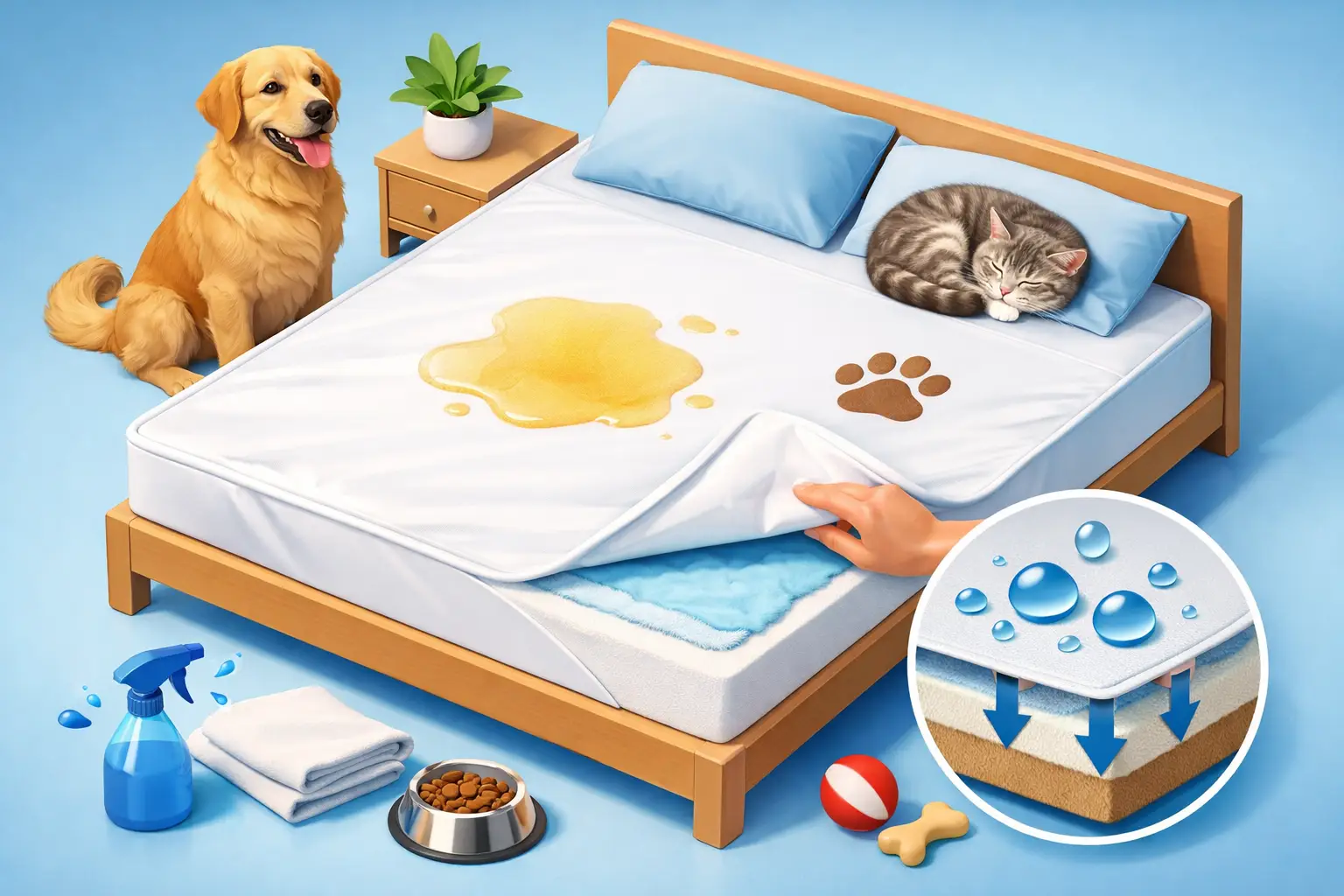
A pet accident on the bed can soak through fitted sheets faster than most people expect. A quality mattress protector for pet accidents creates a practical barrier between the incident and the mattress itself, helping you avoid lingering odors, moisture damage, and an uncomfortable cleaning process.
For households with puppies, senior pets, anxious animals, or cats that occasionally ignore the litter box, this is not a minor accessory. It is a layer of protection for one of the most-used pieces of furniture in the home. The right protector should keep the mattress dry without making the bed feel hot, stiff, or noisy.
A mattress is difficult to clean properly once liquid reaches its internal layers. Foam, fiber padding, and fabric quilting can absorb moisture, while spring mattresses may trap liquid in comfort materials below the surface. Even when the cover looks clean after spot treatment, moisture and odor can remain beneath it.
Pet urine is particularly challenging because it contains compounds that can leave a persistent smell if they are not addressed quickly. Repeated accidents can also affect the mattress’s freshness and hygiene over time. A protector cannot prevent the accident, but it prevents the liquid from reaching the mattress core in the first place.
This matters whether you sleep on foam, memory foam, latex, pocket spring, or Bonnell spring construction. Every mattress benefits from a clean, dry sleep surface, and a protector is much easier to remove and wash than a full mattress.
Not every mattress cover offers the same level of protection. A basic fitted sheet, mattress pad, or decorative cover may improve comfort, but it may not stop moisture from passing through. When pet accidents are a realistic concern, look for a true waterproof mattress protector.
The essential feature is a waterproof layer that blocks liquids while remaining soft and flexible. This layer is commonly placed beneath a fabric sleep surface, so it protects without changing the feel of the mattress too dramatically.
Water resistance is not the same as waterproofing. A water-resistant fabric may handle a small spill for a short period, but it can allow liquid through if the accident is larger or remains on the bed for several minutes. For pets, choose protection designed to form a dependable barrier.
A waterproof protector should not make the bed feel like plastic. Better designs combine the moisture barrier with a breathable top fabric that supports airflow and helps reduce heat buildup.
This is especially relevant for sleepers who already find memory foam or a thick comfort layer warm. If heat retention is a concern, select a protector with a breathable surface and avoid unnecessarily padded styles. Extra cushioning can be useful when you want a softer feel, but it may alter the comfort level you chose when buying the mattress.
A protector only works well when it stays in place. Look for deep, elasticized pockets that fit securely around the mattress sides. Measure the mattress depth before choosing, particularly if you use a pillow top, plush mattress, or thick foam model.
A loose protector can bunch beneath the sheet, shift during sleep, and leave areas exposed. For adjustable beds, a flexible fitted design is also helpful because the protector needs to move with the mattress as the base changes position.
Pet-related messes require prompt cleaning, so washability matters. A protector should be easy to remove, machine washable, and suitable for regular laundering according to its care label.
It is wise to keep a second protector at home. One can go straight into the wash while the other is placed on the bed immediately. This is especially useful during puppy training, when caring for an older pet, or when a pet is recovering from illness.
These products are often grouped together, but they serve different purposes. Understanding the difference helps you buy the level of coverage your household actually needs.
A fitted mattress protector covers the top and usually the sides of the mattress. It is the most convenient choice for routine pet accidents because it is simple to remove and replace. For most homes, this is the best starting point.
A mattress pad adds a layer of cushioning and may offer limited moisture protection. If it is not explicitly waterproof, do not rely on it for pet accidents. Its role is mainly comfort, not dependable liquid defense.
A full mattress encasement wraps around the entire mattress and closes with a zipper. It offers complete coverage and can be useful when you want protection on the underside as well as the top and sides. The trade-off is that it takes more effort to install and remove. An encasement can be a sensible long-term option for guest rooms, rental properties, or situations where accidents happen frequently.
Start with the mattress size, then check its depth. A protector that fits a standard mattress may not fit correctly over a thick pillow top or luxury comfort build. Stretchy side skirts can provide more flexibility, but they still have a depth limit.
Also consider how your pet uses the bed. If your dog sleeps at the foot of the bed occasionally, a standard fitted waterproof protector may be all you need. If a pet sleeps on the bed every night, is in training, or has recurring bladder issues, a full encasement plus a washable top protector can offer added reassurance.
For family homes, avoid products that create excessive noise when you move. A crinkly protector can affect sleep quality and may even discourage a sensitive pet from settling comfortably. A soft, quiet surface makes the protective layer easier to live with every day.
Even the best protector should be checked after an accident. Remove the bedding and protector as soon as possible, then inspect the mattress surface. If the protector did its job, the mattress should be dry.
Wash the protector following its care instructions. Avoid using excessive heat unless the label permits it, since high temperatures can weaken some waterproof membranes over time. Before remaking the bed, make sure the protector is completely dry.
If liquid has reached the mattress, blot the area with a clean, dry towel rather than rubbing it deeper into the fabric. Use a suitable mattress-safe cleaner sparingly, and allow the mattress to air dry fully before covering it again. Do not place sheets over a damp mattress, as trapped moisture can create unpleasant odors and hygiene concerns.
Some shoppers worry that a mattress protector will take away from the feel of a premium mattress. That can happen if the protector is overly thick, poorly fitted, or made from stiff materials. A well-chosen waterproof protector should preserve the comfort profile of the mattress while adding practical protection.
This is why product selection should match both the mattress and the household. A thin, breathable protector is often ideal when maintaining the feel of a memory foam, latex, or gel-infused mattress matters most. A more substantial option may suit a child’s bed, a pet-friendly guest room, or a mattress that needs more frequent cleaning.
At Towell Mattress ME, mattress consultants can help customers match a protector to the mattress depth, construction, and level of protection required. The goal is straightforward: keep the bed comfortable while reducing the risk that a single accident becomes a mattress replacement problem.
A pet belongs in the home, and sometimes that means unexpected messes. Keep a washable waterproof protector on the bed, keep a spare ready in the linen closet, and let your mattress remain the clean, comfortable place it was made to be.
