
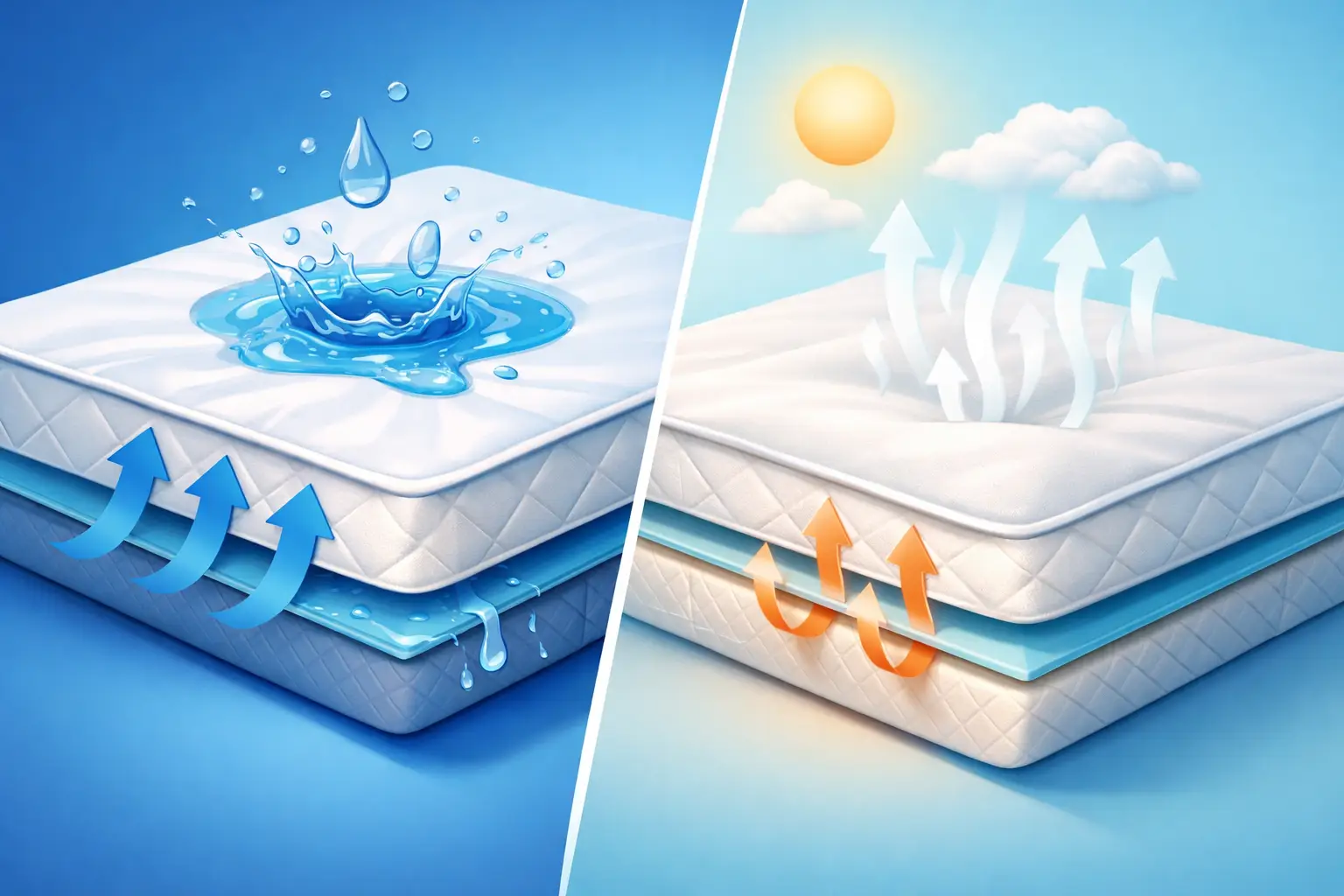
A spilled drink, nighttime sweat, a child climbing into bed after a snack, or a pet settling at the foot of the mattress can all leave more than a temporary mess. A mattress protector waterproof vs breathable comparison matters because protection should not come at the cost of a hot, noisy, uncomfortable bed. The right choice keeps liquids away from the mattress while allowing heat and moisture to move away from your body.
For most households, the best answer is not simply “waterproof” or “breathable.” It is a protector that provides dependable liquid protection with a construction that supports a cooler, more natural sleep surface. The balance you need depends on who uses the bed, how warm they sleep, and the type of mattress underneath.
A waterproof mattress protector is designed to stop liquid from reaching the mattress. Its key layer is usually a thin membrane, often placed beneath a soft fabric surface. This barrier helps protect against spills, sweat, accidents, and other moisture that could stain upholstery, create odors, or affect the condition of the mattress over time.
A breathable protector focuses on airflow and moisture vapor transfer. It allows air and body heat to circulate more easily than a dense, fully sealed cover. Good breathability can help reduce the clammy feeling some sleepers experience, especially in warm bedrooms or on mattresses that already retain heat, such as certain memory foam models.
These features are not opposites. Many quality protectors are both waterproof and breathable. The difference is in how effectively the membrane and fabric work together. A poorly made waterproof layer may feel plasticky, trap warmth, or make noise when you move. A well-designed version uses a thinner, quieter barrier combined with an absorbent top fabric, so the bed remains more comfortable while the mattress stays protected.
When shoppers hear “waterproof,” they sometimes expect a heavy vinyl cover that wraps every side of the mattress. That style offers a high level of barrier protection, but it can noticeably change the feel and temperature of the bed. It may suit specific care needs, but it is rarely the first choice for everyday comfort.
Most modern fitted protectors protect the top sleeping surface and often extend down the sides with a stretchable skirt. This design keeps the protector securely in place and preserves more of the mattress’s original feel. It is practical for family bedrooms, guest rooms, and everyday use because it is easier to remove and wash.
A breathable protector should help moisture vapor pass through the sleeping surface instead of holding it against your skin. This is particularly useful for people who sleep warm, experience night sweats, or use a mattress with pressure-relieving foam layers.
The top fabric also matters. Cotton, Tencel-style fibers, bamboo-derived fabrics, and certain performance knits can feel softer and more absorbent than basic synthetic coverings. The membrane underneath still provides the liquid barrier, but the top layer influences how dry, cool, and smooth the protector feels through your fitted sheet.
A mattress protector sits directly between you and your mattress, even when covered by a sheet. A thick quilted protector can add a slight layer of cushioning, which may be welcome on a firm mattress but may also soften the response of a carefully selected comfort layer. A thin fitted protector has less effect on the feel and is often preferred for memory foam, latex, and pocket spring mattresses where contouring or responsiveness is important.
Temperature is the next consideration. If you already sleep warm, a dense padded protector or non-breathable waterproof coating can make the bed feel warmer. Look for a smooth, lightweight construction with clear breathable waterproof performance. If your bedroom is heavily air-conditioned and you prefer a plusher surface, a lightly padded protector may be comfortable without creating excessive heat.
Noise is another sign worth checking. A protector should move quietly when you turn over. Crinkling is not just an annoyance – it can make a new mattress feel less refined and may disturb light sleepers. A fabric-faced, flexible membrane is generally a better everyday option than a stiff protective layer.
Start with the risk you are trying to manage. Every mattress benefits from a protector because body oils, perspiration, and minor spills can gradually affect the upholstery. However, some situations call for stronger waterproof performance than others.
For a child’s bed, a dependable waterproof protector is usually the priority. Choose one that is easy to remove, machine washable, and deep enough to fit the mattress securely. Breathability still helps, particularly for warm sleepers, but reliable liquid resistance should come first.
For adults who sleep hot or use a foam or gel memory foam mattress, a breathable waterproof protector is usually the better balance. It protects the mattress from everyday moisture without adding a heavy, heat-trapping layer. A thin profile will also let the mattress’s pressure-relieving qualities do their job.
For guest rooms, select a protector that offers simple, all-around protection and a soft finish. Guests should not feel as though they are sleeping on a cover. A quiet, fitted style protects the mattress between visits while keeping the bed welcoming and easy to prepare.
For older adults, medical-care settings, or households managing frequent accidents, consider the practical demands of washing and replacement. A protector needs to be both protective and manageable. In these cases, keeping an extra protector on hand can make bed changes quicker and reduce the chance that the mattress is left exposed.
For hospitality use, consistency is essential. Protectors should fit securely across the mattress sizes in use, withstand repeated laundering, and preserve a clean, comfortable sleep surface for every guest. The correct product is one that supports housekeeping efficiency without compromising the bed’s feel.
Even an excellent protector cannot work properly if it does not fit the mattress. Measure the mattress width, length, and depth, including any pillow-top or Euro-top layers. A protector with a shallow pocket can pull loose at the corners, bunch beneath the sheet, and leave areas of the mattress exposed.
Also consider what is covered. A fitted protector primarily guards the top panel and may cover part of the sidewalls. An encasement style surrounds the entire mattress and is more suitable when complete coverage is required. Neither is automatically better. A fitted protector is easier for routine laundry, while an encasement offers broader protection and is generally left on for longer periods.
If your mattress has a warranty, use a protector from the beginning. Stains and moisture damage can complicate a warranty claim, even when the underlying issue is unrelated to a spill. Keeping the mattress clean and dry is one of the simplest ways to protect the sleep investment you have already made.
Wash a new protector before first use if the care label allows it. Then wash it regularly according to its instructions, especially after illness, accidents, or heavy sweating. Avoid high heat unless the label specifically permits it, as excessive heat can weaken waterproof membranes and reduce their useful life.
Do not use a protector as a substitute for addressing moisture in the room or on the bed. Let the mattress air out when changing bedding, use breathable sheets, and avoid placing the mattress directly against a damp wall. These habits support a fresher sleep environment and help every layer of the bed perform better.
A mattress protector should make ownership easier, not make sleep feel compromised. If you are unsure which construction suits your mattress and household, a Towell Mattress ME consultant can help match the level of waterproof protection, breathability, and fit to the way you actually sleep.
