
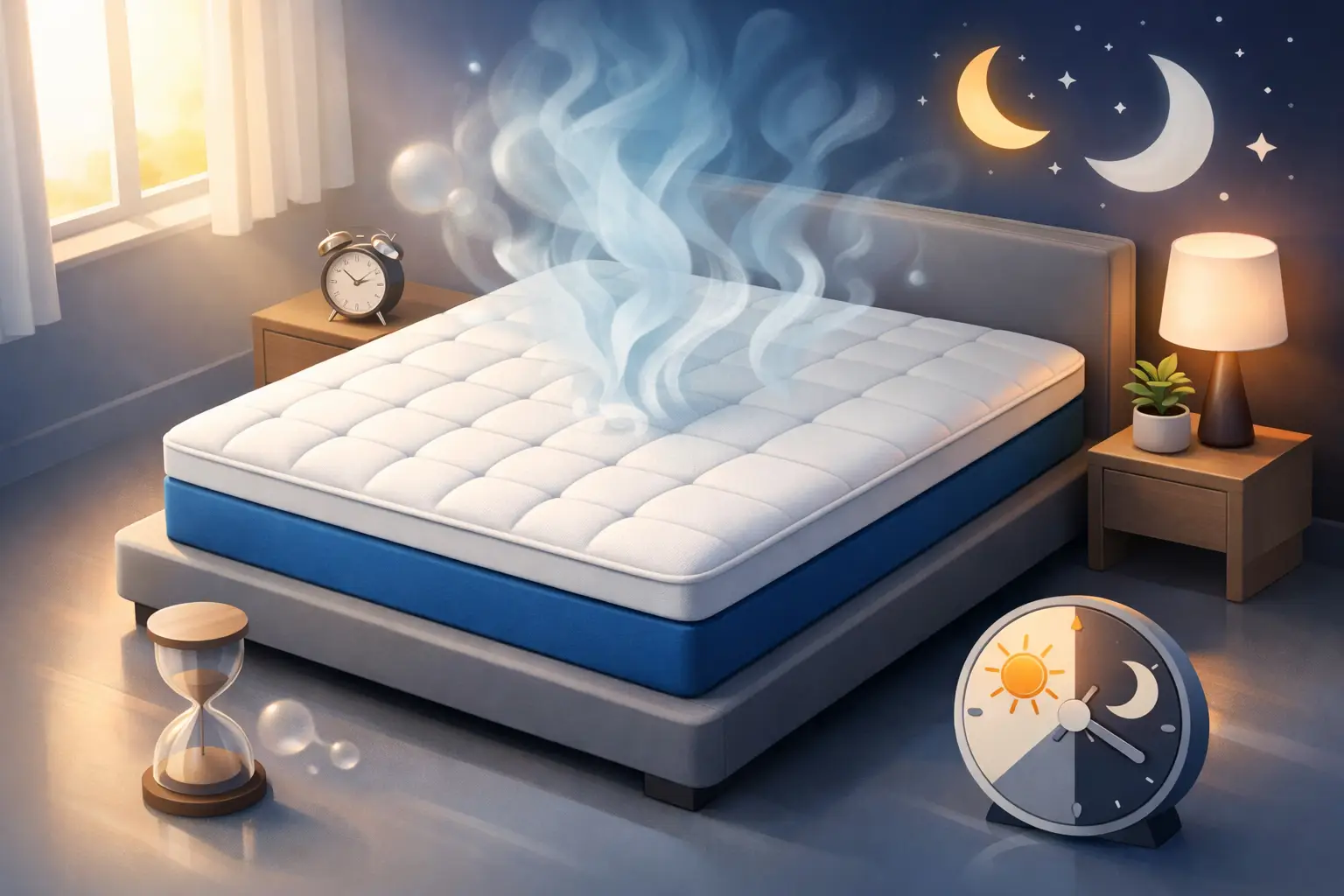
You unbox a new mattress, and before you even put the sheets on, you notice a smell. That usually leads to the same question: what is normal, and how long should it last? Memory foam mattress off gassing duration depends on the foam type, packaging, room airflow, and how sensitive you are to odor – but in most cases, the strongest smell fades within a few days.
That answer helps, but it does not tell the whole story. Some buyers notice only a mild scent for a few hours. Others may still pick up a light odor after a week or two, especially in smaller rooms or with mattresses that were tightly compressed for shipping. The key is knowing the difference between a temporary new-product smell and a problem that needs attention.
Off-gassing is the release of volatile organic compounds, or VOCs, from foam and other new materials after manufacturing and packaging. With memory foam mattresses, this is most noticeable right after unpacking because the mattress has been compressed and sealed, which concentrates odors.
For most households, the smell is strongest in the first 24 to 72 hours. After that, it usually drops off quickly. A faint odor can linger for up to one to two weeks, and in some cases a very light scent may be noticeable longer than that. That does not always mean anything is wrong. It often means the mattress is still airing out gradually.
The important point is that odor strength and off-gassing duration are not exactly the same thing. The highest odor level usually passes early. What remains afterward is often mild and only noticeable when you are close to the mattress.
Not all foam mattresses behave the same way. The memory foam mattress off gassing duration can vary because different products use different foam densities, adhesives, covers, and production methods.
Higher-density memory foam can sometimes hold odor longer simply because there is more material. Mattresses with multiple foam layers may also take longer to fully air out than simpler builds. A mattress that has been boxed for a longer period may release a stronger smell at first because those odors were trapped inside the packaging.
Room conditions matter too. In a cool room with limited airflow, odors can seem to stay around longer. In a well-ventilated room with moving air, the same mattress may smell much less noticeable within a day or two. Humidity can also affect how people perceive odors. In more humid spaces, smells often feel heavier.
Personal sensitivity is another factor that gets overlooked. Two people can stand in the same room and have very different reactions. One may barely notice anything, while another may find even a mild odor unpleasant for several days.
A mild chemical or “new foam” smell is common with freshly unpacked memory foam. This is especially true for bed-in-a-box models or any mattress that was compressed for delivery. If the odor starts to improve within the first few days, that is generally a normal pattern.
It is also normal for the mattress to need time to fully expand. During this stage, both shape and smell are settling. Many manufacturers recommend letting the mattress breathe uncovered for a period before regular use. Even if the mattress looks ready quickly, giving it extra time can help reduce odor further.
What is not normal is an odor that is extremely harsh, causes immediate irritation for most people in the room, or does not improve over time. A smell that stays unusually strong beyond a reasonable airing-out period may point to a product issue, storage problem, or packaging damage.
The simplest way to reduce odor is ventilation. Open the mattress in a room with good airflow, and if possible, open windows or run a fan. Moving air across the surface helps odors disperse more quickly than leaving the mattress in a closed room.
It also helps to remove all packaging as soon as the mattress is in the correct space. Do not leave plastic wrapping partly attached longer than necessary. The foam needs exposure to air on all sides, especially the top and sides where odor tends to concentrate at first.
If your schedule allows, let the mattress air out for at least 24 hours before sleeping on it. Longer is better if you are sensitive to smell. Some families choose to set it up in a guest room first, or unbox it in the morning so it can breathe all day.
Avoid trying to mask the smell with strong sprays or heavy fabric scents. Those can mix with the foam odor and make the room feel worse. Clean air works better than covering it up.
This is where many shoppers want a clear yes or no, but the honest answer is that it depends on the product and the individual. Off-gassing itself is common in many manufactured home goods, including mattresses, furniture, and carpets. A temporary smell does not automatically mean the mattress is unsafe.
That said, material quality matters. Foams made to recognized safety and emissions standards can provide extra reassurance for buyers who are concerned about indoor air quality. If you are shopping for a memory foam mattress and this issue is high on your list, it makes sense to ask about material certifications and product construction before purchase.
People with asthma, migraines, allergies, or higher chemical sensitivity may prefer to be more cautious even when a mattress meets standard expectations. In those cases, planning for a longer airing-out window is practical. It is not about alarm – it is about choosing the setup that feels most comfortable in your home.
If the odor is still strong after one to two weeks of proper ventilation, it is reasonable to ask questions. The same applies if the mattress has a smell that feels unusual compared to a typical new foam scent, such as a musty odor that suggests storage exposure.
It is also worth reaching out if the mattress did not fully expand, arrived with damaged packaging, or seems to have been exposed to moisture. Those issues can affect both performance and odor.
A reliable mattress retailer should be able to guide you on what is normal for that model, how long the expected airing-out period is, and whether any next step is needed. That kind of support matters because a mattress is not a small household purchase – buyers want clarity, not guesswork.
If you are preparing a new mattress for regular use, set realistic expectations. You may notice the smell right away when unboxing. By the next day, it should usually be less intense. Within a few days, many buyers find it fades into the background or disappears entirely.
If you are especially sensitive, give yourself more margin. Air it out longer, keep the room ventilated, and wait until the scent is at a level you are comfortable with. There is no benefit to rushing the first night if a little extra setup time will make the experience better.
For households furnishing a primary bedroom, guest room, or hospitality space, planning ahead helps avoid frustration. If delivery timing is flexible, try not to unbox the mattress at the last possible moment. A little breathing room makes the setup smoother and more comfortable.
A new mattress should feel like an upgrade, not a concern. If you understand what memory foam mattress off gassing duration typically looks like, you can judge the smell more calmly, air the product out properly, and move into your new sleep setup with much more confidence.
