
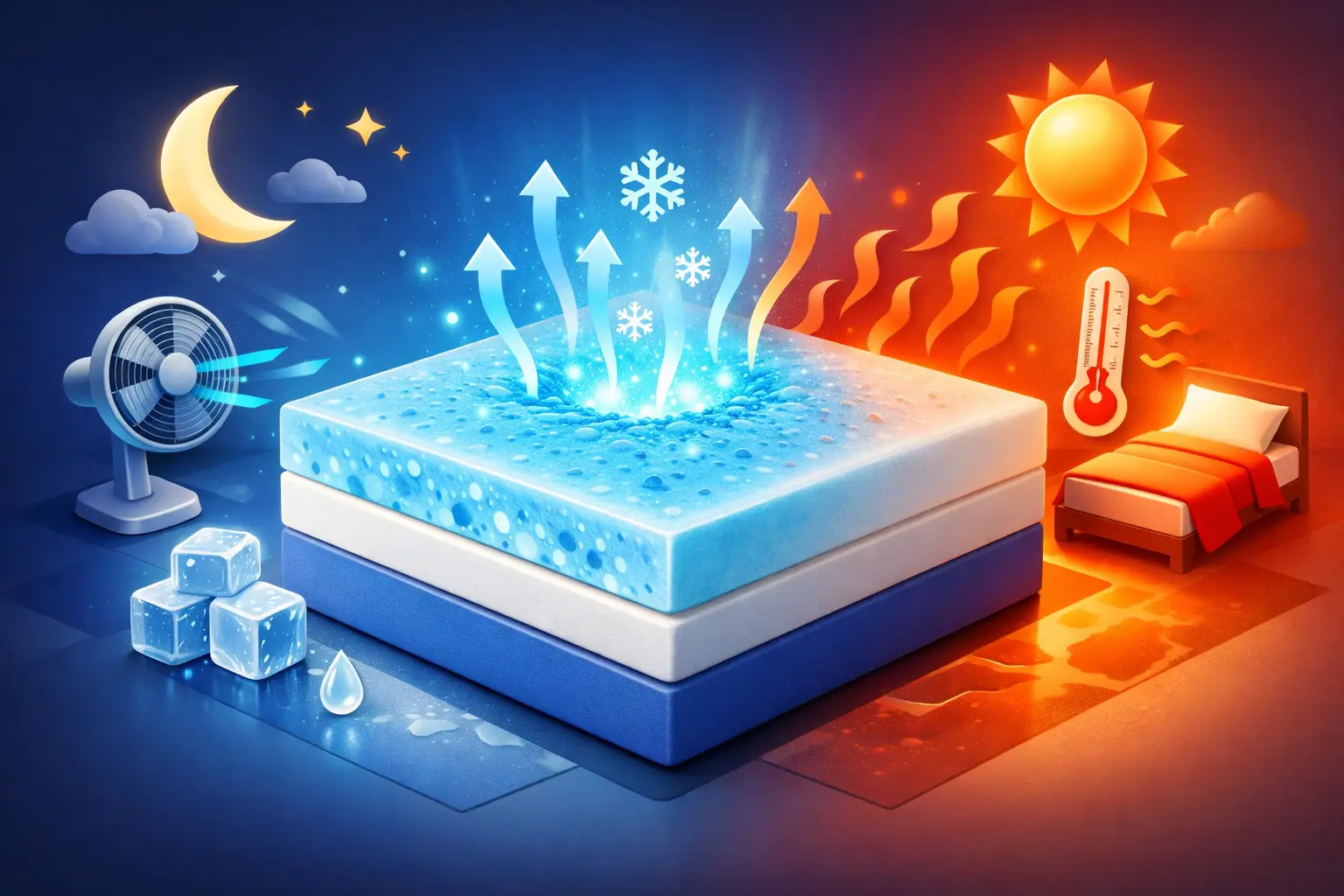
A bedroom can feel perfectly comfortable at bedtime and still leave you waking up warm at 3 a.m. That is why many shoppers ask, is gel memory foam good for heat? The short answer is yes, compared with traditional memory foam, gel memory foam can help reduce heat buildup. But it is not a guarantee that every gel foam mattress will feel cool all night.
The result depends on the amount and type of gel, the overall mattress construction, your body temperature, the room environment, and even the protector and bedding you use. For warm sleepers, the best choice is usually not simply a mattress labeled “gel.” It is a mattress designed with multiple features that manage heat while still providing the pressure relief and support you need.
Traditional visco memory foam is valued for how closely it contours to the body. It responds to warmth and pressure, allowing the material to soften around the shoulders, hips, and lower back. This can reduce pressure points and create the close, cushioned feel many sleepers prefer.
That same close contouring can be a challenge for people who sleep hot. When the foam surrounds the body, less air moves around the areas touching the mattress. Heat can become trapped between you and the sleep surface, especially if the comfort layers are thick or dense.
This does not mean standard memory foam is unsuitable for everyone. Some people prefer its warmer, more enveloping feel, particularly in cooler rooms. However, if you routinely kick off the covers, wake up sweaty, or avoid foam because of past overheating, a gel-infused design is worth considering.
Gel memory foam combines pressure-relieving memory foam with gel particles, beads, swirls, or gel-infused layers. The gel is intended to absorb and disperse some body heat rather than allowing it to concentrate in one spot. In many designs, it also changes the feel of the foam slightly, making it feel less dense or less heat-sensitive than classic memory foam.
The key word is “help.” Gel can improve the thermal performance of a foam comfort layer, but it does not actively refrigerate the mattress. After several hours of sleep, a gel foam layer will still warm up. Its job is to slow and reduce heat buildup, not to make the bed cold.
For many sleepers, that improvement is meaningful. Gel memory foam often feels more comfortable than conventional memory foam during the first part of the night and can be a practical choice for people who want foam cushioning without as much of the warm, sinking sensation.
Some gel foams feel cool immediately when you lie down because the surface draws heat away from the skin at first. This initial cool-touch sensation can be pleasant, but it is different from all-night temperature regulation.
Longer-lasting cooling depends on whether heat has a path to move away from your body. A mattress with gel foam over a breathable support system, for example, usually has a better chance of sleeping cooler than one built with several thick layers of dense foam. Look at the entire construction, not just the name of the top layer.
A well-designed mattress handles heat through several components working together. Gel memory foam is one component, but the cover, comfort layers, support core, and foundation all influence how warm the mattress feels.
A breathable cover can make a noticeable difference because it is the first layer against your body. Fabrics designed to encourage airflow or wick moisture can help keep the surface more comfortable. If you use a mattress protector, choose one that is breathable as well. A heavy, non-breathable protector can limit the benefit of a cooling mattress.
The support system matters just as much. Pocket spring mattresses generally allow more internal airflow than an all-foam core because air can circulate around the coils. A hybrid design that combines gel memory foam with pocket springs can be a strong option for hot sleepers who also want contouring comfort and responsive support.
Latex is another material to consider. Its naturally open structure and quicker response can feel more breathable than slow-moving memory foam. A mattress that combines gel foam with latex or uses a ventilated latex comfort layer may suit sleepers who want pressure relief but do not enjoy a deep body hug.
Thickness also changes the experience. More foam is not automatically better for someone who sleeps warm. Deep, soft comfort systems can allow the body to sink further into the mattress, increasing contact with the material and reducing airflow around the sleeper. A medium or medium-firm feel with targeted pressure relief may be cooler than an extra-plush design.
Gel memory foam can be a good fit if you like the pressure relief of memory foam but find traditional foam too warm. Side sleepers often appreciate how it cushions the shoulders and hips, while back sleepers may value the way it supports the natural curve of the lower back when paired with the right firmness.
It can also be helpful for couples with different comfort needs. If one partner moves often, foam can reduce motion transfer, so movement on one side of the bed is less likely to disturb the other. Choosing a gel-infused comfort layer can provide that motion isolation with better heat management than conventional memory foam alone.
However, very hot sleepers may need more than gel. If you naturally run warm, live in a consistently hot climate, use thick bedding, or prefer an exceptionally cool sleep surface, prioritize a mattress with airflow-focused construction. Gel foam paired with pocket springs, breathable fabrics, or latex is often a more reliable direction than a thick all-foam mattress with a small amount of gel added to the top layer.
A gel foam mattress may still feel warm if the comfort layer is very thick, the foam is dense, or the support core does not permit much airflow. It can also feel warmer if your body sinks deeply into the surface. The closer the foam hugs you, the more likely it is that warmth will collect around the body.
Your sleep setup can change the result as well. Foam pillows, waterproof protectors, high-thread-count sheets, and heavy duvets may retain warmth. Before replacing a mattress solely because of heat, consider whether breathable sheets, a lighter blanket, or improved room ventilation would solve part of the problem.
It is also useful to separate warmth from discomfort caused by poor support. A mattress that lets the hips sink too far can leave you tossing and turning, which may make you feel hotter and less rested. The best mattress for temperature management still needs to match your sleeping position, body type, and preferred comfort level.
Start with how you currently sleep. If you mostly sleep on your side and want pressure relief, a medium to medium-plush gel memory foam or hybrid mattress may suit you. If you sleep on your back or stomach and tend to feel warm, a medium-firm hybrid with a breathable comfort layer may offer a more balanced feel.
Ask what is inside the mattress rather than relying on a cooling claim alone. Find out whether the mattress has gel memory foam throughout the comfort layer or only near the surface. Check whether it uses pocket springs, a foam core, ventilated materials, or a breathable cover. These details tell you more about likely temperature performance than the word “gel” by itself.
Comfort is personal, so take advantage of expert guidance when available. A Mattress Consultant can help compare the feel of gel memory foam, pocket spring hybrids, latex, and other constructions based on your sleep position and warmth concerns. At Towell Mattress ME, that kind of comparison helps narrow a broad selection into a mattress that supports both your comfort preferences and practical needs.
Gel memory foam is a sensible choice for many warm sleepers, especially when it is part of a breathable, well-balanced mattress. Focus on the full construction, protect the airflow benefits with suitable bedding, and choose a comfort level that keeps you supported rather than deeply overheated.
