
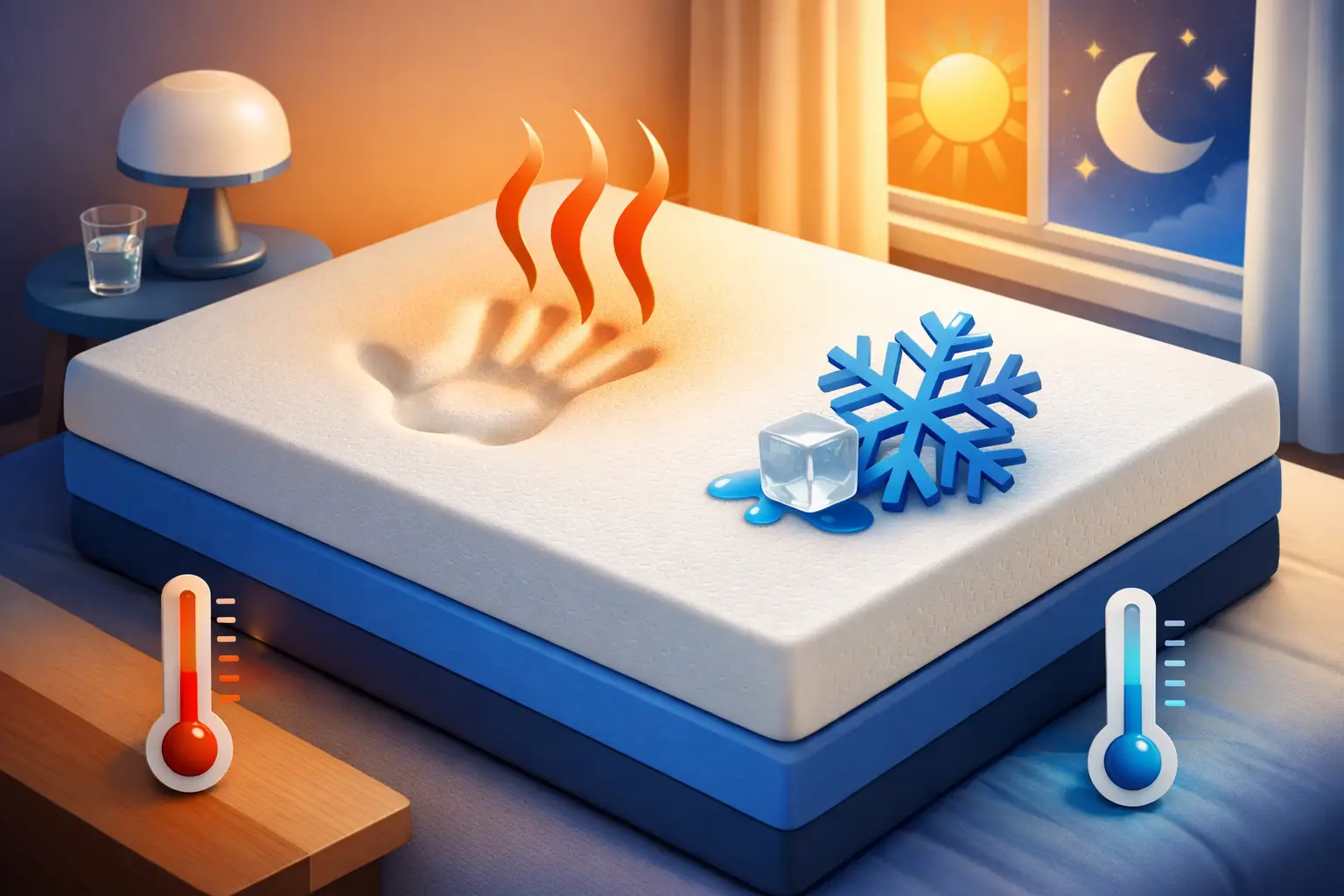
A mattress can feel supportive in the showroom yet leave you warm and restless at 2 a.m. That is why many shoppers ask, does memory foam sleep hot? The honest answer is that some memory foam can retain more body heat than other mattress materials, but the result depends heavily on the foam type, mattress construction, your bedroom environment, and how you sleep.
Traditional memory foam is known for close body contouring and pressure relief. Those qualities can be especially helpful for sleepers who want cushioning around the shoulders, hips, and lower back. However, when foam molds closely to the body, there is less air circulating around you. For a naturally warm sleeper, that can create a warmer sleep surface.
The good news is that memory foam has changed significantly. Gel-infused foams, open-cell structures, breathable covers, and hybrid constructions are designed to address heat retention without giving up the comfort that makes memory foam popular.
No. Heat is personal. One person may find a memory foam mattress comfortably cozy, while another may feel warm on the same mattress. Your body temperature, sleepwear, bedding, room temperature, and even whether you sleep alone all affect the experience.
Traditional, dense memory foam is more likely to feel warm because it responds to body heat and pressure, then contours around the body. This close hug can reduce airflow compared with a spring mattress or a more responsive latex surface. If you often wake up sweaty or throw off the covers during the night, a standard all-foam memory foam mattress may not be the best starting point.
That does not mean you need to avoid memory foam entirely. A well-designed mattress can pair memory foam with cooling features and more breathable support layers. The key is looking beyond the words “memory foam” on the label and asking what is inside the full mattress.
Memory foam itself is made of polyurethane-based foam engineered to respond slowly to pressure. As it conforms, it can cradle the body more closely than materials with a quicker response. This can feel exceptionally comfortable, but it also means heat has fewer places to escape.
Density matters as well. Denser foam can offer durable, deep contouring, but it may allow less airflow than lighter or more open foam formulations. A mattress with thick layers of traditional memory foam near the top may therefore feel warmer than one that uses a thinner comfort layer over a more breathable support system.
The mattress cover and base are also part of the temperature equation. A non-breathable cover can hold warmth near the surface. Solid foam support cores generally have less internal airflow than pocket springs, which create open space for air movement. This is why two mattresses that both include memory foam can sleep very differently.
Not every cooling claim has the same practical value. When choosing a mattress, it helps to understand how each feature is intended to work.
Gel-infused memory foam includes gel particles, beads, or swirls designed to help distribute heat away from the body. It can feel cooler than basic memory foam, particularly when you first lie down. Its effectiveness varies by construction, but gel foam is a sensible option for shoppers who like memory foam pressure relief and want a less heat-trapping feel.
Open-cell foam is designed with a structure that allows more air to move through the material. Ventilated foam may also include small perforations that support airflow. These features can help prevent heat from building up around the body over the course of the night.
A hybrid mattress combines foam comfort layers with a pocket spring support system. The springs create more space for air circulation than a solid foam core while providing responsive support. For many warm sleepers, this construction offers a practical middle ground: the pressure relief of memory foam with more breathability and easier movement.
The cover is the closest mattress component to your body, so it matters. Breathable knit fabrics, moisture-managing fibers, and quilted comfort layers can help the surface feel less stuffy. A cooling cover will not transform a very heat-retentive mattress on its own, but it can complement the materials underneath.
If temperature control is your main concern, comparing constructions is more useful than focusing on one material alone.
Pocket spring mattresses generally allow stronger airflow because the individual coils leave room for ventilation. They can be a good choice for sleepers who want a cooler, more responsive feel and easier movement when changing positions. Adding a modest layer of gel memory foam can provide pressure relief without creating the deep sink associated with thicker all-foam models.
Latex is naturally more responsive and often more breathable than traditional memory foam. It has a buoyant feel, so you sleep more on the surface rather than deeply in it. This can appeal to combination sleepers and those who dislike feeling “stuck” in a mattress.
Bonnell spring mattresses can also feel cooler due to their open coil structure, although comfort and motion transfer differ from pocket spring designs. They are often considered by shoppers seeking straightforward support and a familiar traditional mattress feel.
An all-foam mattress can still be the right choice if you value motion isolation and close contouring. Look for gel-infused or open-cell memory foam, along with a breathable cover and a construction that does not rely on very thick layers of dense foam at the top.
Start by considering where and when you feel hot. If your room is warm year-round, prioritize a mattress with airflow built into the construction, not only a cooling fabric on the surface. A pocket spring hybrid with gel memory foam is often worth considering because it balances contouring with ventilation.
Next, think about your sleep position. Side sleepers may appreciate the pressure relief of memory foam around the shoulders and hips. If they also sleep warm, they may do better with a medium-feel hybrid rather than a thick, plush all-foam mattress. Back sleepers often need stable lumbar support and may prefer a more balanced foam-and-spring construction. Stomach sleepers generally need a firmer, flatter surface to avoid excessive sinking, which can also reduce the enveloping warmth of soft foam.
Your mattress size can influence temperature too. Couples share body heat, and a smaller mattress gives that heat less room to disperse. For shared sleep, good edge support, pocket springs, and breathable materials can make a noticeable difference.
Finally, pay attention to the whole sleep setup. A mattress protector is useful for hygiene and protecting the warranty, but choose one designed to be breathable rather than heavily padded or plastic-feeling. Lightweight sheets and a room with reasonable airflow can also help your mattress perform as intended.
Memory foam remains a strong option for many sleepers, including those who sleep warm. Its ability to relieve pressure and reduce motion transfer can be valuable for couples, side sleepers, and people who prefer a more cradling comfort feel. The question is not whether memory foam is automatically hot. It is whether the specific mattress has the materials and construction that suit your temperature needs.
At Towell Mattress ME, a mattress consultant can help narrow the choice based on your sleep position, preferred feel, room conditions, and support requirements. That guidance can be particularly useful when comparing gel memory foam, latex, pocket spring hybrids, and other constructions that may look similar at first glance.
A cooler night’s sleep usually comes from choosing the right combination of comfort layer, support system, cover, and bedding. If you enjoy the pressure relief of memory foam, look for a design that manages heat thoughtfully rather than giving up the comfort you want.
