
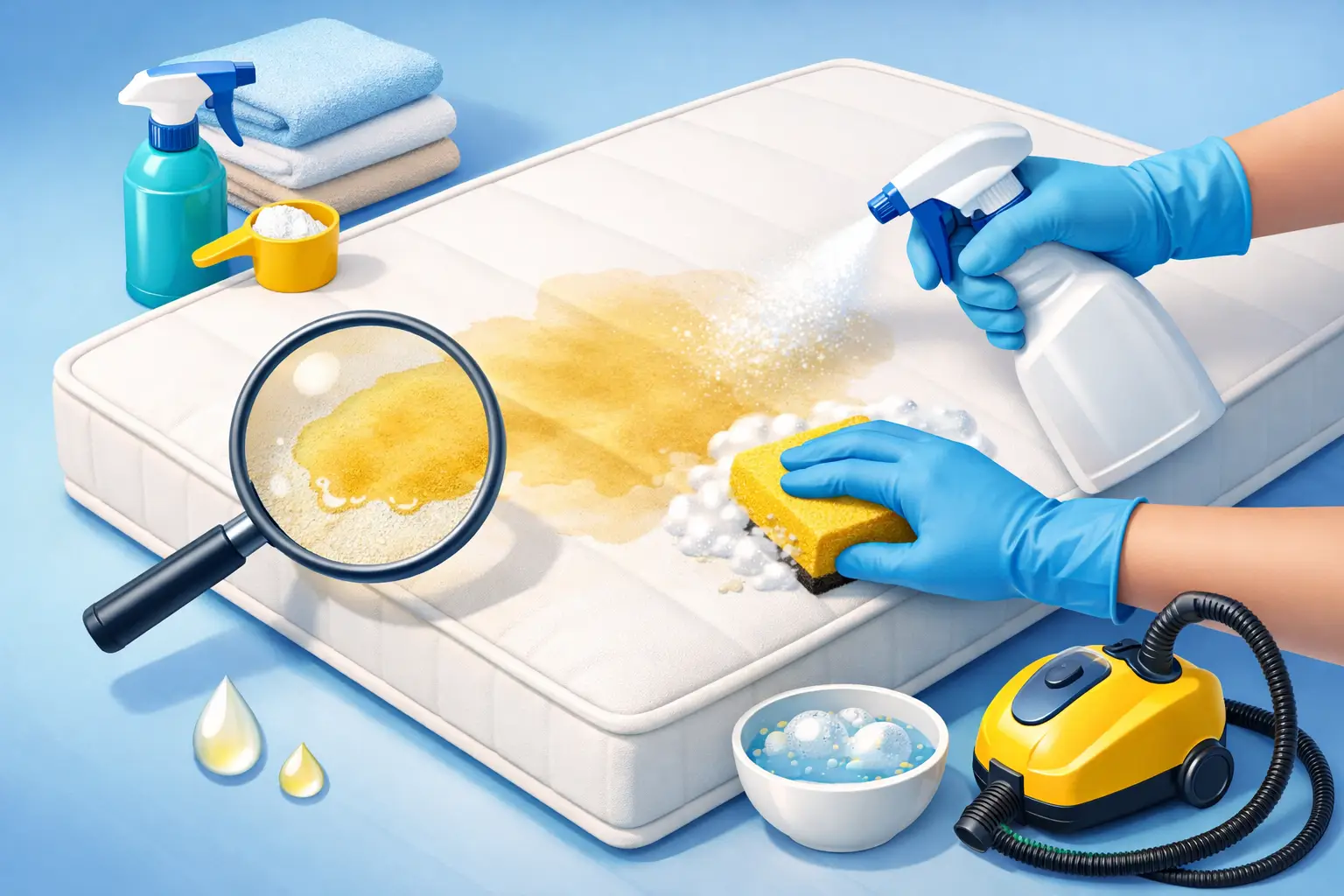
A urine accident on the bed usually feels urgent for two reasons at once – the stain you can see and the odor you know may settle deeper if you wait too long. If you need to clean urine stains on mattress surfaces properly, the goal is not just to make the fabric look better. You also need to pull out as much moisture as possible, reduce odor at the source, and avoid damaging the comfort layers inside.
That matters whether you are caring for a child’s bed, a guest room mattress, or a premium sleep surface you expect to use for years. The right cleaning method is straightforward, but the wrong one can push liquid deeper, leave a ring, or soak materials that are slow to dry.
Start by stripping the bed completely. Remove sheets, protectors, and any bedding that absorbed moisture, then wash them separately according to their care instructions. If the urine is fresh, press clean, dry towels firmly onto the affected area to absorb as much liquid as possible. Do not rub. Rubbing spreads the stain and drives moisture farther into the fabric and padding.
Once you have blotted the area, mix a small amount of mild liquid laundry detergent or dish soap with cool water. You want a light cleaning solution, not heavy foam. Dampen a clean cloth with the mixture and blot the stained section gently. Keep the fabric moist, not soaked. Mattresses are built with layered materials such as foam, quilting, fiber, springs, and in some cases memory foam or latex. Too much water can stay trapped inside and create a larger problem than the original stain.
After blotting with the cleaning solution, use another cloth dampened only with cool water to lift away any soap residue. Then blot again with dry towels. At this stage, many people stop because the stain looks lighter. That is often when odor remains. A mattress can seem clean on the surface while moisture and urine compounds remain below the top fabric.
For odor control, sprinkle baking soda generously over the cleaned area and let it sit for several hours. Overnight is even better if the mattress can stay uncovered. Baking soda helps absorb remaining moisture and reduce lingering smell. Once dry, vacuum it thoroughly with an upholstery attachment.
The best method depends on timing. Fresh urine is easier to remove because it has not fully settled into the fibers and comfort layers. Your priority is fast blotting, light cleaning, and complete drying.
Dried urine stains are more stubborn. They usually need a little more patience because the proteins and salts have already set into the fabric. In that case, after your initial dry blotting, use a solution of white vinegar and water in equal parts, applied lightly with a spray bottle or cloth. Vinegar helps break down odor-causing residue. Let it sit for 10 to 15 minutes, then blot thoroughly and follow with baking soda once the area is only slightly damp.
There is a trade-off here. Vinegar can be effective, but using too much can leave the mattress wet for too long and create its own smell until fully dry. The key is controlled application, not saturation.
A mattress is not like a removable cushion cover or a washable throw. The internal build matters. Foam and memory foam, in particular, can hold moisture if over-wetted, while quilted tops may develop water rings if cleaned unevenly.
Avoid hot water because heat can set the stain and odor more firmly. Avoid harsh bleach unless the care label specifically allows it, which is uncommon for mattresses. Bleach can damage fabric, weaken stitching, and affect foams. You should also avoid pouring liquid directly onto the mattress. Even if the stain is large, a slow and controlled approach is safer than flooding the area.
Steam cleaning sounds like a strong solution, but it depends on the mattress construction. Some materials do not respond well to heat and excess moisture. If you are dealing with a specialized mattress, especially one with memory foam, gel foam, latex, or medical-support layers, it is smarter to use a surface-safe cleaning method and keep moisture levels low.
If the stain is no longer visible but the smell remains, repeat the treatment in stages rather than all at once. First, lightly apply the vinegar-and-water solution or an enzyme-based upholstery-safe cleaner that is approved for urine removal. Enzyme cleaners can be very effective because they target the organic compounds causing the odor, not just the surface mark.
Before using any specialty cleaner, test a small hidden area if possible. Not every mattress fabric reacts the same way. A premium knit cover, pillow top, or tightly quilted surface may show spotting if a product is too strong.
After treatment, blot carefully, apply baking soda again, and allow full drying with strong air circulation. Use a fan, open windows if conditions allow, or run air conditioning to help the mattress dry faster. The mattress should feel fully dry before you remake the bed. If it still feels cool or damp to the touch, give it more time.
Not all mattresses handle accidents in the same way. A traditional spring mattress with breathable fill may dry faster than dense memory foam. A visco memory foam or gel-infused foam model can be very comfortable, but these materials can retain moisture longer if liquid reaches below the cover. Latex tends to be more resilient, but it still should not be soaked.
This is why mattress-safe cleaning is as much about protecting the product as it is about removing the stain. If you have invested in a comfort level and support system that suits your sleep needs, preserving the mattress structure matters. Over-cleaning with too much liquid can affect feel, hygiene, and long-term durability.
If urine accidents are a possibility in your home, a quality mattress protector is one of the most practical sleep accessories you can add. It creates a barrier between the surface and the comfort layers, which makes cleanup far easier and helps protect the mattress from deep staining and odor retention.
This is especially useful in family homes, guest rooms, and hospitality settings where mattresses need to stay fresh and serviceable over time. A protector will not eliminate the need for cleaning bedding, but it can prevent moisture from reaching the mattress core, where cleanup becomes far more difficult.
It also reduces risk. When a mattress stays cleaner internally, it is easier to maintain comfort and hygiene without repeated spot treatments that may wear on the cover fabric.
Sometimes the right answer is that it depends on the extent of the accident. If the urine soaked deeply, happened more than once, or has been left untreated for an extended period, home spot cleaning may improve the mattress without fully resolving the issue. Persistent odor, discoloration over a large area, or signs of trapped moisture may call for professional assessment.
For households managing repeated accidents, it may also be worth reviewing whether the current mattress setup is adequately protected. A mattress protector, washable bedding layers, and a mattress chosen for your comfort and practical needs can make ongoing care much easier.
Towell Mattress ME approaches sleep products the same way customers make real purchase decisions – with comfort, durability, and long-term practicality in mind. Cleaning matters, but prevention and product fit matter too.
Even after the stain is gone, let the mattress air out periodically and vacuum the sleep surface as part of normal care. This will not remove deep stains after the fact, but it helps maintain a fresher sleeping environment and gives you a chance to catch any problem early.
A clean mattress does not require aggressive treatment. It requires quick action, controlled moisture, and a method that respects the materials inside. If you act early and avoid over-wetting, most urine stains can be handled effectively at home while protecting the comfort and support you rely on every night.
The most helpful rule is simple: treat the mattress like a long-term investment, not just a fabric surface, and your cleanup decisions will usually be the right ones.
