
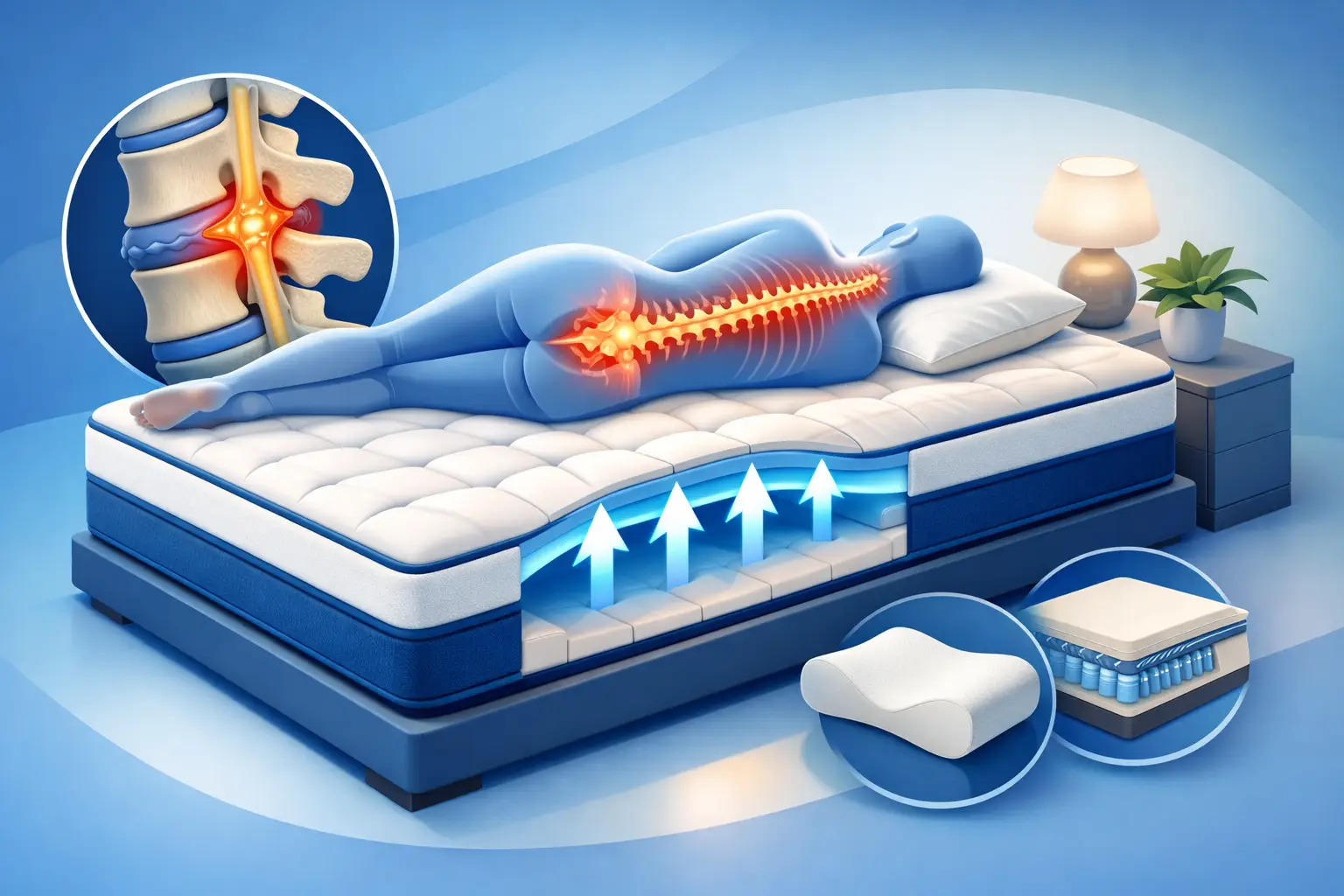
Waking up with leg pain, lower back pressure, or numbness can make mattress shopping feel more urgent than optional. If you are looking for a mattress for spinal stenosis support, the goal is not simply a softer bed or a firmer one. The right choice is the one that keeps your spine better aligned, cushions pressure points, and helps you stay comfortable through the night without creating extra strain.
Spinal stenosis can affect people differently, which is why there is no single mattress type that works for everyone. Some sleepers need more contouring around the hips and shoulders. Others need a steadier, more supportive surface that prevents the midsection from sinking too deeply. A good mattress should support your body evenly while reducing pressure in the areas that tend to flare up during sleep.
Spinal stenosis happens when spaces within the spine narrow and place pressure on nerves. For many people, symptoms show up as back pain, tingling, numbness, weakness, or pain that radiates into the hips or legs. That means mattress comfort is not just about preference. It directly affects how the body settles, how muscles relax, and whether pressure builds overnight.
A mattress that is too soft can let the pelvis dip and throw the spine out of neutral alignment. A mattress that is too hard can create sharp pressure at the shoulders, lower back, and hips. Most people with spinal stenosis do best with balanced support – enough stability to hold the spine in a healthier position, with enough cushioning to avoid pressure buildup.
This is where mattress construction matters. The feel on the surface is only part of the story. What sits underneath that comfort layer often determines whether the mattress continues to support the body properly over time.
The best place to start is firmness, but not in the oversimplified way most shoppers hear about. Medium-firm is often a strong starting point because it tends to combine support and pressure relief well. Still, body weight, sleep position, and sensitivity levels matter.
A lighter sleeper may find a firm mattress too unyielding, especially if they sleep on their side. A heavier sleeper may need a stronger support core to avoid sagging through the middle. If you switch positions during the night, a mattress with responsive support can make movement easier and reduce the stuck feeling some deep memory foam beds create.
When evaluating a mattress, look for three things working together: spinal alignment, pressure relief, and consistency. Alignment means the mattress supports the natural curve of the spine instead of forcing it into an awkward shape. Pressure relief means the surface cushions the joints and reduces concentrated force on painful areas. Consistency means the bed holds that comfort and support night after night, not just during the first few weeks.
Firmness should match your body, not just the diagnosis. Many shoppers assume back pain always means choosing the firmest option available. In practice, that can backfire. If the mattress is too rigid, muscles may stay tense because the body cannot settle naturally into the surface.
A medium-firm feel often works well because it supports the lower back while still allowing light contouring. If symptoms are more noticeable in the lumbar area, zoned support or a denser core can help keep the hips from dropping too low. If pressure around the shoulders and hips is the bigger issue, a comfort layer with foam, latex, or gel memory foam can help spread weight more evenly.
Different mattress materials create different support patterns. Memory foam can contour closely, which many sleepers find helpful for pressure relief. Gel-infused memory foam can offer a similar feel with a less heat-trapping surface for those who sleep warm. Latex tends to feel more buoyant and responsive, giving pressure relief without the deep sink some people dislike.
Pocket spring mattresses can also be a strong option for spinal stenosis support because they often provide targeted support with better motion control than older interconnected spring systems. A quality hybrid build that combines pocket springs with supportive foam layers can give a good mix of structure and comfort.
Traditional Bonnell spring mattresses may suit some shoppers who prefer a more straightforward, firmer feel, but they usually offer less contouring than pocket spring or foam-based constructions. For sleepers dealing with nerve-related discomfort, that reduced pressure relief can be a trade-off worth considering.
There is no perfect mattress category for every sleeper, but some constructions tend to perform better than others for this need.
A well-made memory foam or gel memory foam mattress can work well if you need pressure relief around the hips, shoulders, and lower back. These models are often helpful for side sleepers and for people whose symptoms flare when pressure points are not cushioned properly.
A latex mattress is often a strong fit for shoppers who want support with a more lifted feel. It contours, but usually not as deeply as memory foam. That can be helpful if you want easier movement in bed or simply prefer a mattress that feels supportive without feeling too soft.
A pocket spring mattress, especially one paired with quality comfort layers, can suit back and combination sleepers who need structured support and better airflow. It can also be a practical option for couples because it balances support and movement control well.
Medical or health-focused mattresses can be worth considering when they are built specifically to promote posture support, pressure distribution, and long-term comfort. What matters most is not the label itself, but the actual design inside the mattress.
Your usual sleep position should guide your final decision.
Side sleepers usually need more pressure relief at the shoulders and hips. If the mattress is too firm, these areas take too much force and the spine can tilt unnaturally. A medium or medium-firm mattress with contouring comfort layers often works best.
Back sleepers generally need stronger lumbar support so the lower back does not flatten or overarch. A medium-firm to firm mattress can be a better fit here, especially if it keeps the hips level with the shoulders.
Stomach sleeping is usually the hardest position for spinal discomfort because it can place extra stress on the lower back and neck. If you sleep this way, a firmer, more supportive mattress may reduce sagging, but many people with spinal stenosis feel better when they shift to side or back sleeping with the right pillow support.
Sometimes the mattress problem is obvious. Sometimes it shows up gradually. If you wake up stiffer than when you went to bed, notice more numbness or leg discomfort overnight, or feel better after sleeping somewhere else, your mattress may not be supporting you well enough.
Visible sagging is another clear warning sign, especially in the center third of the bed where the hips rest. Even high-quality materials wear over time, and once the support core starts to fail, alignment usually follows. A mattress that worked a few years ago may no longer be the right mattress for spinal stenosis support today.
Focus less on marketing terms and more on how the mattress is built. Ask what is inside, how the support core works, what type of comfort layers are used, and whether the feel is likely to match your sleep position and body type. For many shoppers, guided selection makes the process easier because symptoms, comfort preference, and support needs all have to be balanced together.
This is especially important if you are choosing between foam, latex, pocket spring, or health-focused mattress options. The right answer depends on whether you need deeper pressure relief, stronger pushback support, easier movement, or a more temperature-neutral sleep surface. It is rarely one feature alone that makes the difference.
A trusted mattress consultant can help narrow the field much faster by matching mattress construction to your comfort needs instead of leaving you to guess from product labels alone. For shoppers who want a practical, guided approach, that support can remove a lot of uncertainty from the process.
The best mattress for spinal stenosis support should help your body rest in a more natural position, not fight the bed all night. If a mattress gives you stable support, gentle pressure relief, and a feel that matches the way you sleep, you are much more likely to wake up with less strain and better rest.
