
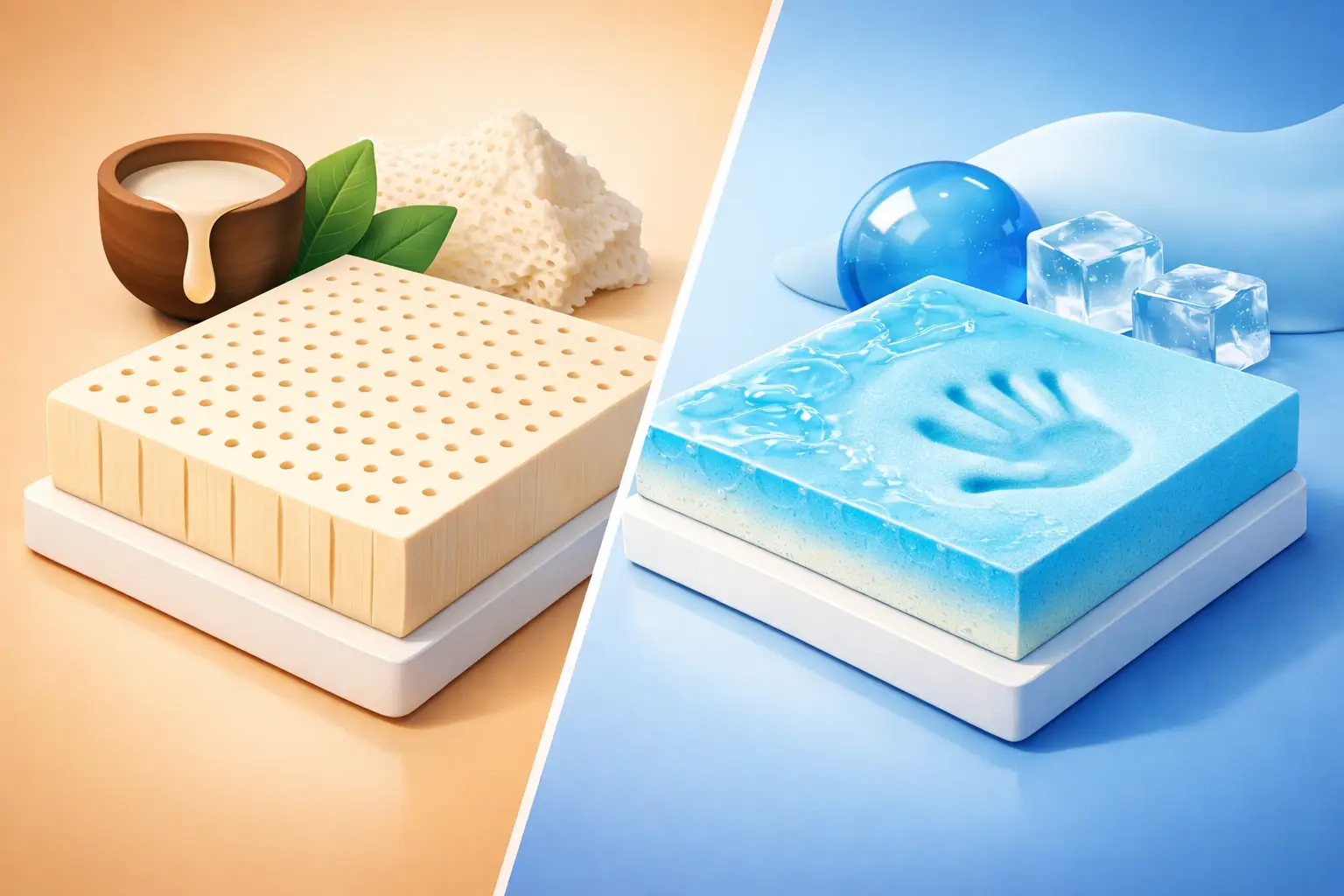
A mattress can feel great for five minutes in a showroom and still be the wrong fit after a full night’s sleep. That is exactly why the latex vs gel memory foam question matters. These two materials are often grouped together as premium comfort options, but they create very different sleep experiences in terms of feel, temperature, pressure relief, and long-term support.
If you are choosing for your home, guest room, or even a hospitality setup, the goal is not to find the “best” material in general. The goal is to find the one that matches how you sleep, how warm you run at night, and how much response or cushioning your body prefers.
The simplest way to understand latex vs gel memory foam is this: latex feels buoyant and responsive, while gel memory foam feels contouring and slower to respond. Both can be comfortable and supportive, but they get there in very different ways.
Latex gently compresses under weight and pushes back quickly. It has a more lifted feel, so you sleep more on the mattress than deeply in it. Many sleepers like this because it feels easier to turn, change position, and get in and out of bed.
Gel memory foam is designed to contour more closely around the body. It softens under pressure and usually responds more slowly, which creates that cradling feel many people associate with memory foam. The gel infusion is added to help manage heat better than traditional memory foam, but the overall feel is still closer, deeper, and more pressure-relieving.
Feel is not a small detail. It often decides whether a mattress works for years or becomes uncomfortable within weeks.
If you dislike the sensation of sinking too far into a mattress, latex is usually the better match. It has a naturally elastic character, so it adapts to your body without holding you in one spot. Combination sleepers often appreciate this because shifting from your side to your back or stomach feels easier and more natural.
This also matters for couples. A mattress that responds quickly can feel more supportive during movement, especially for people who do not want a “stuck” sensation at night.
Gel memory foam is better known for close body shaping. It can cushion pressure points around the shoulders, hips, and joints very effectively, which is why many side sleepers are drawn to it. If you want that hugged, cradled feel, gel memory foam usually delivers it more clearly than latex.
The trade-off is response speed. Some sleepers love the steady, body-conforming support. Others find it harder to reposition, especially if they prefer a lighter, more lifted sleeping surface.
Cooling is one of the biggest reasons shoppers compare these materials. In warm climates and air-conditioned homes alike, heat retention can change sleep quality quickly.
Latex generally has an advantage in temperature regulation because it is more breathable and less heat-trapping by nature. Its structure allows for better airflow, and its responsive feel means less full-body sink, which can also reduce heat buildup around the sleeper.
Gel memory foam is designed to improve on standard memory foam by dispersing heat more effectively. In many cases, it does feel cooler than older, traditional memory foam. Still, it usually does not feel as naturally airy as latex. If you are very sensitive to sleeping hot, latex may feel more consistently comfortable over the course of the night.
That said, cooling is never about one layer alone. Cover fabric, quilted top layers, mattress height, room temperature, and protector choice all influence how warm or cool the bed feels.
Support and pressure relief are not the same thing, and both matter.
For sleepers with pressure buildup at the shoulders, hips, or lower back, gel memory foam can be very effective. Because it molds more closely, it helps spread body weight across the surface instead of letting heavier areas bear too much force in one spot.
This can be especially helpful for side sleepers or anyone who wants a softer, more cushioned comfort layer without losing underlying support.
Latex also relieves pressure, but in a different way. It cushions while keeping the body more elevated. Many back sleepers and combination sleepers prefer this balanced sensation because it supports alignment without the deeper contour of memory foam.
For some people, that means better comfort. For others, especially those wanting a more enveloping feel, it may not feel plush enough unless the mattress construction is specifically designed for that softness.
These details are easy to overlook online, but they matter in everyday use.
Gel memory foam usually performs very well in motion isolation. If one partner moves, gets up, or changes position, the material tends to absorb a lot of that movement rather than spreading it across the bed. Couples often notice this benefit immediately.
Latex can still reduce motion, but because it is more responsive, some movement may be more noticeable compared to memory foam. This does not make it a poor choice for couples. It simply means the feel is more active.
On ease of movement, latex often wins. The quick rebound makes changing position simpler, which can matter for older adults, restless sleepers, and anyone who prefers not to fight the mattress when turning over.
Edge support depends heavily on the full mattress build, not just the comfort material, but latex comfort layers often feel more stable near the perimeter than softer memory foam surfaces. If you sit on the side of the bed often or sleep near the edge, this is worth checking carefully.
Durability should be part of any mattress decision because comfort that fades quickly is not good value.
Latex is widely regarded as a durable material with strong long-term resilience. It tends to maintain its shape and response well over time, especially in higher-quality mattress builds. For buyers who want a comfort layer that stays more consistent year after year, latex is a strong option.
Gel memory foam can also perform well, but longevity depends more on foam density, overall construction, and how the mattress is used. Better-quality gel memory foam mattresses can offer lasting comfort, but lower-quality builds may show body impressions or softening sooner.
This is where expert guidance matters. Material name alone does not tell the whole story. The quality of the full mattress build is what determines whether the comfort remains reliable over time.
The latex vs gel memory foam decision becomes easier when you match the material to your sleep style.
Choose latex if you want a mattress that feels responsive, more breathable, and easier to move on. It is often a strong fit for combination sleepers, back sleepers, and anyone who prefers a supportive surface with less sink.
Choose gel memory foam if you want stronger contouring, better pressure relief around joints, and better motion absorption for shared sleep. It is often a natural fit for side sleepers and people who enjoy a softer, more body-hugging comfort feel.
If you are torn between the two, think about your current mattress complaints. If you feel stuck, sleep hot, or struggle to reposition, latex may solve those issues. If you feel pressure at the shoulders or hips and want more cushioning, gel memory foam may be the better direction.
One important point: very few mattresses are made from only one comfort material from top to bottom. The support core, cover, quilting, firmness level, and layer thickness all affect the final feel.
A firmer gel memory foam mattress may still feel more supportive than a very soft latex build. A latex hybrid may feel different from an all-latex design. That is why consultant-led selection is useful. At Towell Mattress ME, the focus is on helping shoppers match comfort, support, and intended use rather than choosing by material name alone.
Before making a decision, consider your sleep position, body type, heat sensitivity, and whether you sleep alone or with a partner. Those factors usually point more clearly to the right fit than marketing terms do.
The right mattress should feel comfortable not just when you first lie down, but after hours of real sleep. If you choose based on how you actually rest – not just what sounds premium – you are far more likely to end up with a mattress that feels right from the first night onward.
