
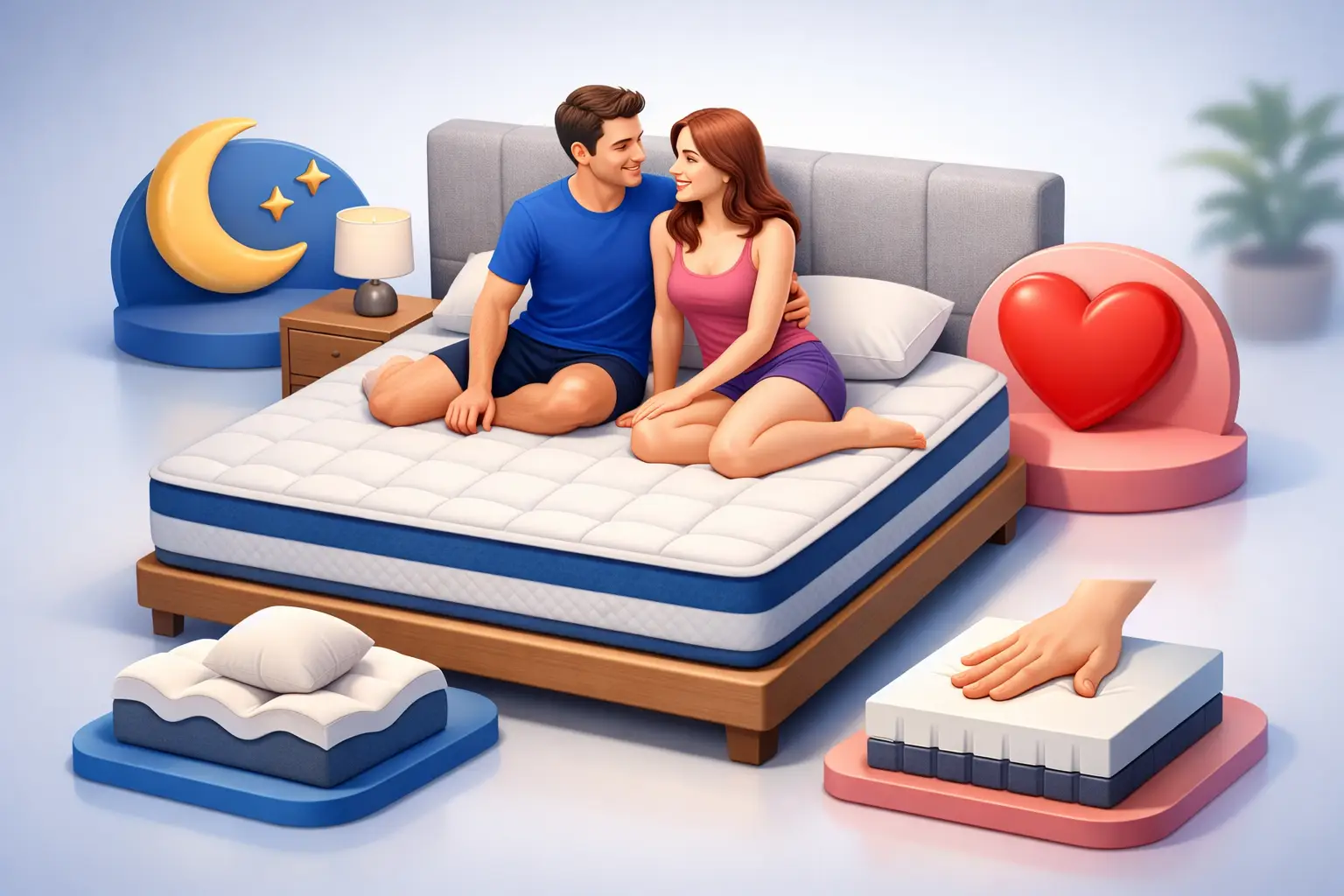
A mattress can feel excellent for one person and completely wrong once two people share it. So, is medium firm mattress good for couples? For many couples, yes. It is often the most practical starting point because it aims to balance cushioning comfort with the support needed to keep two bodies properly aligned. But firmness alone does not determine whether a bed will work for you both.
The right shared mattress must also manage motion, accommodate different body weights and sleep positions, and provide enough usable space at the edges. A medium firm feel can meet these needs very well when it is paired with the right construction.
Medium firm sits near the center of the comfort scale. It should have enough give at the surface to cushion shoulders, hips, and pressure points, while still keeping the body from sinking too deeply. This middle-ground feel is especially useful when partners have different preferences.
A back sleeper may need steady lumbar support, while a side sleeper usually needs more pressure relief around the shoulder and hip. A medium firm mattress can often serve both sleepers better than an extra-firm model that feels hard on the joints or a very soft model that allows the heavier partner to sink too far.
For couples, stability matters as much as softness. When a mattress is too plush, the middle and sleep surface may feel less stable, particularly if there is a noticeable difference in body weight. Medium firm options generally provide a more secure, level base that makes changing positions and getting in and out of bed easier.
That said, the label “medium firm” is not identical across every mattress. One medium firm foam mattress may feel very different from a medium firm pocket spring or latex mattress. Always consider the materials and support system beneath the comfort layer.
It can be, but your usual sleeping positions should guide the final choice.
Side sleepers tend to need a mattress that allows the shoulder and hip to settle in slightly. If both partners sleep on their sides, choose a medium firm model with a pressure-relieving comfort layer, such as quality memory foam, gel-infused foam, or responsive latex. The mattress should contour without creating a deep, difficult-to-move-in impression.
Back sleepers often do well with medium firm support because it helps keep the lower back from dipping. A supportive pocket spring or hybrid-style construction can be a strong option here, especially for couples who want a more buoyant feel than all-foam provides.
Stomach sleepers usually need a flatter, more supportive surface. If one partner consistently sleeps on their stomach, lean toward the firmer side of medium firm. This can reduce excessive hip sink, which may place strain on the lower back over time.
Combination sleepers, who change position during the night, frequently appreciate medium firm mattresses because they offer a balanced surface. Look for responsive materials that recover quickly when you move, rather than a comfort layer that holds the body too tightly.
Firmness is only one part of a shared sleep setup. Before deciding, look closely at these four factors:
A mattress may be described as medium firm yet still perform poorly for couples if its edges collapse, its surface transfers every movement, or it traps heat. Ask about the full construction, not just the firmness rating.
If one partner is a light sleeper, motion isolation deserves special attention. Memory foam is well known for absorbing movement, while pocket spring mattresses can also limit transfer because each spring responds more independently than a connected spring system.
Bonnell spring mattresses can offer reliable, familiar support, but they may allow more movement to travel across the surface depending on the design. They can still be suitable for couples who prefer a traditional spring feel and are not easily disturbed, but motion-sensitive sleepers may be better served by pocket springs, foam, or a combination of both.
The goal is not to eliminate all movement. A mattress should simply prevent ordinary turning, sitting up, or getting out of bed from becoming a repeated sleep interruption for the other person.
A couple does not always sleep in the center of the bed. Strong edge support gives each person more usable room and helps prevent the feeling of rolling outward when lying near the side.
This is particularly helpful when choosing a bed for a smaller room where moving up to a larger mattress size may not be practical. A well-built mattress with reinforced perimeter support can make the sleep surface feel more spacious and stable.
Medium firm is a sensible default, not a universal answer. A softer mattress may suit two lighter-weight side sleepers who need extra pressure relief and prefer a more enveloping feel. In this situation, a medium or medium-soft mattress with adequate underlying support may be more comfortable.
A firmer option may be better for partners with higher body weights, dedicated stomach sleepers, or anyone who feels their hips sinking noticeably on softer beds. Support needs can increase with body weight, and the same mattress can feel softer to one person than another.
Chronic pain, injuries, and medical requirements also call for a more personalized approach. A mattress can support healthy posture, but it is not a substitute for professional medical advice. If either partner has ongoing back, shoulder, or joint concerns, prioritize alignment and pressure relief rather than choosing based on a firmness label alone.
For many couples, a medium firm pocket spring mattress offers a strong balance of independent support, airflow, and easier movement. Pocket springs can respond separately to each sleeper, which is useful when partners have different body types or schedules.
Memory foam is a good consideration for couples who place motion isolation and body contouring at the top of their list. The trade-off is that some foam models feel warmer or less responsive, although gel-infused and breathable designs can help improve temperature comfort.
Latex offers a more responsive, resilient feel with natural airflow. It can be a good fit for couples who want pressure relief but do not enjoy the deeper hug of traditional memory foam. Quality latex also tends to be durable, which matters for a mattress supporting two people night after night.
Hybrid constructions combine a spring support unit with foam or latex comfort layers. They can be a practical option for couples who want the airflow and bounce of springs along with pressure relief at the surface. The best choice depends on which trade-offs matter most in your bedroom.
Start by discussing what disturbs each person’s sleep now. One partner may be waking from movement, while the other may have shoulder pressure or lower-back discomfort. These are more useful starting points than simply asking whether you both like a soft or firm bed.
When testing a mattress, lie down in your normal sleeping position for more than a few minutes. Notice whether your shoulders and hips feel cushioned, whether your lower back feels supported, and whether you can change position comfortably. Have one person move or get out of bed while the other remains still to assess motion transfer.
Also consider the foundation beneath the mattress. A worn or unsuitable base can affect comfort, support, and mattress performance. Confirm that the mattress is paired with a compatible, stable foundation and follow the care guidance provided with it.
Towell Mattress ME’s Mattress Consultants can help couples compare construction types, comfort feels, and support needs without reducing the decision to one label. A medium firm mattress is often an excellent place to begin, but the best shared bed is the one that lets both partners wake up rested, supported, and ready for the day.
