
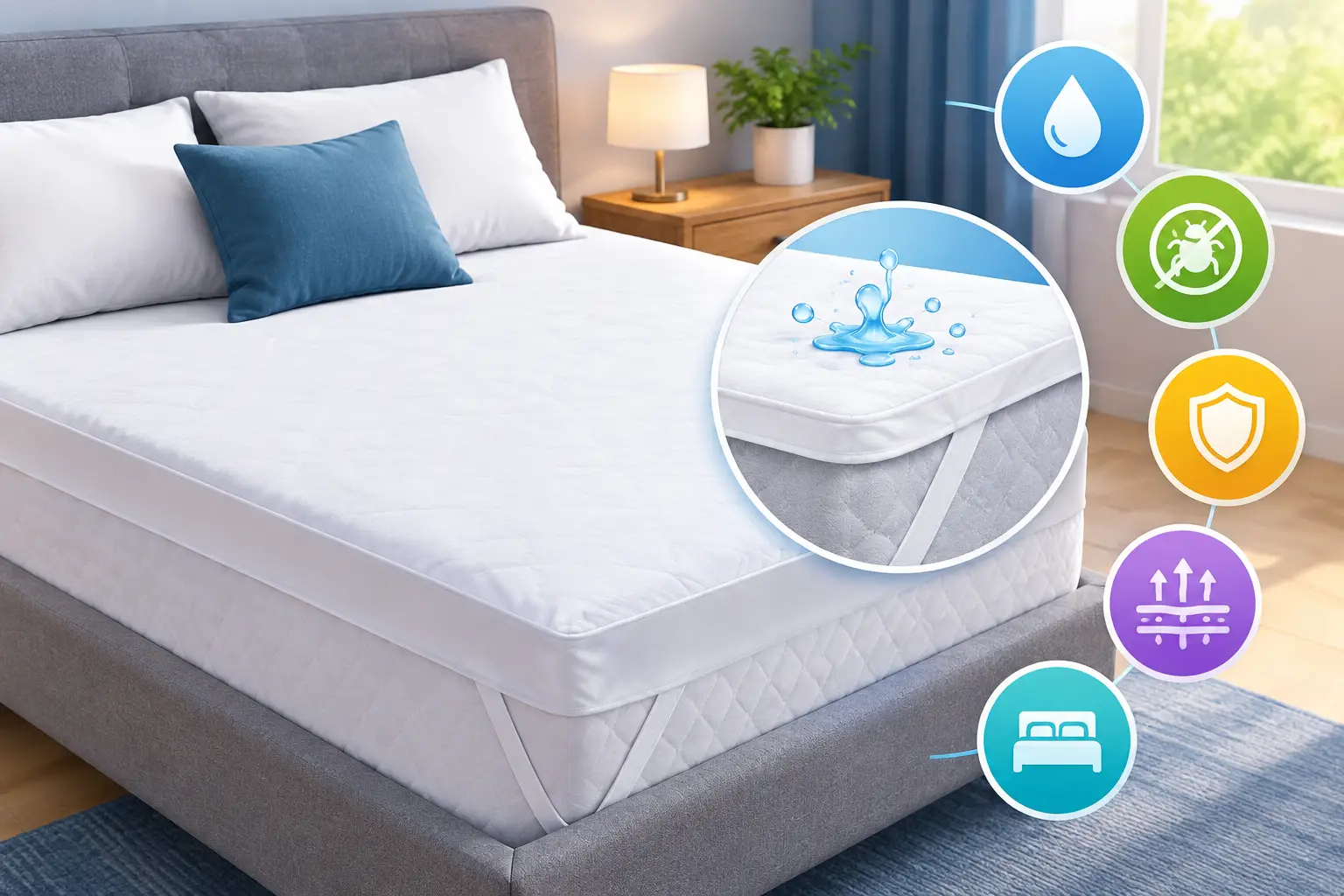
A new mattress can look perfectly clean while absorbing far more than most people expect. Night after night, it is exposed to body moisture, skin cells, accidental spills, dust, and everyday friction. So, what is a mattress protector for? Its primary job is to create a protective layer between you and the mattress, helping keep the sleep surface cleaner and in better condition for longer.
A mattress protector is a practical bedding essential, not an optional decorative layer. Whether you have chosen a supportive pocket spring mattress, a pressure-relieving memory foam model, or a premium latex design, the right protector helps safeguard the investment without changing the feel you selected.
A mattress protector fits over the mattress, usually like a fitted sheet, and sits beneath your regular bed sheet. It is designed to shield the mattress fabric and comfort layers from moisture, stains, dust, and routine wear. Unlike a thick mattress pad or topper, it is not intended to significantly change cushioning or firmness.
Its usefulness is easy to overlook until a spill, a child’s accident, illness, or an unusually warm night occurs. Mattresses are difficult to clean thoroughly because liquids and oils can move beyond the cover and into foam, fiber, or upholstery layers. Once moisture is inside, it can leave a stain, create an odor, or affect hygiene over time.
A protector gives you a washable barrier. Rather than trying to clean the mattress itself, you remove and wash the protector according to its care label. That simple step makes routine bed care more manageable for households, guest rooms, and hospitality settings.
The most recognized purpose of a mattress protector is moisture protection. Water-resistant and waterproof styles are especially useful for families with young children, pet owners, people managing nighttime perspiration, and anyone caring for an older adult or a person recovering from illness.
Not all protectors offer the same level of protection. A water-resistant protector may handle light moisture and everyday perspiration, while a waterproof design uses a barrier layer to prevent larger spills from reaching the mattress. The best choice depends on how the bed is used and the level of protection you need.
Breathability matters here. Some buyers worry that waterproof protection will feel hot or make noise when they move. Better-quality protectors are designed with breathable materials and thin protective membranes that help reduce that concern. Still, materials vary. If you sleep warm, look for a protector that clearly prioritizes airflow and moisture vapor release rather than choosing based on waterproofing alone.
Over time, mattresses can collect dust, skin flakes, and other household allergens. A protector does not replace regular cleaning or solve every allergy concern, but it adds a useful washable layer between the sleeper and the mattress.
For people who experience dust sensitivity, asthma, or seasonal allergies, this can make bed maintenance simpler. Washing the protector regularly helps reduce the buildup that would otherwise settle directly into the mattress cover. An encasement-style protector, which fully zips around the mattress, may offer more complete coverage than a fitted style for certain allergy-focused needs.
It depends on the product and the concern. A fitted protector is convenient for everyday use and easy removal. A full encasement takes longer to install but covers the sides and underside as well, which can be useful when protecting a mattress in a guest room, rental property, or high-use environment.
Mattress comfort layers are designed to support the body, but they are still affected by daily use. Sweat, body oils, friction, and repeated cleaning attempts can gradually affect the outer fabric and the materials beneath it. A protector helps limit direct exposure, keeping the mattress surface in better shape.
This does not mean a protector can prevent every form of wear. It will not stop normal settling, eliminate body impressions caused by use, or correct a mattress that no longer provides proper support. What it can do is reduce avoidable damage from stains and moisture, helping preserve the condition of the product you chose.
That matters when you want to keep your mattress clean through its expected service life. It may also be helpful when reviewing a mattress warranty. Warranty terms differ by manufacturer, but damage caused by stains, spills, or improper care can affect eligibility in some cases. Keeping the mattress protected and following care instructions is a sensible part of long-term ownership.
These products are often confused because they all sit on top of the mattress, but they serve different purposes.
A mattress protector is mainly for hygiene and protection. It is typically thin, washable, and designed to guard against moisture, stains, dust, and general surface wear.
A mattress pad usually adds a light layer of softness or quilted comfort while offering some surface protection. It may absorb minor moisture, but it is not always waterproof.
A mattress topper is thicker and is used to noticeably adjust the feel of a mattress. For example, a memory foam topper can add contouring comfort, while a firmer topper may change the surface response. A topper is not a substitute for a protector because it can absorb spills too.
For most beds, the practical order is mattress, protector, then fitted sheet. If you also use a topper, place the protector over the topper when you want to keep that layer protected as well. If your goal is to protect the mattress itself from significant moisture, confirm that the protector’s design and size work for the full bed setup.
Start by matching the protector to the exact mattress size and depth. Deep mattresses, pillow-top designs, and some luxury models need a protector with sufficient pocket depth. A protector that is too shallow may pull up at the corners, bunch beneath the sheet, or fail to cover the sides properly.
Then consider the protection level. For a primary bedroom with normal use, a breathable fitted protector may be enough. For children’s beds, guest beds, or situations where spills are more likely, a waterproof option is usually the more reliable choice. If allergies are the main concern, consider whether a zippered encasement is more appropriate.
Fabric feel is another important factor. Cotton-rich surfaces tend to feel familiar and breathable, while some performance fabrics are designed to wick moisture or dry quickly. The protector should not make your bed feel stiff, noisy, or overly warm. Since comfort is personal, choose one that supports the feel of your mattress rather than covering it with a heavy, uncomfortable layer.
At Towell Mattress ME, mattress protectors can be selected alongside your mattress so the fit, depth, and intended use are considered together. A mattress consultant can help match protection needs with your chosen comfort type, whether you are furnishing one bedroom or multiple rooms.
For ordinary household use, washing a mattress protector every one to two months is a sensible routine. Wash it sooner after spills, illness, heavy sweating, or an accident. If someone has allergies, more frequent washing may be helpful.
Always check the care label before washing and drying. High heat can damage some waterproof membranes, while fabric softeners may affect moisture-resistant performance. Keeping a spare protector on hand is convenient because you can maintain protection even while the other one is being washed.
A mattress protector is a small addition to the bed, but it handles a large share of the everyday mess a mattress should never have to absorb. Choose one that fits correctly, feels comfortable, and matches your household’s needs, then make washing it part of your regular bedding routine.
