
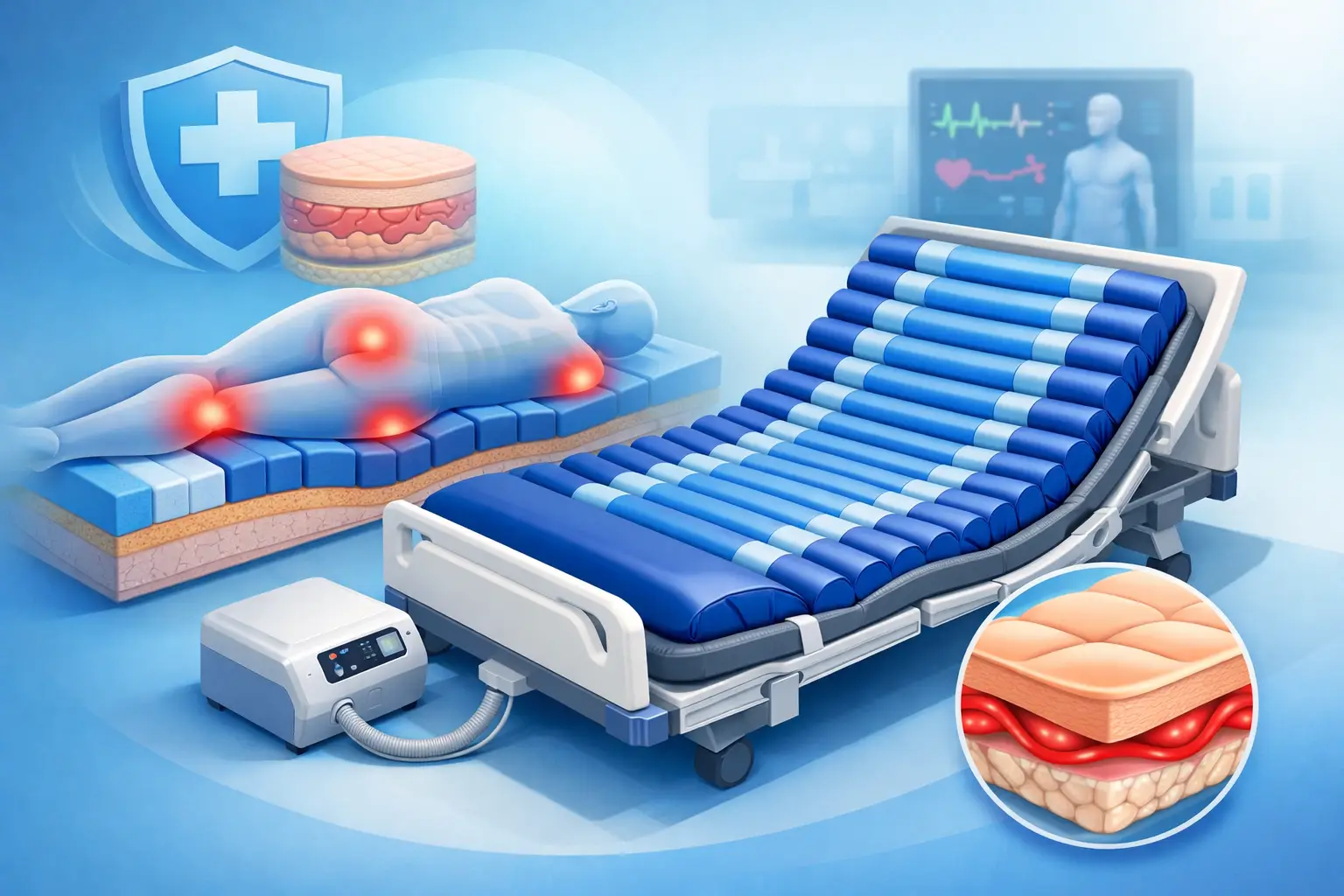
When someone is spending long hours in bed, the mattress stops being a comfort choice and becomes a care decision. A medical mattress for pressure sore prevention is designed to reduce prolonged pressure on vulnerable areas such as the hips, shoulders, heels, and lower back, helping support skin integrity and day-to-day comfort.
That matters for families caring for older adults at home, for individuals recovering from surgery, and for hospitality or care settings where guest well-being and hygiene standards are closely watched. The right mattress can help lower risk, but only if it matches the user’s mobility, body weight, sleep position, and care routine.
Pressure sores develop when one area of the body stays under pressure for too long, especially over bony points. Reduced circulation can begin to affect the skin and tissue underneath. Moisture, heat, friction, and limited mobility can make the problem worse.
A standard mattress may feel soft at first, yet still create pressure concentration in the wrong places. A medical mattress is built differently. Its job is to distribute body weight more evenly, reduce peak pressure points, and support safer repositioning. Depending on the construction, it may also help with airflow, temperature control, and movement assistance for caregivers.
This is why mattress type matters. Prevention is not just about softness. In many cases, a mattress that is too soft allows the body to sink unevenly, which can increase pressure around heavier contact zones. What works better is balanced support with controlled pressure redistribution.
The most obvious users are people with limited mobility, whether due to age, illness, injury, or post-surgical recovery. If someone cannot turn easily without assistance, remains in bed for extended periods, or already shows skin redness that does not fade quickly, a medical mattress should be considered seriously.
It can also be useful in home care setups where families want a more reliable support surface than a basic foam mattress. In those situations, the mattress is part of a wider prevention plan that includes repositioning, skin checks, dryness management, and the right bed accessories.
For hospitality and residential care environments, mattress choice affects both comfort and duty of care. A guest or resident with health needs may not ask for technical support by name, but the mattress still has to perform under real use conditions.
Foam medical mattresses are among the most common options because they offer stable support and simple maintenance. Higher-quality medical foam can contour enough to spread pressure without creating the trapped feeling some users dislike. This is often a practical choice for home users who need dependable support and easier handling.
Memory foam models can improve pressure redistribution by responding to body shape and weight. For some users, that contouring can be very effective. The trade-off is that slower-response foam may feel warmer or make repositioning slightly harder if the surface hugs the body too closely. That is why build quality matters more than the material name alone.
Gel-infused memory foam can help address one of memory foam’s common concerns by improving heat management. It may suit users who need pressure relief but are sensitive to warmth during the night.
Latex-based support surfaces are valued for resilience and responsiveness. They tend to bounce back faster than memory foam, which can help with mobility and turning. For some users, that responsive feel is more comfortable over long periods.
There are also advanced medical systems designed specifically for higher-risk care needs. These may use layered foam zones or alternating pressure technology. In those cases, the mattress actively changes pressure distribution over time. These systems are usually considered when a person has very limited movement or elevated risk factors.
The first thing to check is pressure redistribution, not just plushness. A mattress should spread body weight across a wider surface area while still keeping the spine supported. If the hips and shoulders sink too deeply while other areas remain unsupported, comfort may improve briefly but risk may not.
The second is surface stability. For users who need assistance getting in and out of bed, or who are able to reposition with some independence, a mattress should not feel unstable. Good edge support and a more predictable surface can make everyday movement easier and safer.
Cover material is also important. A medical mattress should have a hygienic, durable cover that is easy to clean and designed for repeated use. Moisture resistance matters because skin protection is not only about pressure. It is also about maintaining a cleaner, drier sleep surface.
Breathability plays a bigger role than many shoppers expect. Heat and moisture can increase skin stress, so airflow and temperature balance are practical considerations, not luxury extras.
Mattress height and transfer support should be reviewed too. A mattress may perform well for pressure management but become impractical if it makes transfers difficult for the user or caregiver.
This is where expert guidance makes a real difference. There is no single mattress that fits every medical need. A lighter user may need a different level of contouring than a heavier user. Someone who sleeps mostly on their back will create pressure in different areas than someone lying on their side for long periods.
Mobility level is one of the biggest decision points. If the user can reposition independently, a responsive foam or latex-based surface may help. If repositioning is very limited, stronger pressure management becomes the priority.
You also need to think about duration of use. A temporary recovery need may call for a different solution than a long-term care arrangement. In long-term situations, durability, hygiene, and ease of maintenance become even more important.
For households balancing comfort needs and practical care, it helps to work with a mattress consultant who can narrow options by support type, construction, and intended use rather than by generic comfort labels alone.
A medical mattress for pressure sore prevention is an important support tool, but it is not a complete prevention plan by itself. Even a well-designed mattress cannot fully replace regular repositioning, skin monitoring, clean bedding, and proper medical advice when risk is high.
That is worth saying clearly because many buyers expect the product alone to solve the issue. The mattress reduces risk by improving support conditions. It does not remove the need for daily care routines.
At the same time, the mattress should not be underestimated. Choosing the wrong surface can make prevention harder, especially when the user already has fragile skin, reduced sensation, or limited movement.
One common mistake is choosing based only on softness. A softer mattress is not always better for pressure care. What matters is how evenly it supports the body over time.
Another is ignoring the cover and hygiene features. Families often focus on the inside construction and forget that the outer cover affects cleaning, moisture handling, and daily usability.
A third is buying without considering bed base compatibility or caregiver needs. If a mattress is difficult to move, rotate, clean, or use for transfers, it may create problems after delivery even if it looked suitable on paper.
The last is waiting too long. If someone is already showing early warning signs such as persistent redness, discomfort in pressure areas, or increasing difficulty turning, it makes sense to review the sleep surface promptly.
This category is not like buying a guest room mattress. The right choice depends on the person, the care routine, and how the mattress will be used day after day. That is why consultant-led guidance is often the safest path, especially for families making a high-stakes purchase for someone they care about.
Towell Mattress ME approaches this the same way a knowledgeable showroom consultant would – by helping buyers compare support materials, comfort feel, durability, and practical care features without making the process harder than it needs to be. That kind of clarity helps reduce the guesswork.
If you are choosing for a parent, a recovering family member, or a care setting, focus on support quality first and comfort second, not the other way around. The best mattress in this category should help the user rest with less pressure, less worry, and more confidence in the care setup around them.
A careful mattress choice will not fix every challenge, but it can make daily care more manageable and give the person in bed a better chance at real comfort where it matters most.
