
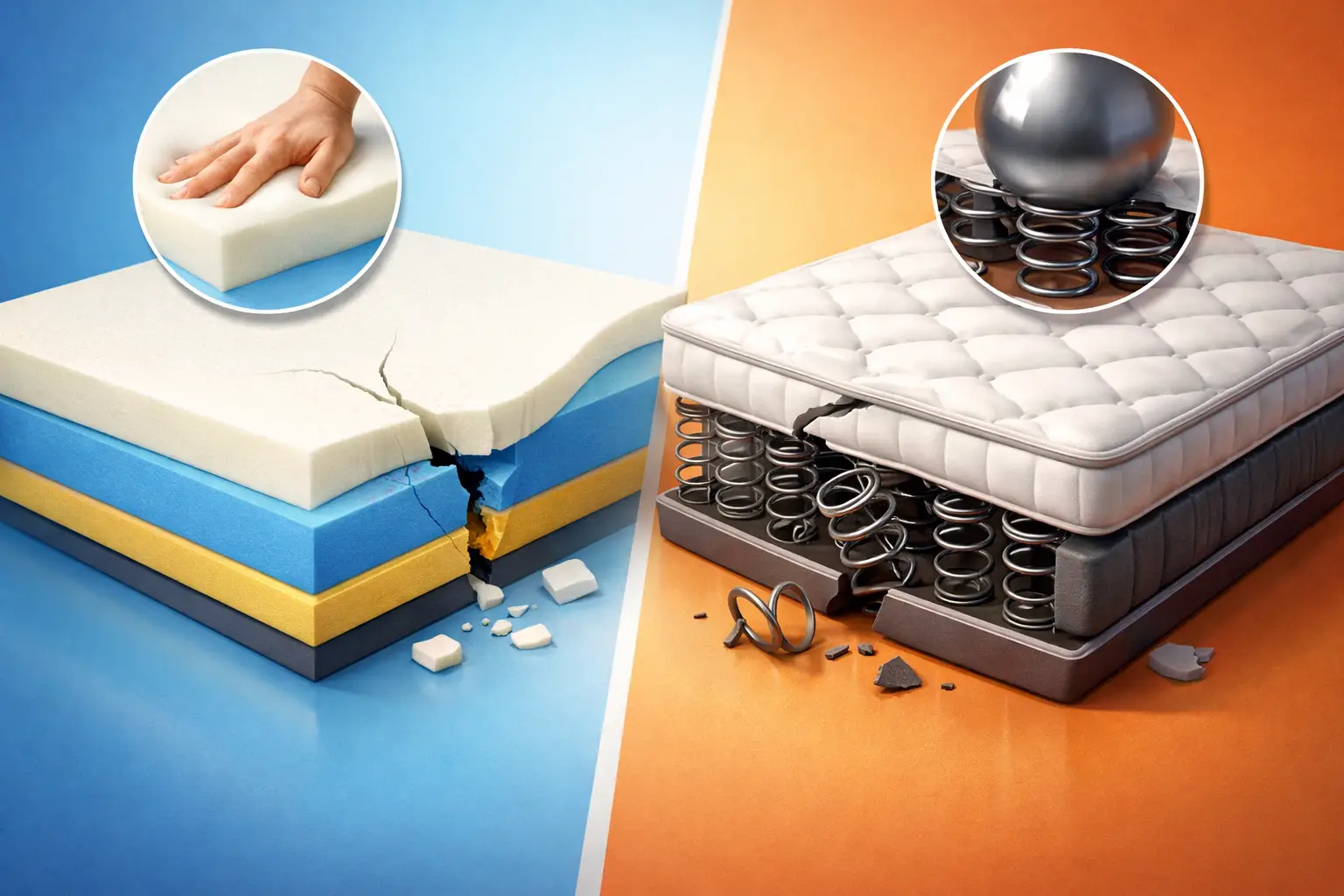
A mattress can feel excellent in a showroom and still disappoint after a year or two. That is why foam vs spring mattress durability matters so much. For most buyers, the real question is not just which mattress feels better on day one, but which one keeps its comfort, support, and shape over time.
The short answer is that both foam and spring mattresses can be durable, but durability depends less on the label and more on what is inside the mattress. Foam density, coil design, edge support, comfort layers, body weight, and even bed base choice all affect how long a mattress performs well. If you are choosing for your home, guest room, or hospitality setup, understanding those differences helps you buy with fewer surprises later.
People often compare mattress types as if one material always outlasts the other. In practice, construction quality makes the biggest difference. A well-made pocket spring mattress with balanced comfort layers can outlast a low-grade foam mattress. The reverse is also true if the spring unit is basic and the upper layers wear out quickly.
For foam mattresses, the main durability factor is foam quality. Higher-density foams usually hold their shape and resistance longer. Lower-quality foam tends to soften earlier, which can lead to body impressions, less support under the hips and shoulders, and a feeling that the mattress is no longer level.
For spring mattresses, the durability question starts with the coil system. Bonnell springs can be dependable in the right build, especially in value-focused models, but they generally transfer more motion and may not contour as precisely over time as pocket springs. Pocket spring systems often provide more targeted support because each coil works more independently. That can help the mattress maintain comfort for longer, especially when paired with strong edge support and quality top layers.
Another point many shoppers miss is that mattresses usually do not fail from the core alone. In many cases, the comfort layers on top wear out before the support unit underneath does. That means a spring mattress with weak foam on top may lose comfort sooner than expected, even if the springs remain structurally sound.
Foam mattresses are popular because they can offer consistent pressure relief, quieter performance, and a stable sleep surface with no coil movement. In durability terms, their biggest strength is that there are no metal springs to fatigue or shift. Their biggest risk is softening.
As foam ages, repeated compression changes how quickly it bounces back and how evenly it supports the body. This is especially noticeable in lower-density foams and in mattresses used nightly by heavier sleepers. The mattress may still look intact, but the feel changes. Support becomes less even, and the sleeper may start waking with pressure points or lower back discomfort.
Memory foam and gel-infused memory foam can perform well over time when used in the right densities and layer combinations. They are often chosen for contouring comfort, but they need a stable support core underneath. All-foam designs can be very durable when the internal structure is engineered properly, yet not every foam mattress is built to the same standard.
Heat can also affect the feel of foam. In warmer environments, some foams may feel softer. That does not automatically mean they are failing, but it can influence how quickly the material appears to lose firmness under regular use. For buyers who prefer a more consistent feel, the full construction matters more than the word foam alone.
Spring mattresses have remained popular for good reason. A good spring system can deliver durable support, airflow, and a familiar balanced feel. When buyers ask whether springs wear out, the answer is yes, eventually, but quality spring mattresses are designed to handle repeated compression over many years.
Pocket spring mattresses usually perform better in long-term comfort retention than basic open-coil designs because the coil action is more individualized. This helps reduce broad sagging patterns and can support different body zones more effectively. For couples, it also helps reduce motion transfer, which matters for uninterrupted sleep.
Bonnell spring mattresses still have a place, particularly for shoppers who want a supportive, straightforward construction. They can be durable in guest rooms, lighter-use settings, or value-focused households. The trade-off is that they often provide less body-contouring precision than pocket spring models, and their connected coil structure may show wear differently over time.
Like foam mattresses, spring models depend heavily on the layers above the core. If the quilted top and comfort foams compress early, the whole mattress can feel worn even when the spring system is still doing its job. This is why comparing coil count alone is not enough.
If you compare high-quality versions of both, there is no universal winner. Foam vs spring mattress durability is really a question of design quality, sleeper profile, and usage conditions.
Foam can last very well when the materials are dense and the support core is strong. Spring can last very well when the coil unit is properly engineered and the comfort layers are durable. A cheap foam mattress is unlikely to age better than a well-built pocket spring mattress. Likewise, an entry-level spring mattress with thin upper layers may not outlast a premium foam model.
For average household use, both mattress types can offer dependable service if matched correctly to the sleeper. For higher-use environments, such as family homes with daily use across years or hospitality applications with frequent turnover, consistency of construction becomes even more important.
In practical terms, heavier body weights place more stress on any mattress, especially around the center third. Side sleepers usually compress shoulder and hip zones more deeply. Back and stomach sleepers often need firmer support retention to avoid dipping. These factors can make one mattress type feel longer-lasting for one person and less durable for another.
A mattress does not need to collapse to be considered worn. More often, the changes are gradual. You may notice visible body impressions, softer spots where you sleep most often, weaker edge support, or a loss of overall levelness. Some sleepers first notice durability issues through their own sleep quality – more tossing, more stiffness in the morning, or the feeling of rolling into a dip.
With foam, these signs often show up as softening and impressions. With spring mattresses, they may appear as sagging, uneven support, or more noticeable motion. In both cases, the top comfort layers are often the first area to reveal wear.
That is why it is worth looking beyond surface comfort when shopping. A mattress should not only feel good at first touch. It should be built to keep performing.
If durability is your priority, start by being honest about who will use the mattress. A master bedroom mattress used every night needs a different level of construction than a guest room mattress used occasionally. Couples need to think about motion control and shared wear patterns. Families may want stronger edge support if people sit on the bed often.
For buyers who prefer pressure relief and a quieter, more cushioned surface, a quality foam mattress can be a strong option. Focus on the internal build, not just the comfort claim on the label. For buyers who want a more lifted feel, better airflow, and long-term structural support, a well-constructed spring mattress, especially a pocket spring model, is often a dependable choice.
This is also where guided selection makes a real difference. A mattress consultant can help match construction to sleep position, comfort preference, and expected use, which reduces the chance of choosing a mattress that feels right briefly but wears poorly for your actual needs.
Even a durable mattress benefits from proper care. A supportive bed base helps the internal structure perform as intended. Rotating the mattress, if the model allows it, can promote more even wear. A mattress protector helps prevent moisture and buildup that can affect hygiene and material condition over time.
Just as important, choose the mattress for real use, not idealized use. If you know the mattress will handle nightly sleep, children jumping on the bed, or repeated guest turnover, buy for that reality. Durability starts at the point of selection.
The best choice is usually not foam or spring in the abstract. It is the mattress that is built well, suited to your sleep habits, and supported by clear product guidance. When those pieces come together, comfort tends to last longer and the decision feels a lot easier.
