
A mattress can feel comfortable for five minutes in a showroom and completely different after a full night at home. That is why a mattress firmness scale explained UAE should start with one clear point: firmness is not a universal measurement. It is a guide to how a mattress feels when you lie on it, and the right choice depends on your sleep position, body type, comfort preferences, and the support underneath the surface.
For UAE households, the decision also needs to account for warm sleeping conditions, air-conditioned rooms, shared beds, and the practical need for lasting support. Understanding the scale helps you compare mattress types confidently rather than choosing based on a label alone.
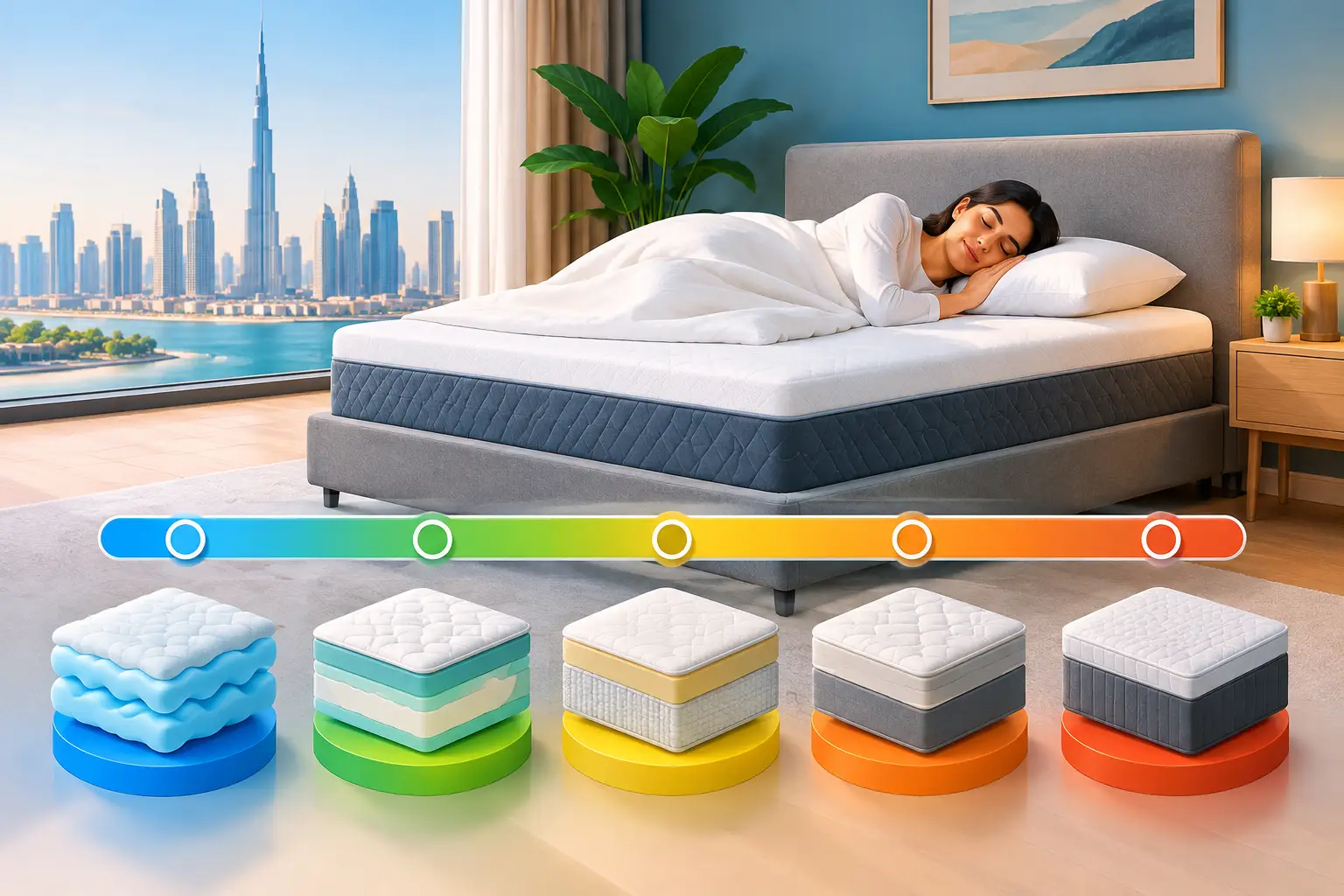
Most mattresses are described on a scale from 1 to 10. A rating of 1 is exceptionally soft, while 10 is extremely firm. In real-world shopping, most quality mattresses sit between 3 and 8. The scale describes initial feel, not necessarily the level of support a mattress provides.
A softer mattress allows more contouring around the shoulders, hips, and lower back. A firmer mattress has a flatter, more stable feel and allows less sink. Neither is automatically better. A well-designed medium mattress may provide stronger support than a poorly built firm one, while a soft mattress can still be supportive when its comfort layers and core are properly matched.
There is no single industry-wide firmness test used by every manufacturer. One brand’s medium-firm can feel closer to another brand’s medium. Construction, upholstery layers, mattress height, and the sleeper’s weight all change the experience. This is why the firmness label is a useful starting point, but not the final decision.
Soft mattresses create a plush, pressure-relieving feel. They are often preferred by side sleepers because they cushion the shoulder and hip, helping the spine stay more level. Memory foam, gel-infused memory foam, and plush pillow-top spring mattresses can all fall into this range.
The trade-off is that very soft comfort layers may feel too enveloping for stomach sleepers or people who prefer easy movement during the night. A soft mattress can also feel firmer to a lighter sleeper and noticeably softer to a heavier sleeper. If you enjoy a cloud-like surface but need dependable support, look for a mattress with a stable foam, pocket spring, or latex support core beneath the softer top layers.
Medium-soft mattresses offer noticeable cushioning without the deep sink of a plush model. They are a sensible middle ground for side sleepers who want pressure relief but do not want to feel held in place by the mattress.
This range is often suitable for lighter adults and people who have found medium mattresses slightly too firm at the shoulders. It may not be the best fit for sleepers who need a more stable surface to prevent their hips from dropping too far.
Medium is one of the most versatile firmness levels, particularly for couples with different preferences. It balances contouring and support, making it suitable for combination sleepers who move from their side to their back during the night.
A medium mattress can be built with foam, pocket springs, latex, or a hybrid-style combination of materials. The feel will vary. A medium memory foam mattress usually contours more closely, while a medium pocket spring mattress may feel more responsive and easier to move on. If you are uncertain where to begin, medium is often the practical reference point for comparison.
Medium-firm mattresses have a supportive, balanced feel with less sink than medium options. They are commonly chosen by back sleepers because they help keep the hips from settling too deeply, which can support more natural spinal alignment.
This range can also work well for couples, especially when one partner prefers a little more support. Pocket spring and latex mattresses are often strong options here because they combine surface comfort with responsive support. A medium-firm model is not meant to feel hard. It should still cushion the body while maintaining an even, stable sleep surface.
Firm mattresses provide a more level feel with minimal contouring. They can suit stomach sleepers, larger body types, and anyone who dislikes the sensation of sinking into the mattress. Medical or health-focused mattress designs may also use firmer constructions, depending on their intended support features.
The key is avoiding excessive firmness. If a mattress creates pressure at the shoulders, hips, or lower back, firmer is not necessarily more supportive for you. A firm mattress should feel stable, not unforgiving.
Firmness is the comfort sensation you notice first. Support is the mattress’s ability to hold your body in healthy alignment over time. They work together, but they are different.
For example, a soft mattress with a high-quality pocket spring system may offer excellent support while still feeling plush on top. A very firm foam mattress may feel stable initially but may not contour enough for a side sleeper’s shoulders. The best mattress lets your heavier areas, usually the hips and shoulders, settle just enough while keeping your spine from bending or twisting.
When testing a mattress, pay attention to your position after several minutes. On your side, your spine should look and feel relatively straight from neck to lower back. On your back, your hips should not dip lower than your shoulders. On your stomach, your pelvis should not sink enough to strain your lower back.
Your usual sleep position is one of the fastest ways to narrow the choices. Side sleepers generally need more pressure relief and often feel most comfortable from medium-soft to medium. Back sleepers commonly do well from medium to medium-firm, depending on their body weight and preferred feel. Stomach sleepers usually need a flatter surface, often medium-firm to firm, to reduce excessive hip sink.
Combination sleepers need a mattress that is both supportive and easy to move on. Responsive pocket springs and latex can be especially helpful for this group. Memory foam can still work well, but the feel should not be so soft that changing position becomes difficult.
If you share a bed, do not choose based only on one person’s position. A medium or medium-firm mattress with good pressure relief and motion control is often a practical compromise. In some cases, a larger mattress size or a model with stronger edge support can make shared sleep more comfortable as well.
A firmness number does not tell the full story because materials react differently to pressure and temperature.
Memory foam is known for close contouring and pressure relief. It can feel more enveloping than a spring mattress with the same rating. Gel-infused memory foam is designed to offer similar contouring with features that can help manage heat buildup, a useful consideration for sleepers who tend to sleep warm.
Latex is generally more buoyant and responsive. It cushions pressure points but has less of the slow-sinking sensation associated with traditional memory foam. Pocket spring mattresses provide individually responding support, which can help reduce movement transfer from one side of the bed to the other. Bonnell spring mattresses have a more connected spring system and often give a traditional, supportive feel.
The cover, quilting, pillow top, and comfort foams also matter. Two medium-firm mattresses can feel distinctly different when one has a thick plush top and the other has a flatter quilted surface.
Room temperature can affect some foam materials. Memory foam may feel a little softer as it warms to your body and the room, while a cool, strongly air-conditioned bedroom may make it feel firmer at first. This does not mean foam is unsuitable for UAE homes. It simply means that material choice, ventilation, and personal temperature preference should be part of the conversation.
For warm sleepers, breathable fabrics, gel-infused foams, responsive spring systems, and latex can be worth considering. A mattress protector is also a practical addition for maintaining hygiene and helping protect the mattress from everyday spills and moisture. It should fit properly and be breathable so it does not change the mattress feel unnecessarily.
Start by identifying your main sleep position and whether you prefer a cushioning or more level surface. Then test or compare mattresses within one firmness range on either side of your starting point. For example, if medium feels close, compare medium-soft, medium, and medium-firm rather than jumping directly from plush to firm.
Lie down in your normal position for at least several minutes. Do not judge only by sitting on the edge or pressing the surface with your hand. Your body distributes weight differently when lying down, and that is the feeling that matters.
Also consider the mattress base. A worn, uneven, or poorly matched base can change how a mattress performs. For long-term comfort, pair the mattress with an appropriate foundation and follow its care and warranty guidance.
Towell Mattress ME consultants can help translate a firmness label into a choice that suits your sleep position, preferred materials, and household needs. The most useful final check is simple: choose the mattress that keeps your body supported without making you think about pressure points, heat, or discomfort when it is time to rest.
