
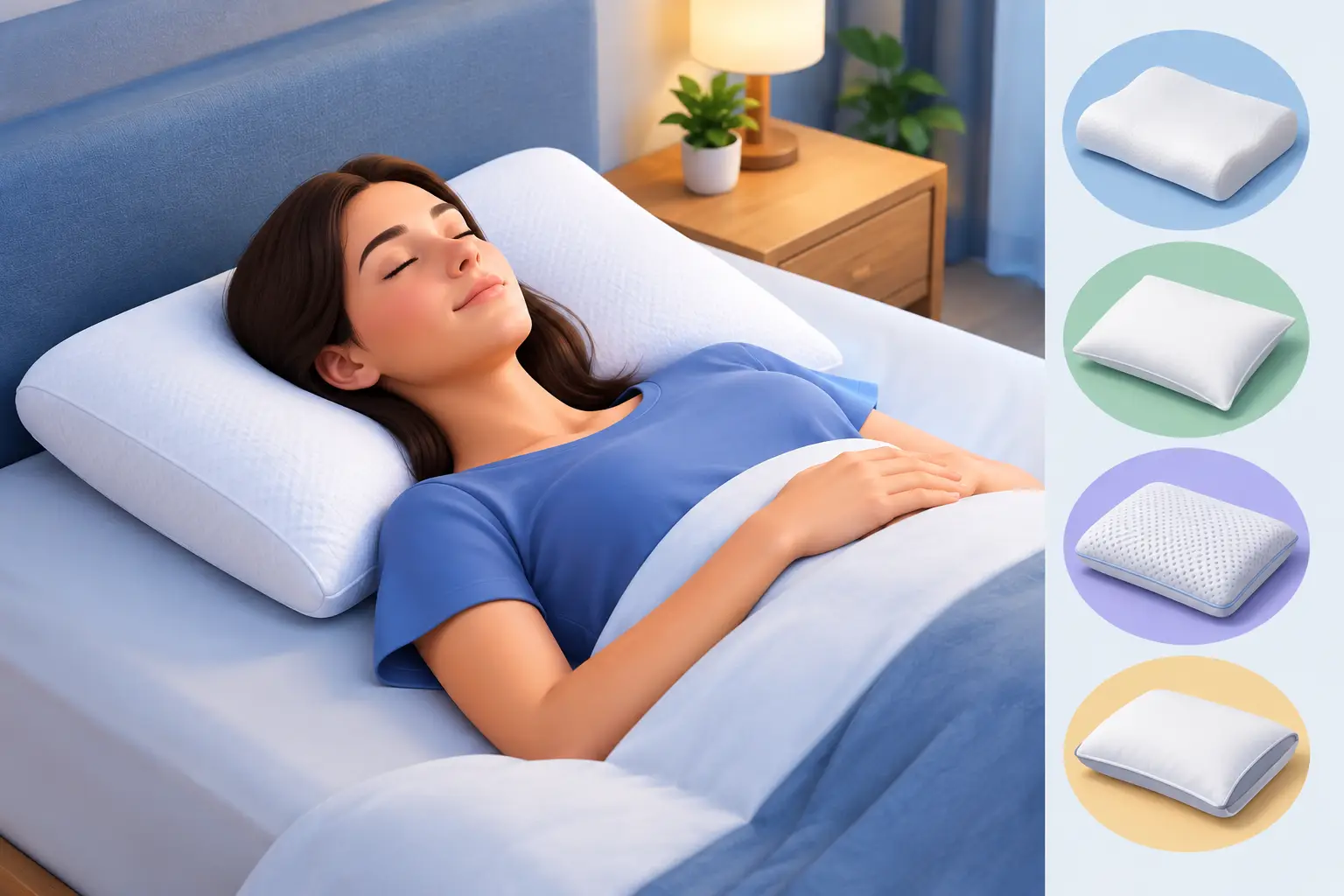
A pillow that feels soft in the showroom can still be the reason you wake up with a stiff neck. The best pillow for back sleepers support keeps your head comfortably centered, supports the natural curve of your neck, and avoids pushing your chin down toward your chest. That balance is more useful than choosing the thickest, firmest, or most luxurious-looking option.
Back sleeping is often considered a balanced sleep position because your weight is distributed broadly across the mattress. But your pillow still has an important job. It needs to fill the small space between your neck and the mattress without lifting your head too high. The right fit can make your mattress feel more comfortable and help you settle into a more relaxed position from the start of the night.
When you lie on your back, your face should point naturally toward the ceiling. Your neck should not feel stretched upward, compressed forward, or forced to tilt to either side. Think of the pillow as support for your neck first and cushioning for your head second.
A well-fitted pillow usually creates a gentle, stable cradle beneath the head while supporting the curve at the base of the neck. You should be able to breathe easily and relax your shoulders into the mattress. If you feel pressure gathering at the back of your head or tension through the upper shoulders, the pillow may be too firm, too high, or simply shaped incorrectly for you.
Comfort remains personal. Some back sleepers prefer a softly cushioned surface, while others need a more responsive feel that holds its shape through the night. The goal is not to eliminate all movement. It is to avoid starting each night in a position that places unnecessary strain on your neck.
Loft means pillow height, and for most back sleepers, medium or low-to-medium loft is the practical starting point. An overly tall pillow bends the neck forward. A pillow that is too thin lets the head fall back and may leave the neck unsupported.
Your body size, shoulder width, and mattress firmness all affect the right height. On a plush mattress, your shoulders and upper back sink farther into the surface, so you may need a slightly lower pillow. On a firmer mattress, your body stays more elevated, which can make a medium-loft pillow feel more appropriate.
Do not judge loft while standing beside the bed. Test it lying down in your normal position for several minutes. Your head should look level with your torso rather than visibly raised. If you share your bed, ask your partner to check your posture from the side. This simple observation can reveal a poor fit quickly.
Adjustable-fill pillows can be especially useful if you are between loft levels or if your comfort needs change. Removing or adding fill allows you to fine-tune height instead of replacing a pillow that is almost right. They do require a little patience, but that flexibility can be worthwhile for shoppers who want a more personalized result.
Firmness and loft work together, but they are not the same thing. A pillow can be high and soft, then flatten too much after you fall asleep. It can also be low and very firm, creating pressure without enough contour. Back sleepers generally benefit from medium firmness because it offers enough structure to hold the neck in place while still cushioning the head.
A medium-firm pillow is often a sensible choice for people who wake up with their head tilted or who repeatedly bunch up their pillow during the night. It should resist collapsing under normal pressure but should not feel like you are resting on a rigid block.
If you have a lighter build or prefer a softer sleep surface, medium-soft support may feel more comfortable. If you have a larger frame, a firmer mattress, or a tendency to sink deeply into soft pillows, medium-firm to firm support may be the better direction. The best choice is the one that maintains alignment after the pillow has been under your head for a while, not just during the first few minutes.
Material influences temperature, pressure relief, shape retention, and maintenance. There is no single best material for every back sleeper, but understanding the differences makes selection easier.
Memory foam pillows contour closely around the head and neck. They can provide consistent support and are often a strong option for sleepers who want a secure, molded feel. Traditional solid foam designs tend to hold their shape well, while shredded memory foam designs can offer more adjustability. Some sleepers find foam warmer or less responsive when changing positions, so cooling features and a breathable cover can matter.
Latex pillows have a springier, more responsive feel. They support the neck without the slower contour of memory foam and usually recover their shape quickly. Latex can work well for back sleepers who want buoyant support and easier movement during the night. Its feel is distinct, so it is worth trying if possible rather than assuming it will feel like foam.
Fiberfill and down-alternative pillows can feel soft, familiar, and inviting. For back sleepers, the key is choosing a design with enough fill and construction to resist flattening. A very plush fiber pillow may feel comfortable at bedtime but leave the neck unsupported later. These options can suit people who prefer softness, provided the loft remains stable.
Feather and down pillows can be shaped easily, which some back sleepers enjoy. However, they may require regular fluffing and can lose their ideal height overnight. A chambered design, with supportive inner fill and a softer outer layer, may offer better stability than a loosely filled pillow.
Ergonomic or contoured pillows are designed with a raised neck roll and a lower center area for the head. For some back sleepers, this shape makes alignment easier because it gives the neck targeted support without adding excess height under the head.
They are particularly worth considering if you often tuck a towel beneath your current pillow to support your neck, or if a conventional rectangle pillow leaves a noticeable gap beneath your cervical curve. The trade-off is that contour pillows can feel restrictive for combination sleepers who regularly turn onto their side or stomach.
A contour is not automatically better just because it looks technical. The height of the neck roll still needs to suit your build and mattress. If it is too high, it can create the same forward neck bend as any oversized pillow.
Pillow support cannot be separated completely from mattress support. If your mattress has developed deep body impressions or lets your upper back sink unevenly, your pillow may no longer meet your neck at the right height. A pillow that once felt ideal can begin to feel wrong as the sleep surface changes.
Likewise, changing from a firm mattress to a deeper foam or pillow-top mattress may call for a lower-loft pillow. Consider your sleep system as a whole. The mattress supports your body; the pillow completes support for the head and neck.
This is why trying a pillow with your usual mattress feel in mind is more reliable than following a generic recommendation. At Towell Mattress ME, a Mattress Consultant can help match pillow height and material to your preferred mattress comfort, rather than treating the pillow as an afterthought.
A worn or poorly matched pillow often gives clear signals. Pay attention to patterns rather than one occasional uncomfortable morning. It may be time to reassess if you notice:
Pillows do not last forever. Foam may soften, fibers may compress, and fill can shift away from the areas that need support. Replacing a pillow when it no longer recovers its shape is a practical comfort decision, not an unnecessary upgrade.
Lie on your back with your shoulders resting naturally on the mattress. Place the pillow beneath your head and neck, then relax your jaw and shoulders. Notice whether your eyes point comfortably upward, whether your chin stays neutral, and whether your neck feels filled rather than forced.
Give the pillow a few minutes. A supportive pillow should become less noticeable as you settle in. If you are constantly aware of its height, edges, or pressure points, it is probably not the right match. If neck pain is severe, persistent, or linked to numbness or injury, seek advice from a qualified healthcare professional rather than relying on bedding changes alone.
The right pillow should make back sleeping feel uncomplicated: your head rests easily, your neck feels supported, and you do not need to fight for a comfortable position before sleep can begin.
