
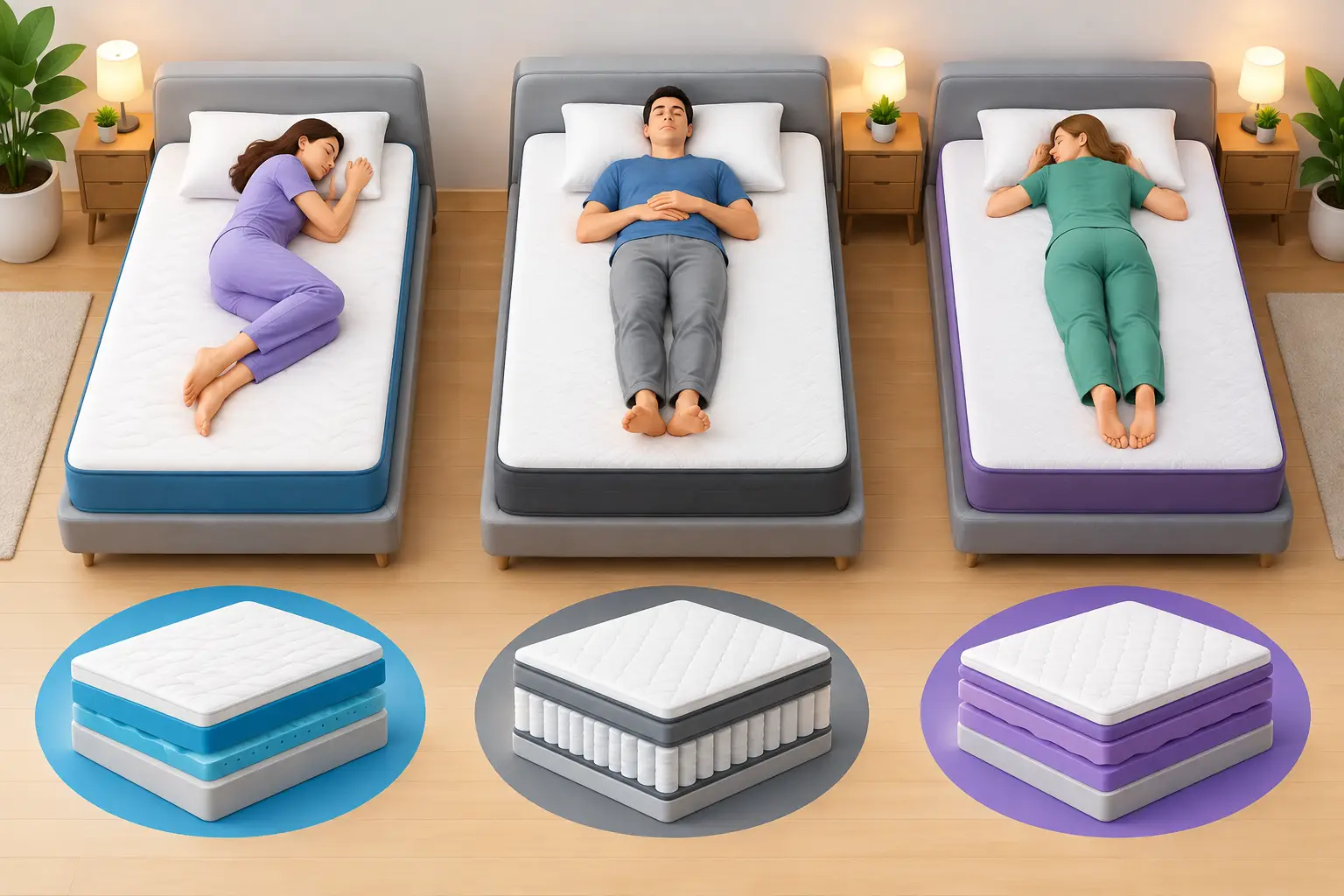
A mattress can feel excellent for ten minutes in a showroom and still be the wrong fit after eight hours. An example mattress selection by sleeping position starts with how your body is supported from shoulders to hips, then considers body weight, temperature preferences, and the feel you enjoy most. The aim is not to choose the firmest or softest option. It is to choose a mattress that helps your spine stay in a more natural, relaxed position through the night.
Your preferred sleeping position is a practical starting point because it changes where your body needs pressure relief and where it needs support. A side sleeper carries more pressure at the shoulder and hip. A back sleeper usually needs steadier support through the lower back. A stomach sleeper often needs to prevent the hips from sinking too deeply.
Most people change positions during the night, so do not treat these categories as rigid rules. Choose for the position you spend the most time in, then look for a construction that remains comfortable when you turn. A mattress consultant can help narrow the options when two sleepers share a bed or when comfort needs differ.
Side sleepers commonly do well with a medium to medium-soft comfort feel, provided the mattress still has a supportive core. The shoulder and hip are the main contact points, and a surface that is too firm can create pressure that leads to numb arms, sore shoulders, or frequent repositioning.
Memory foam, gel-infused memory foam, and quality pocket spring mattresses with comfort layers are often strong choices for this position. Memory foam can contour closely around the body, while gel-infused foam may be a better option for sleepers who prefer a less warm feel. Pocket springs can provide individual support beneath the comfort layers, which is particularly useful for couples because movement is less likely to travel across the bed.
The trade-off is that a very soft mattress may allow the hips to settle too far down, especially for heavier side sleepers. In that case, medium comfort with deeper pressure-relieving layers is often more suitable than an overly plush surface.
Back sleeping generally suits a medium or medium-firm mattress. This range can support the natural curve of the lower back while allowing the shoulders and hips to settle in slightly. If the surface is too soft, the pelvis may sink and place strain on the lower back. If it is too firm, the mattress may leave a gap beneath the lumbar area and feel uncomfortable at the shoulders.
Pocket spring, latex, and high-quality foam mattresses are all worth considering for back sleepers. Latex has a responsive, buoyant feel that supports the body without the deeper sink associated with some memory foams. Pocket springs offer a balanced, familiar feel with targeted support, while supportive foam designs can create an even sleep surface with minimal motion transfer.
For many back sleepers, the best test is simple: lie down in your usual position and notice whether your lower back feels supported rather than pushed upward or left hanging. Comfort should feel stable, not rigid.
Stomach sleeping requires more attention to support because the midsection can sink into a soft mattress. When this happens, the lower back may arch excessively. A medium-firm to firm mattress is often the better starting point for stomach sleepers, particularly for adults with a heavier build.
Firm foam, latex, and supportive spring constructions can work well. Latex is especially helpful for sleepers who want firmer support with some surface comfort and easy movement. Bonnell spring mattresses may also appeal to those who prefer a traditional, stable feel, although the overall comfort depends on the padding and build above the spring unit.
A firm mattress should not feel like sleeping on a board. The right model gives the body a level foundation while still providing enough comfort at the chest, knees, and shoulders. Stomach sleepers may also benefit from a lower-profile pillow so the neck is not forced upward.
If you move from your side to your back, or from your back to your stomach, look for a mattress that combines pressure relief with responsiveness. Many combination sleepers find their fit in the medium to medium-firm range. This provides enough give for side sleeping without becoming difficult to move on.
Latex, responsive foam, gel-infused foam, and pocket spring mattresses are practical options. A mattress that responds more quickly can make turning easier than a very deep, slow-moving foam surface. For couples, pocket spring designs and motion-reducing foam layers can also help one person move without repeatedly waking the other.
Sleeping position tells you what your body needs. Mattress construction helps determine how that support and comfort are delivered. Looking beyond the label is useful, especially when comparing models with a similar firmness description.
Pocket springs are individually wrapped coils that respond separately to weight and movement. They are a reliable choice for sleepers who want structured support, good airflow, and reduced motion transfer. The comfort layers above the springs determine whether the mattress feels plush, medium, or firm.
They are well suited to back sleepers, combination sleepers, and couples with different sleep schedules. Side sleepers can also benefit when the mattress includes sufficient cushioning at the top.
Foam mattresses can offer a quiet, consistent surface and strong motion isolation. Visco memory foam is known for body contouring, making it a practical choice for side sleepers and anyone who wants pressure relief around joints. Gel-infused memory foam adds a cooling-focused element for people who tend to sleep warm.
The consideration is feel. Some sleepers enjoy the close contour of memory foam, while others prefer a more responsive surface. If you dislike feeling settled into the mattress, a latex or spring-based model may be a better match.
Latex offers responsive support, durability, and a gently buoyant feel. It is a strong option for back sleepers, stomach sleepers, and combination sleepers who want to change position easily. It can also suit side sleepers when paired with adequate comfort layers.
Latex often feels different from both traditional spring mattresses and slow-response memory foam. Testing the surface feel matters because preference is personal, even when the support level is correct.
Bonnell spring mattresses use connected coils and can provide a traditional, supportive feel. They are often considered by shoppers who value a straightforward, firmer sleep surface. Medical or health-focused mattress designs may include features intended to provide added support or specific comfort benefits, but the right choice should still be based on your sleeping position, comfort needs, and any advice from a healthcare professional.
Sleeping position is the foundation, not the whole decision. Body weight can affect how deeply you sink into a mattress, so a heavier sleeper may need a more supportive version of the same comfort category. Lighter sleepers may find a firm mattress feels firmer than expected and may need more cushioning for pressure relief.
Temperature is another consideration. If you sleep warm, breathable spring designs, latex, or gel-infused memory foam may feel more comfortable than dense traditional foam. If you share a bed, think about motion transfer, edge support, and the compromise between both sleepers’ preferences rather than selecting only for one person.
Your pillow also changes how a mattress feels. A side sleeper generally needs enough pillow height to keep the head aligned with the spine, while a stomach sleeper typically needs less height. A mattress and pillow should work together, not compete with each other.
Begin with your primary position, then choose a comfort range that supports it: medium to medium-soft for many side sleepers, medium to medium-firm for many back sleepers, and medium-firm to firm for many stomach sleepers. From there, compare the construction that best matches your preferences for contouring, cooling, responsiveness, and motion control.
Do not let a single label make the decision for you. Firmness descriptions can vary between mattress designs, and a supportive mattress can still feel comfortable. Use the available product details, construction information, warranty coverage, and guided advice to compare with confidence. Towell Mattress ME mattress consultants can help translate those choices into a practical recommendation for your sleep style and household needs.
The best mattress is the one that lets you wake up without feeling like you spent the night fighting for a comfortable position. Start with how you sleep, listen to how your body responds, and give support the same attention as softness.
