
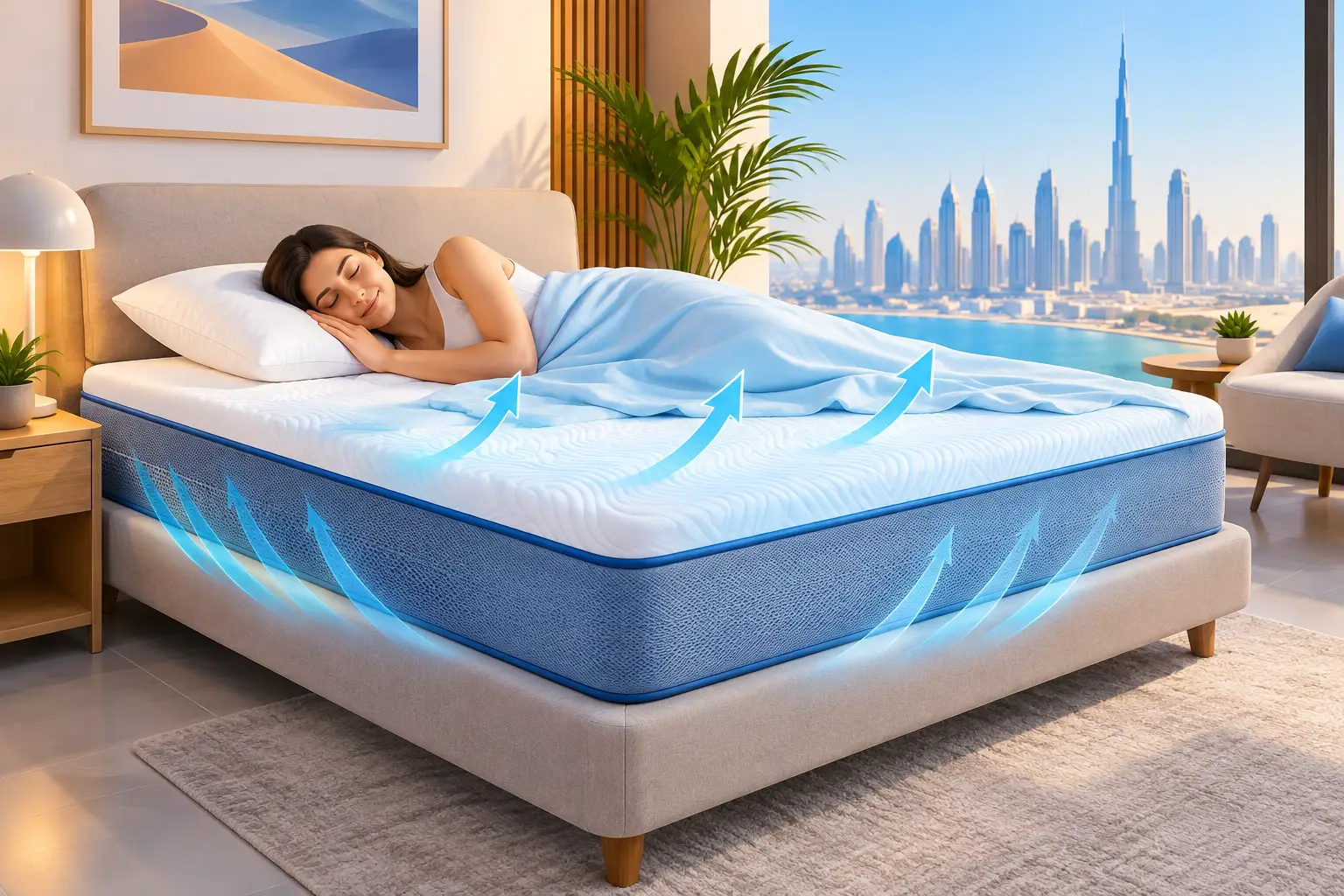
A bedroom can be fully air-conditioned and still feel uncomfortable at 3 a.m. if the mattress traps body heat. For shoppers comparing the best mattresses for hot sleepers UAE residents can depend on, the right answer is rarely just “buy a cooling mattress.” The materials, support system, cover, sleeping position, and even the room’s airflow all affect whether you wake up refreshed or overheated.
Heat is personal. One person may sleep comfortably on a close-contouring memory foam mattress, while another finds the same feel too warm. The aim is to choose a mattress that manages temperature without giving up the pressure relief, support, and durability your body needs.
Your body releases heat while you sleep. A mattress can either allow that heat and moisture to move away from you or hold it close to the surface. Dense comfort layers, limited airflow, and synthetic covers that do not breathe well can make a bed feel warmer, especially for people who naturally sleep hot.
This does not mean every foam mattress is unsuitable. Modern foam designs can use open-cell structures, gel infusions, breathable covers, and carefully layered constructions to reduce heat buildup. However, people who are highly sensitive to warmth often prefer mattresses with more internal airflow, such as pocket spring or latex designs.
The feel of the mattress matters too. A very soft mattress lets your body sink further into the comfort layers. That deeper cradle can feel supportive for some sleepers, but it may reduce the air circulating around the body. A medium or medium-firm feel often gives hot sleepers a more balanced result, provided it still supports the shoulders, hips, and lower back correctly.
There is no single construction that suits every warm sleeper. The best choice depends on how much cooling you need, how you sleep, and whether you value a buoyant or contouring feel.
Pocket spring mattresses are often a practical starting point for hot sleepers. Each spring sits in its own fabric pocket, allowing the mattress to respond more independently to your weight. The open space around the spring unit encourages airflow through the mattress, which can help it feel less enclosed than a dense all-foam design.
They also provide good support for couples because movement is more isolated than in traditional connected-spring mattresses. Look closely at the comfort layers above the springs. A pocket spring core promotes ventilation, but a very thick heat-retaining top layer may still affect how warm the bed feels.
Latex is a strong option for shoppers who want pressure relief without the deep, slow sink associated with traditional memory foam. Its responsive surface makes it easier to change position during the night, and its naturally open structure can support better ventilation.
Latex mattresses are especially appealing to combination sleepers and people who dislike the “stuck” sensation some contouring foams can create. The trade-off is feel: latex has a gentle springiness that not everyone prefers. If you want a mattress that hugs the body closely, a latex model may feel more lifted and responsive than expected.
Memory foam can be an excellent choice for side sleepers who need pressure relief around the shoulders and hips. Gel-infused memory foam is designed to address one of the common concerns with traditional foam by helping manage surface warmth.
It is worth setting realistic expectations. Gel alone does not turn every foam mattress into a cool-sleep solution. The overall design matters more: foam density, layer thickness, ventilation, cover fabric, and the support core all work together. For a hot sleeper who likes the pressure-relieving feel of foam, a mattress with gel-infused comfort layers and a breathable cover can be a sensible middle ground.
Many mattresses combine a spring support system with foam, gel foam, or latex comfort layers. This approach can offer a useful balance: springs create airflow and support, while the upper layers add cushioning and pressure relief.
For couples with different preferences, this can be one of the easier constructions to consider. The sleeper who runs warm benefits from the more open core, while the sleeper who needs comfort at the shoulders and hips still gets a more forgiving surface. The key is choosing the right comfort level, not simply choosing the thickest mattress.
Bonnell spring mattresses use interconnected springs and generally have a more traditional, responsive feel. Their open spring structure can allow air to move through the mattress, making them worth considering for shoppers who prefer a firmer, more buoyant sleep surface.
They are not the best fit for everyone. Motion can transfer more easily across the bed than with pocket springs, so couples may prefer a pocket spring alternative. Still, for a single sleeper or guest room where breathable support and straightforward comfort are the priority, this construction can be a practical choice.
A cooling claim should never be the only reason to choose a mattress. The right mattress must support your body properly, because discomfort can lead to restless sleep and frequent position changes, which can make heat feel even more disruptive.
Start with your sleep position. Side sleepers usually need enough cushioning at the shoulder and hip to avoid pressure points. Back sleepers often do well with balanced support that keeps the lower back from dipping. Stomach sleepers commonly need a firmer surface that prevents the hips from sinking too far.
Then consider the mattress cover. A breathable, moisture-managing cover can make a noticeable difference because it is the layer closest to your body. A washable mattress protector is also useful for hygiene and protecting the mattress, but choose one designed to remain breathable. A thick, non-breathable protector can reduce the benefit of a cooling mattress.
Edge support matters if you sit on the side of the bed, share the mattress, or need full use of the sleep surface. It may not directly cool the bed, but it contributes to stability and long-term comfort. Likewise, confirm the mattress size suits your room and sleep habits. More personal space can improve airflow around the body and reduce the feeling of retained warmth when sharing a bed.
Hot sleepers sometimes assume firm automatically means cooler. That is not always true. A firm mattress may keep you more on the surface, but it can create pressure points if it does not match your body type or sleep position. A mattress that is too soft, on the other hand, can allow excessive sinking and make the sleep surface feel warmer.
A medium feel is often a useful starting point for many adults, particularly combination sleepers. But your comfort requirement should lead the decision. If you are a lighter side sleeper, you may need a softer comfort layer. If you are a heavier back or stomach sleeper, you may need firmer support beneath the surface. This is where guided selection is more useful than choosing by a cooling label alone.
At Towell Mattress ME, Mattress Consultants can help narrow the options by construction, comfort preference, support needs, and intended use, whether you are furnishing a primary bedroom, guest room, or serviced residence.
Even the best mattress benefits from the right sleep setup. Keep bedding breathable and avoid overly heavy layers that hold heat close to the body. Lightweight sheets and a suitable duvet or blanket can have as much impact on overnight comfort as the mattress surface.
Allow the mattress to air out when changing linens, particularly in humid conditions. Check that the bed base does not block ventilation underneath the mattress. A supportive base with reasonable airflow helps protect the mattress and can prevent moisture from lingering.
Room temperature also matters. If the room is very warm before bedtime, the mattress may begin the night already holding heat. Cooling the room ahead of sleep and keeping direct sunlight away from the bed during the day can improve comfort without changing the mattress itself.
No mattress can guarantee the same temperature experience for every person. A well-designed spring, latex, or gel foam mattress can reduce heat buildup, but bedding, room conditions, and personal metabolism still matter. Focus on breathable construction and a comfort level that prevents excessive sinking.
Not necessarily. Traditional dense foam can feel warm for some people, but gel-infused and more breathable foam constructions may work well, particularly for side sleepers who value pressure relief. Test the overall feel rather than ruling out a material category immediately.
Not by default. Couples should prioritize support, motion isolation, and comfort for both sleepers. A pocket spring or hybrid-style mattress with breathable layers may offer a better shared solution than simply choosing the firmest available option.
The most useful choice is the mattress you can sleep on comfortably night after night, not the one with the boldest cooling description. Match breathable materials with proper support, a suitable cover, and bedding that lets heat escape, then give your body the stable, cooler rest it has been asking for.
