
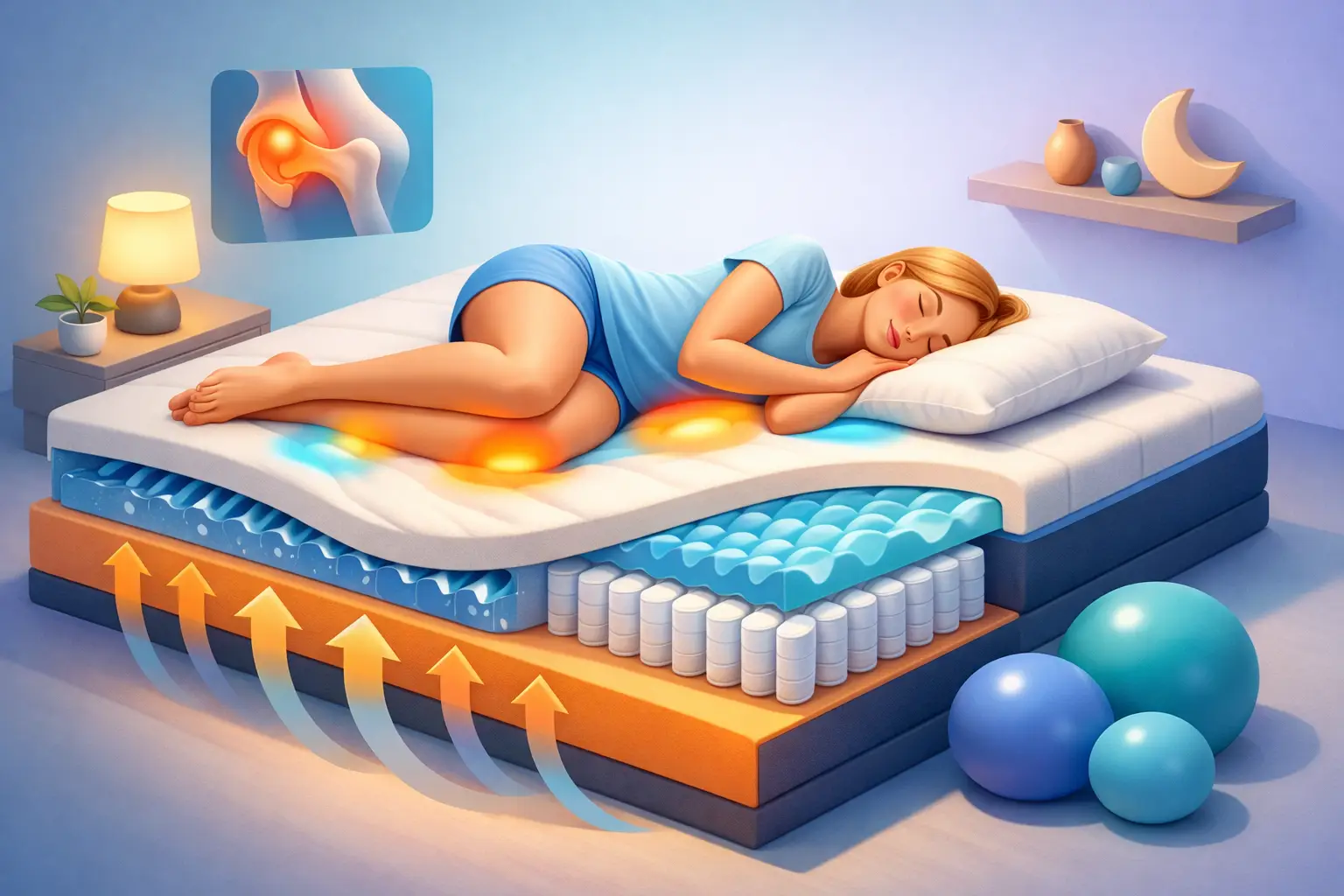
Your shoulder carries much of the load when you sleep on your side. If a mattress is too firm, that pressure stays concentrated at the shoulder and hip, leaving you to wake up stiff, numb, or constantly changing position. If it is too soft, your hips can sink too far and pull your spine out of alignment. The best mattress for side sleepers pressure relief has to solve both problems at once: cushion the prominent joints while holding the body in a level, supported position.
That balance is personal. Your body weight, shoulder width, preferred sleeping position, and even the pillow under your head affect what feels right. Rather than choosing by a label alone, look at how the mattress distributes pressure and supports your natural posture.
Side sleeping creates a narrower contact area than back sleeping. The shoulder and hip press more deeply into the mattress, so surface comfort matters more than it does for many back sleepers. A suitable mattress lets these areas settle in enough to reduce pressure while supporting the waist and lower back.
When the fit is right, your spine should look relatively straight from the neck to the tailbone when viewed from behind. Your shoulder should not feel compressed, and your hip should not sag below the rest of your body. This is why a mattress that feels comfortable for a few minutes in a showroom may not always be the correct choice for a full night of sleep.
For most side sleepers, medium to medium-soft comfort is a sensible starting point. That does not mean every side sleeper needs a soft mattress. A higher-body-weight sleeper may need a medium-firm feel with a thicker pressure-relieving comfort layer, while a lighter sleeper may need more immediate cushioning to avoid pressure at the shoulder.
The most useful way to compare mattresses is to separate comfort from support. Comfort materials ease pressure at the surface. The support core prevents excessive sinkage and helps the mattress retain its shape over time. Both should work together.
Memory foam and visco memory foam are popular for side sleepers because they respond closely to body contours. They can reduce the sharp feeling of pressure at the shoulders and hips by spreading weight across a wider area. Gel-infused memory foam offers a similar contouring feel with an added focus on helping the surface feel less warm.
Traditional foam can also work well, particularly when it is layered over a supportive base. It tends to have a more responsive feel than slow-moving memory foam, which may suit sleepers who change sides often and do not like the sensation of sinking in.
Latex is another strong option. It cushions pressure points but has more bounce and quicker response than memory foam. Many side sleepers appreciate that it feels supportive without making movement difficult. The exact feel varies by latex type, thickness, and the layers beneath it.
A plush top is not enough if the deeper structure allows the hips to drop too far. Pocket spring mattresses are often a practical choice because individual coils can respond to different parts of the body. The shoulder can settle into the comfort layers while the heavier hip area receives more targeted support.
Hybrid-style constructions that combine pocket springs with foam, gel foam, or latex can be especially useful for couples and combination sleepers. They often provide contouring comfort without losing the stable support and edge structure many households expect from a mattress.
Bonnell spring mattresses can deliver dependable support and a firmer, more traditional feel. For a dedicated side sleeper with sensitive shoulders or hips, however, the comfort layers above the springs deserve close attention. A thinner comfort layer may feel too firm unless the sleeper prefers a firmer surface or has a lighter frame.
Temperature is not just a comfort issue. When a mattress sleeps too warm, some people wake more often and reposition repeatedly, which can make pressure discomfort more noticeable. Gel-infused foams, breathable covers, ventilated designs, and coil-based support systems may help create a cooler-feeling sleep surface.
A naturally responsive material such as latex may also appeal to sleepers who want pressure relief without the deeper body-hugging sensation associated with some memory foams. There is no universal winner here. The better choice is the material that gives you relief without making you feel trapped, overheated, or unsupported.
Firmness labels are useful guides, but they are not universal measurements. A medium mattress can feel different depending on the thickness and quality of its comfort layers, the spring system, and the sleeper using it. Use your body and sleep habits to narrow the selection.
Lightweight side sleepers commonly need softer initial cushioning because they do not compress the mattress as deeply. Without enough give, the shoulder may remain elevated, placing strain on the neck and upper back. A medium-soft foam, memory foam, or latex comfort layer can be a better match.
Average-weight side sleepers often find their balance in a medium feel. This range typically offers enough contouring for the shoulder and hip with sufficient support through the center of the body. A pocket spring mattress with a quality foam or gel memory foam comfort layer is a reliable category to consider.
Higher-body-weight side sleepers generally need more support underneath the pressure-relieving layers. A mattress that is overly soft may feel pleasant at first but can allow the hips to sink too deeply over time. Medium-firm pocket spring, latex, or supportive hybrid constructions can provide better alignment while still protecting pressure points.
If you sleep partly on your back or stomach, avoid choosing a mattress that is too soft solely for side sleeping. Combination sleepers need a more balanced feel and easier movement. A medium or medium-firm responsive mattress is often the safer direction.
A mattress and pillow should be considered together. Even the right mattress can feel wrong if the pillow leaves your head tilted upward or dropping toward the mattress. Side sleepers usually need a pillow with enough loft to fill the space between the shoulder and neck.
Your shoulder width and mattress softness change the ideal pillow height. On a softer mattress, the shoulder sinks farther, so a slightly lower pillow may be comfortable. On a firmer mattress, the shoulder stays higher, and you may need more loft. If you regularly wake with neck tension, assess the pillow before assuming the mattress is the only issue.
A mattress protector is also a practical part of protecting your investment. It helps keep the sleep surface cleaner while preserving the feel of the mattress more effectively than adding thick, poorly fitted layers that can change the comfort you chose.
Pain does not always mean a mattress is worn out, but recurring patterns are worth paying attention to. Shoulder soreness, tingling in the arm, hip tenderness, and frequent tossing can point to excess pressure at the surface. Lower-back discomfort may suggest that the mattress is allowing too much hip sinkage.
Look for physical changes as well. Visible dips, uneven areas, weakened edges, or a mattress that no longer returns to shape can affect alignment and comfort. A newer mattress can also feel uncomfortable if its construction simply does not match your sleep position.
Give a new mattress a reasonable adjustment period, especially if you are moving from a very firm surface to a contouring foam or latex feel. But persistent pain is not something to ignore. The goal is comfortable support, not forcing your body to adapt to the wrong mattress.
When comparing options, lie in your normal side-sleeping position long enough to notice your shoulder, hip, and lower back. Check whether your shoulder can relax, whether your waist feels supported, and whether changing position feels natural. Ask about the mattress construction, comfort level, warranty coverage, and the support system beneath the top layers.
A guided selection can reduce guesswork, particularly when two people have different comfort needs. Towell Mattress ME Mattress Consultants can help compare pocket spring, foam, visco memory foam, gel-infused memory foam, latex, and health-focused options based on your sleep position and support preferences.
The right mattress should not make side sleeping feel like a compromise. Choose the one that lets your shoulder and hip settle comfortably, keeps your body supported through the night, and gives you a clear reason to look forward to bedtime.
