
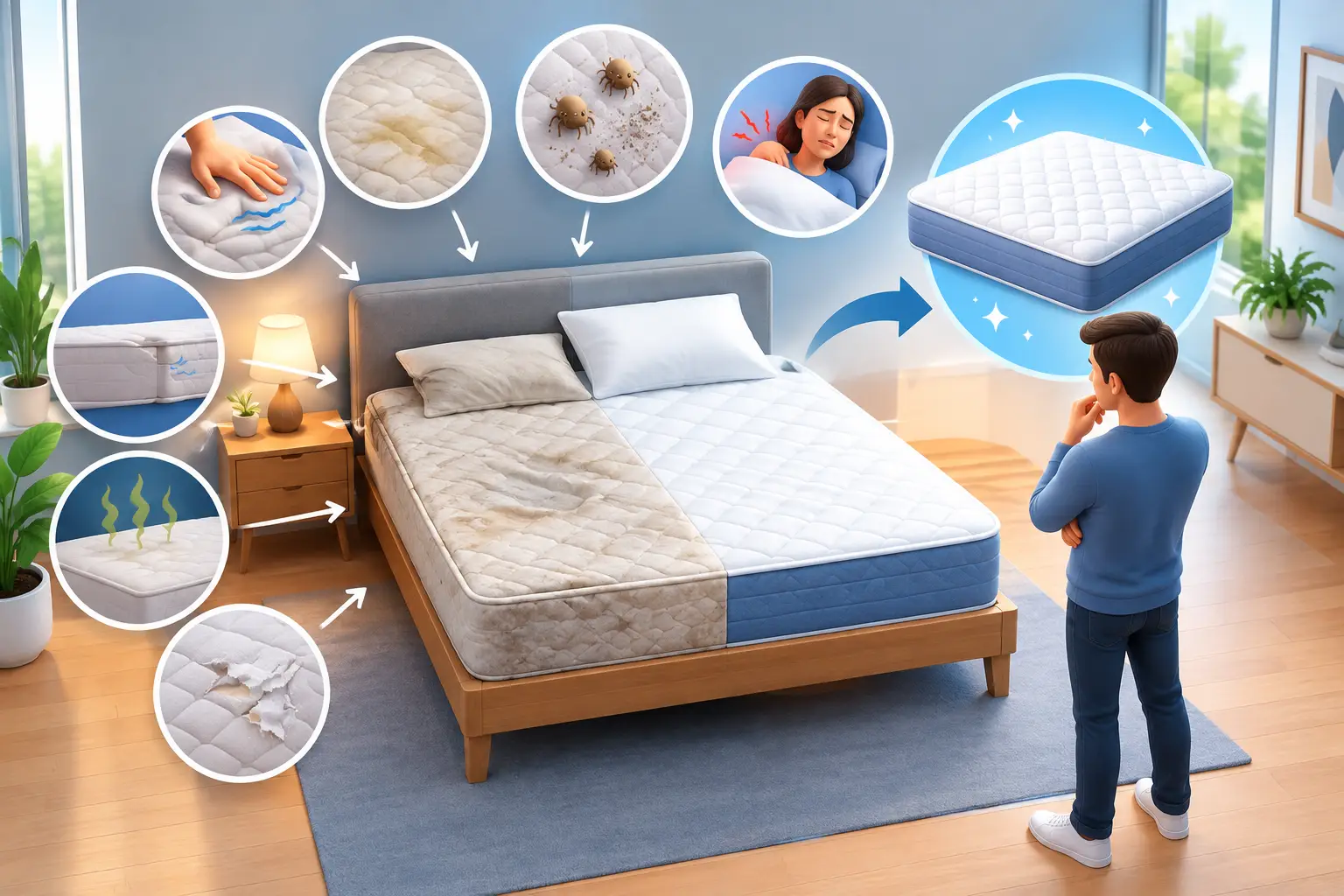
A mattress can look acceptable from across the room and still stop doing its job every night. The question of when to replace a mattress usually comes down to what you feel: waking stiff, shifting repeatedly to get comfortable, or sleeping better almost anywhere else. These are not small inconveniences. They can be practical signs that your mattress is no longer giving your body the support it needs.
A mattress is a long-term household purchase, but it is not meant to last forever. Materials gradually soften, springs lose resilience, and body impressions become more noticeable. Knowing what to check helps you replace it at the right time rather than waiting until restless nights become your normal.
For most households, a mattress should be assessed seriously after about seven to 10 years. That range is a useful benchmark, not a fixed rule. A well-made mattress that is properly supported by its base, protected from spills, and used by one sleeper may remain comfortable longer. A mattress used nightly by two adults, children, or pets may wear sooner.
Construction matters as well. Foam and memory foam mattresses can gradually develop softer areas where the body rests most often. Innerspring models may begin to feel less responsive as coils weaken. Latex is known for durability, although it still needs replacement once comfort or support changes. The condition of the mattress matters more than the calendar alone.
If you do not remember when you bought your mattress, check its label, warranty documents, or past order records. An approximate age gives you a useful starting point when evaluating the other signs below.
Morning discomfort is one of the clearest signs to investigate. If your back, shoulders, hips, or neck feel stiff when you wake up but improve after moving around, your mattress may no longer be holding you in a comfortable, balanced position.
Of course, soreness can have many causes, including activity levels, an old pillow, or an existing health concern. But if the discomfort appears regularly and your mattress is several years old, it deserves attention. The right mattress should support your body without creating concentrated pressure at the shoulders, hips, or lower back.
Remove the bedding and inspect the surface in good light. Some minor settling is normal, especially in plush comfort layers. Deep visible dips, uneven areas, raised edges, or a noticeable slope are different. They can affect alignment and make it harder to find a stable sleeping position.
Turn the mattress only if its care instructions allow it. Many modern mattresses are designed with a specific comfort side and should not be flipped, though rotating head-to-foot may help distribute wear. Rotation can slow future wear, but it cannot restore materials that have already broken down.
A mattress should feel consistent across the area where you sleep. If you can feel individual springs, hard spots, lumps, or a sudden change from firm to soft, the internal structure may be wearing out.
For a spring mattress, creaking or increased motion transfer can also be a clue. Pocket spring designs generally help limit movement between sleepers, but damaged or tired components can still reduce comfort. In foam mattresses, unevenness may feel less obvious to the eye but clear to your body when one area sinks more than another.
Pay attention to how you feel after sleeping in a guest room, hotel, or at a family member’s home. One good night elsewhere is not proof that your mattress has failed. A repeated pattern, however, is useful information.
If you consistently fall asleep faster, wake less often, or feel better rested away from home, your current setup may no longer suit your comfort needs. Consider the entire sleep surface, including your pillow and base, but do not overlook the mattress as the main source of support.
The mattress that suited you years ago may not be the best fit now. Changes in body weight, sleep position, injury recovery, pregnancy, or sharing the bed with a partner can all change what feels supportive.
For example, side sleepers often need enough pressure relief at the shoulder and hip, while back and stomach sleepers may prefer a flatter, more stable surface. Couples may want better motion control or a larger sleep area. Replacing a mattress is not always about damage. Sometimes it is about choosing a construction and comfort level that better matches your life today.
A mattress can collect dust, skin cells, moisture, and allergens over time. Regular cleaning, breathable bedding, and a quality mattress protector can help keep the sleep environment fresher. Still, a mattress with persistent odors, visible staining, mold concerns, or allergy symptoms that do not improve after proper cleaning should be assessed carefully.
A protector is one of the simplest ways to extend the useful life of a new mattress. It helps guard against spills and everyday moisture while keeping the comfort surface cleaner. It cannot, however, fix sagging, worn springs, or foam that has lost its support.
If you spend the night searching for a comfortable position, avoid one side of the bed, or wake repeatedly because you feel trapped in a dip, the mattress is no longer serving its purpose. Good sleep does not require a perfect mattress every night, but your bed should not be a regular source of frustration.
This sign is especially relevant for couples. When one sleeper’s movement wakes the other, or when each person has settled into a separate worn area, the mattress may no longer provide the stability both people need.
Before replacing the mattress, inspect what sits underneath it. A bent frame, broken slats, weak center support, or an incompatible foundation can make even a good mattress feel uneven. The base should be level, stable, and appropriate for the mattress type.
This check matters for warranty protection as well. Manufacturers commonly specify support requirements because an unsuitable base can contribute to premature wear. If the base is the issue, replacing only the mattress may not solve the problem.
Once you know it is time to replace your mattress, avoid choosing based on firmness labels alone. “Firm” and “plush” can feel different depending on the construction, your body type, and your preferred sleep position. Think first about the support you need, then the comfort feel you enjoy.
Pocket spring mattresses are often a strong option for sleepers who want responsive support and reduced partner disturbance. Bonnell spring mattresses offer a traditional, connected spring feel. Foam and visco memory foam models can provide contouring comfort, while gel-infused memory foam may appeal to sleepers who prefer that pressure-relieving feel with a cooler touch. Latex can suit those looking for a buoyant, responsive surface with long-term resilience.
If you have ongoing pain, mobility concerns, or a specific comfort requirement, guided selection is particularly valuable. A mattress consultant can help narrow the choices by sleep position, preferred feel, bed-sharing needs, and the support provided by your existing base. At Towell Mattress ME, that approach helps customers compare construction types without guessing from product names alone.
A new mattress can feel different for the first several nights, especially if you are moving from a worn, sagging surface to one with proper support. Your body may need a short adjustment period. Follow the care instructions, use a suitable protector, and make sure the mattress is placed on the correct base from the first day.
Do not wait for visible damage before taking your sleep comfort seriously. If your mattress leaves you tired, sore, or constantly searching for a better position, that is useful feedback. A well-chosen replacement can make the bedroom feel dependable again – one comfortable night at a time.
