
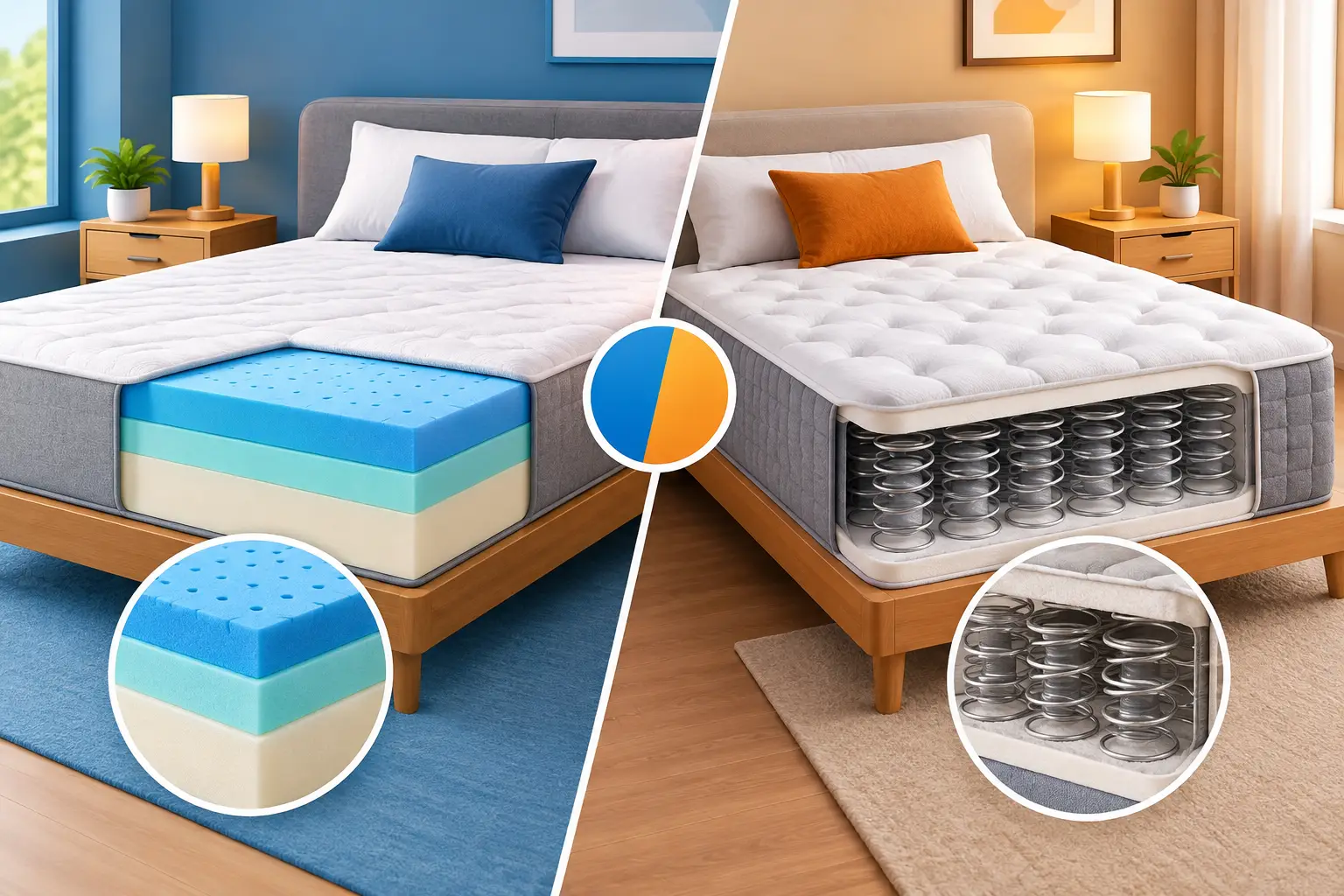
A foam vs innerspring mattress decision usually comes down to one question: do you want a bed that closely cushions your body, or one that feels more responsive and breathable when you move? Both can provide dependable support. The better choice depends on your sleep position, body type, temperature preferences, and whether you share the bed.
A mattress is not one-size-fits-all. The construction beneath the cover changes how your shoulders settle, how your hips are supported, how much movement you feel from a partner, and how the bed performs over time. Understanding those differences makes the selection process much clearer.
A foam mattress uses layers of foam to create its comfort and support. These may include high-density support foam, pressure-relieving memory foam, responsive foam, or gel-infused memory foam. Instead of relying on coils, the mattress distributes body weight across its foam layers.
An innerspring mattress is built around a coil system. The springs provide the primary support, while comfort layers above them add cushioning. Traditional Bonnell springs are interconnected, while pocket springs are individually wrapped and can respond more independently to body weight and movement.
The sensation is noticeably different. Foam generally feels more contouring and stable. Innerspring mattresses usually feel bouncier, easier to move on, and more open in their airflow. Neither construction is automatically better. It is about matching the feel to the sleeper.
Foam is often chosen by people who want pressure relief and a quieter, more cushioned sleep surface. As you lie down, the material adapts around the body, helping spread pressure away from prominent areas such as the shoulders and hips.
Side sleepers commonly need enough cushioning to prevent pressure buildup at the shoulder while keeping the waist and hips supported. A well-designed foam mattress can provide this close-contact comfort, especially when it includes memory foam or a carefully balanced comfort layer.
This does not mean every foam mattress feels soft. Foam comes in a wide range of firmness levels. A firmer foam construction can suit back sleepers and some stomach sleepers, while a medium or medium-plush feel may better suit side sleepers. The key is that your spine should remain in a neutral, comfortable position rather than dipping through the middle.
Foam is particularly effective at absorbing movement. If one person turns over or gets out of bed, the other person is less likely to feel that motion travel across the mattress. For couples with different schedules, light sleepers, or families where a child occasionally joins the bed, this can be a meaningful advantage.
Because foam does not depend on a network of metal springs, it tends to be very quiet. There is less chance of the bed producing noise as sleepers change position. This is a small detail until it affects your sleep night after night.
Traditional memory foam can retain more body heat than a highly breathable coil mattress. Gel-infused foams and ventilated foam designs can improve temperature regulation, but sleepers who naturally run hot should pay attention to the full construction, not simply the label.
Some people also find deep memory foam slower to respond when they change position. If you dislike the feeling of sinking in or prefer a quicker, more buoyant surface, a responsive foam model or a spring-based mattress may feel more natural.
Innerspring mattresses have remained a familiar choice for good reason. Their coil systems create a supportive, responsive foundation with a more traditional mattress feel. Many sleepers appreciate the ease of movement and the airflow around the springs.
An innerspring mattress responds quickly when you shift positions. This can be especially helpful for combination sleepers who move from their side to back during the night. It may also feel easier to get in and out of bed because the surface has more lift and less body-hugging contour.
Stomach sleepers often appreciate this responsive support, provided the comfort layers are not overly soft. The goal is to keep the pelvis from sinking too far, which can place strain on the lower back.
The open space within a coil system allows air to circulate more freely than it does through solid layers of foam. This can make an innerspring mattress a strong option for people who prefer a cooler, fresher sleeping surface.
Temperature is influenced by more than the core. Fabric, quilting, foam layers, room conditions, and bedding all matter. Still, a breathable spring structure is a practical starting point for anyone concerned about sleeping warm.
Not all innerspring mattresses perform the same way. Bonnell springs are interconnected and often provide a firm, classic support feel. They can be a reliable option for guest rooms, children’s rooms, and sleepers who prefer a traditional mattress structure.
Pocket springs work independently, allowing the mattress to respond more precisely to different areas of the body. Because each coil can move on its own, pocket spring mattresses typically offer better motion separation and targeted support than interconnected spring designs. For couples, this is often an important distinction.
A basic innerspring mattress may transfer more motion than foam, particularly if the coils are interconnected. Its comfort also depends heavily on the quality and thickness of the layers above the springs. A coil unit alone does not determine whether a mattress will feel firm, plush, supportive, or pressure-relieving.
Over time, any mattress can show wear if it is not well matched to the sleeper or properly supported by its foundation. Choosing a construction with quality materials and using a suitable base will help protect performance.
Your usual sleep position offers a useful starting point, although it should not replace trying the mattress for comfort and alignment.
Side sleepers often favor foam or a pocket spring mattress with generous comfort layers because these designs can cushion the shoulder and hip. Back sleepers need balanced support across the lumbar area and may do well with medium-feel foam, pocket spring, or firmer innerspring options. Stomach sleepers generally need a flatter, more supportive surface that prevents excessive hip sink. Combination sleepers often prefer the quick response of innersprings or responsive foam rather than slow-moving memory foam.
For couples, motion control deserves extra attention. Foam is usually the strongest choice when one sleeper is easily disturbed. A pocket spring mattress can also be an excellent middle ground, combining responsiveness and airflow with more independent movement than traditional interconnected springs.
Body weight and personal comfort preference matter too. A mattress should provide support without feeling hard at pressure points. Heavier sleepers may prefer a sturdier support core and a surface that does not allow excessive sink, while lighter sleepers may need enough comfort-layer softness to feel proper pressure relief.
“Foam” and “innerspring” describe a broad category, not a complete comfort specification. Two foam mattresses can feel completely different, just as two innerspring mattresses can offer very different levels of support and motion control.
Look beyond the main material and consider the whole build: the support core, comfort layers, edge support, cover, and overall firmness. A mattress with pocket springs and foam comfort layers, for example, can offer a balanced blend of cushioning, airflow, and responsive support. This is why a guided comparison is often more useful than making a decision based on one feature.
When testing a mattress, lie in your normal sleep position long enough to notice how your shoulders, hips, and lower back feel. Your body should feel supported, not pushed upward at pressure points or allowed to sag. If you share the bed, test movement and edge stability together.
A clear mattress consultation should help you answer a few practical questions. Do you sleep warm? Do you wake when your partner moves? Are you primarily a side, back, stomach, or combination sleeper? Do you prefer a close, cushioned feel or a more lifted and responsive surface? Finally, does the mattress provide reliable support at the edges and feel comfortable in your actual sleeping position?
At Towell Mattress ME, Mattress Consultants can help narrow these choices across foam, memory foam, gel-infused foam, Bonnell spring, and pocket spring constructions. This makes it easier to compare comfort types without guessing from product names alone.
The right mattress should make bedtime feel uncomplicated. Choose the construction that supports the way you actually sleep, then give comfort and proper alignment the final say.
