
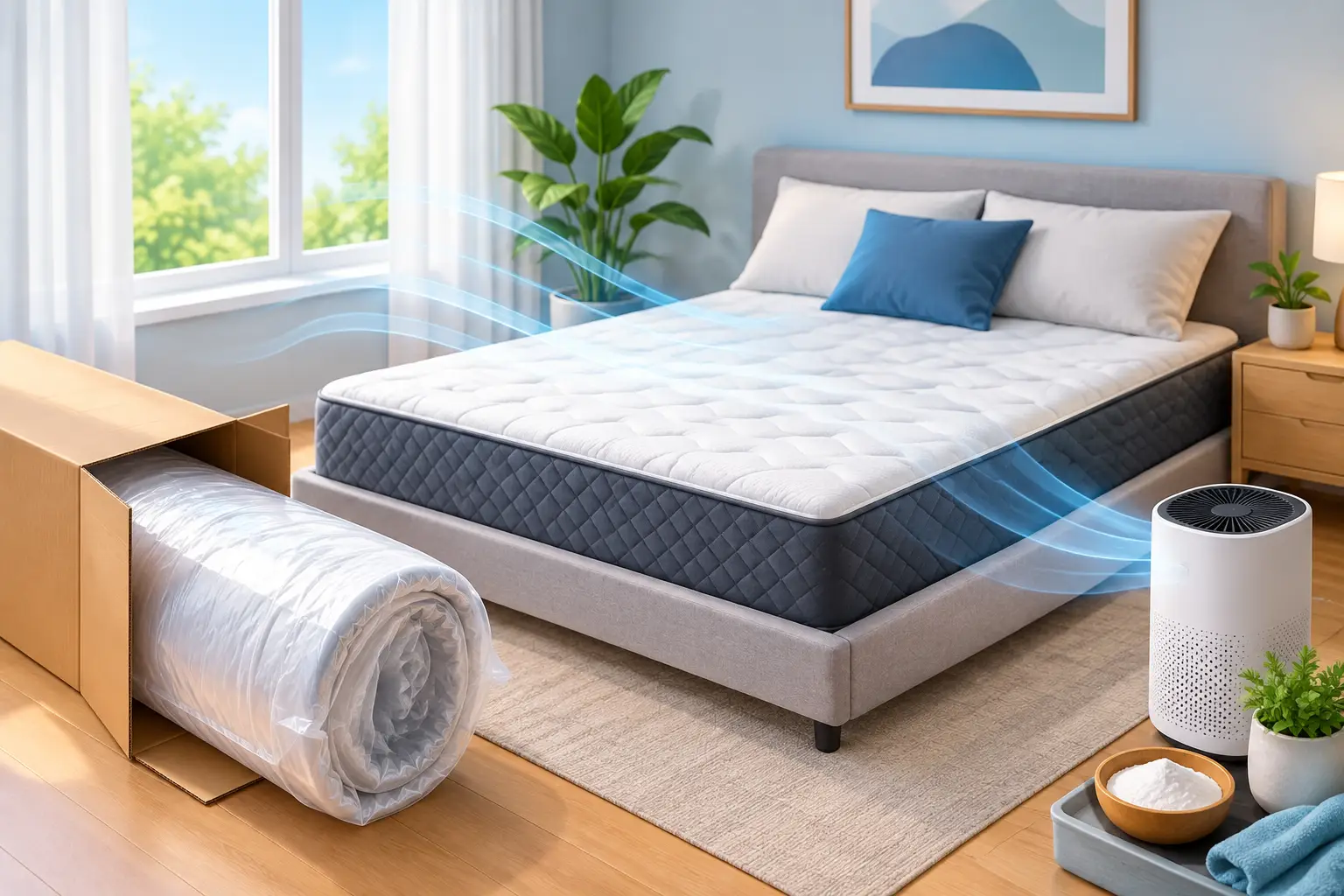
A new mattress should feel like a comfort upgrade, not leave you wondering whether the room needs fresh air. It is common to notice a light, temporary smell when you reduce mattress odor after unboxing, especially with foam, memory foam, gel foam, or a mattress that has been tightly packaged for delivery. The practical goal is not to mask the odor with strong fragrance. It is to give the mattress the right conditions to air out safely while you check that it is expanding and performing as expected.
Most new-mattress odors come from materials releasing a small amount of residual scent after manufacturing and compression. Foam layers are the most frequent source, although fabric, adhesives, and protective packaging can also contribute. When a mattress has been sealed in plastic and compressed, those odors have nowhere to disperse until it is opened.
The smell is often described as chemical-like, plastic-like, or simply unfamiliar. For most households, it fades substantially within a few hours to several days. The timing depends on the mattress construction, how long it was packed, airflow in the room, and room temperature.
A pocket spring or Bonnell spring mattress with comfort foam may air out faster than an all-foam or deep memory foam model. That does not mean one construction is better than another. It simply means denser foam can hold a temporary packaging scent longer. A well-ventilated room makes the biggest difference in either case.
Start by removing all plastic wrap, cardboard, straps, and packaging materials from the room. Do not leave plastic beneath the mattress while it expands. It can trap heat and limit airflow around the bottom surface.
Place the mattress on its intended bed base or a clean, flat, well-supported surface. Give it room to expand according to the product instructions. If possible, open windows and keep interior doors open to create cross-ventilation. A ceiling fan or standing fan can help circulate air, but it should move air around the room rather than blow continuously into one small section of the mattress.
Allow the mattress to air out uncovered. Avoid making the bed immediately with thick sheets, blankets, or a waterproof protector. Those items are useful once the mattress is ready for use, but covering it too early can slow the process. If you need to sleep on it the first night, use clean, breathable bedding and continue ventilating the room during the day.
For a mild odor, ventilation and time are usually enough. If you want an additional, low-risk step, lightly sprinkle plain baking soda over the mattress surface, leave it for several hours, then vacuum it thoroughly using a clean upholstery attachment. This can help absorb surface odors, but it will not speed up foam expansion or remove a scent trapped deep inside the materials. Use only a light layer and make sure every trace is vacuumed away before adding bedding.
It can be tempting to spray perfume, air freshener, disinfectant, or fabric freshener onto a new mattress. That approach often creates a stronger mix of odors and may introduce moisture into foam and upholstery. Moisture is particularly unhelpful because it can take time to dry and may create a musty smell of its own.
Avoid steam cleaning, washing the mattress, or applying essential oils directly to the cover. These methods are not necessary for a newly unboxed mattress and may affect fabrics, foams, adhesives, or warranty conditions. A mattress is not designed to be saturated with liquid, even when the liquid seems gentle.
Activated charcoal bags placed nearby can be a reasonable option for the room, particularly if it has limited ventilation. Keep them beside the bed rather than inside the mattress cover. Similarly, an air purifier with an appropriate filter may improve overall room air, but it should support ventilation rather than replace it.
The room itself can either shorten or extend the airing-out period. Warm, stuffy spaces tend to hold odors longer, while fresh circulating air helps them disperse. Keep the room comfortably temperate and dry. Extreme heat is not a solution, so do not place the mattress in direct harsh sunlight or use heaters close to it.
If outdoor air is unsuitable due to weather or local conditions, use the home’s normal ventilation and a fan. Opening the bedroom door, ventilating adjacent rooms, and running an air purifier can still improve circulation. In a humid environment, a dehumidifier may help keep the room comfortable, but it should not be aimed directly at the mattress.
Do not move the mattress outdoors unless the manufacturer specifically permits it. A new mattress can pick up dust, moisture, pollen, and dirt quickly, and carrying it unnecessarily may damage edges or handles. The cleanest, safest place for airing out is usually the bedroom where it will be used.
A light odor that steadily fades is generally expected after unboxing. It should not become stronger after the first day, and it should not be accompanied by visible staining, dampness, smoke-like smells, or damaged packaging materials.
Pay attention to how people in the household feel around the mattress. If anyone develops persistent headaches, eye irritation, breathing discomfort, nausea, or an allergic-type reaction, move them to fresh air and stop using the mattress until you have received guidance. Individuals with asthma, chemical sensitivities, or other respiratory concerns may prefer to air out a new mattress in a separate room before sleeping on it.
Contact the retailer or manufacturer if a strong odor remains unchanged after several days of proper ventilation, if the smell is clearly moldy or burnt, or if the mattress arrives with damage. Take clear photos of the packaging, labels, and affected area before disposing of anything. This gives the service team the information needed to advise you properly.
When the odor has faded and the mattress has reached its intended shape, add a breathable mattress protector. A quality protector helps guard against spills, sweat, dust, and everyday wear without changing the comfort feel of the mattress. For families, it is one of the simplest ways to keep a new sleep surface clean from the first night.
Choose bedding that allows air to circulate, especially during the first week. Cotton or other breathable fabrics are usually more comfortable than overly heavy layers. If the mattress has a removable cover, follow its care label exactly. If it does not, spot-clean only when needed and avoid soaking the surface.
Rotating the mattress, where permitted by its design, can also support even wear over time. Do not flip a one-sided mattress unless the product instructions say it is reversible. Proper support, regular care, and a clean protector do more for long-term freshness than heavily scented products ever will.
Towell Mattress ME can help customers match the right mattress construction, comfort level, and care routine to their household needs. Whether you select spring, foam, latex, or memory foam, a short airing-out period is usually a normal part of setting up a freshly delivered mattress.
A new mattress should settle into your home quickly. Give it clean airflow, avoid aggressive cleaning products, and trust gradual improvement rather than quick-fix fragrance. If the smell does not improve or raises a genuine concern, asking for professional product guidance is the right next step.
