
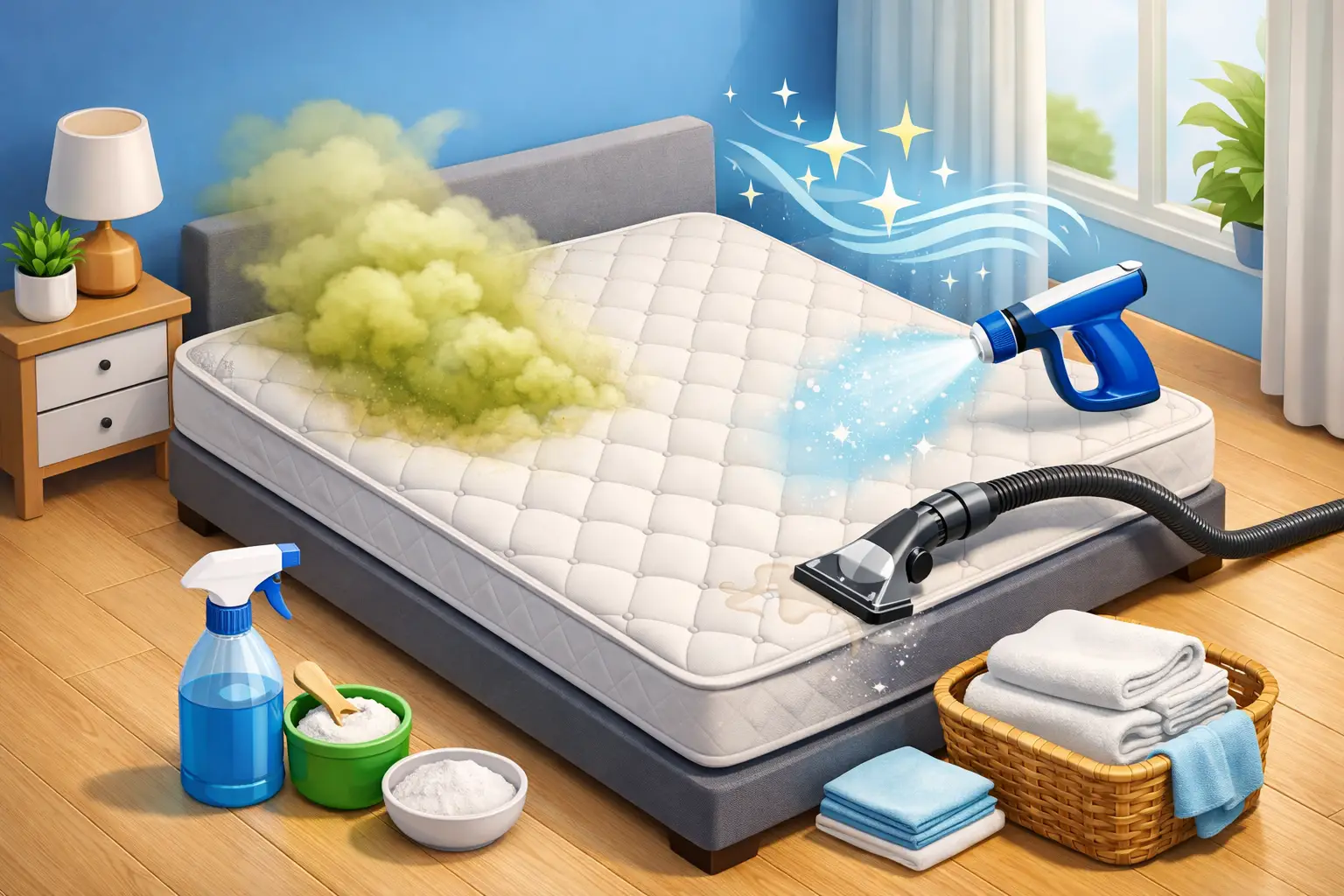
A mattress can look clean and still hold onto odors from perspiration, humidity, pets, spills, or extended use. Knowing how to remove mattress odor safely matters because the wrong method can leave moisture deep inside the bed, damage foam, or create a stronger smell later. The goal is not to mask the odor with fragrance. It is to lift the source, dry the mattress thoroughly, and keep the materials protected.
A light, stale smell after warm nights is usually caused by absorbed body moisture and normal use. This type of odor often responds well to airing, vacuuming, and baking soda. A sharper smell may point to a recent spill, while a musty odor can indicate that the mattress has been exposed to too much humidity or has not dried properly after cleaning.
Pet urine, vomit, and other biological stains need a different approach. They can seep below the surface and leave behind odor-causing residue even when the visible stain has faded. If you suspect mold or mildew, or if the odor is persistent and causes respiratory irritation, do not simply cover it with a protector or room spray. Inspect the mattress, bed base, and nearby wall for moisture problems first.
The mattress construction also affects what is safe. Foam, memory foam, gel foam, latex, pocket spring, and Bonnell spring mattresses all benefit from low-moisture cleaning. Foam and latex layers are especially vulnerable to saturation because they dry slowly. Always check the mattress care label before applying any product.
For everyday odors, baking soda is one of the most dependable low-risk options. It absorbs surface oils and odors without soaking the mattress or introducing strong chemicals.
Strip the bed completely, including the mattress protector. Wash sheets, pillowcases, blankets, and the protector according to their care labels. If the bedding goes back on before it is fully dry, it can transfer moisture and odor back to the mattress.
Next, use the upholstery attachment on your vacuum cleaner to remove dust, hair, skin flakes, and loose debris from the top and sides of the mattress. Work slowly along seams, quilting, and handles, where dust tends to gather. Vacuuming first allows the baking soda to make better contact with the fabric surface.
Sprinkle a light, even layer of baking soda over the mattress. You do not need to create a thick coating. Let it sit for at least several hours, ideally while the room is dry and well ventilated. For a mild odor, three to four hours may be enough. For a mattress that has absorbed more perspiration or has been stored for a while, leave it on longer.
Then vacuum thoroughly, making several passes in different directions. Check the seams again to make sure no powder remains. Baking soda is useful, but leaving excessive residue behind can make the sleeping surface feel gritty and may affect people who are sensitive to dust.
Airflow is one of the most effective parts of odor control. Open windows when outdoor conditions allow, run a ceiling fan, or position a fan so air moves across the mattress surface. Remove the bedding and give the mattress time to breathe after cleaning.
Brief indirect sunlight can also help freshen a mattress, especially after the baking soda step. However, avoid leaving foam, memory foam, or latex mattresses in intense direct sun for long periods. Heat and ultraviolet exposure can degrade some comfort materials over time. If you move a mattress outdoors, place it in a clean, dry shaded area with strong airflow rather than leaving it under harsh sun all afternoon.
In humid climates or during rainy weather, indoor airflow and air conditioning may be more useful than open windows. The key is dryness. A mattress that feels cool or slightly damp should not be remade until it is completely dry.
For a fresh spill, blot immediately with a clean white cloth or paper towel. Press down firmly, but do not rub. Rubbing spreads the liquid and pushes it farther into the upholstery layers.
For a water-based spill, lightly dampen a cloth with cool water and a small amount of mild dish soap, then blot the affected area. Follow with a separate cloth dampened only with water to remove soap residue. Use as little moisture as possible. Finish by pressing dry towels into the area and allowing strong airflow to dry it completely.
Urine odors usually require an enzyme-based upholstery cleaner that is specifically labeled as suitable for mattresses or fabric. Enzymes help break down the organic residue that causes recurring odor. Apply the product sparingly and follow its instructions exactly. Test it first on a small, hidden area, especially on mattresses with specialty fabrics or natural fiber covers.
After treatment, blot rather than scrub and use fans to speed drying. Do not use a hair dryer on high heat, and do not place bedding over the spot until no moisture remains. If the urine has soaked deeply into a thick foam mattress or returns after treatment, professional cleaning or replacement may be the safer option.
A strong scent can make a mattress seem fresher for an hour, but perfumes and essential oils do not remove the source of odor. Some oils can also stain fabric, irritate sensitive skin, or leave an oily residue that is difficult to clean.
Avoid saturating the mattress with vinegar, water, disinfectant spray, or carpet cleaner. Vinegar can be useful for some household cleaning tasks, but a heavily sprayed mattress can retain both moisture and a sour smell. It is not the right first choice for a foam or latex bed.
Do not use bleach, ammonia, or harsh multipurpose cleaners on a mattress. These products can damage fabrics and foams, create unpleasant fumes, and may react badly with biological residues. Steam cleaning is also not automatically safe. While steam can sanitize certain surfaces, it introduces significant moisture and heat, which may be unsuitable for many mattress constructions.
If the smell is musty, resist the temptation to keep cleaning repeatedly. Repeated wet treatments can make a moisture problem worse. Instead, inspect the bedroom environment, including the bed frame, foundation, and wall behind the bed. A dehumidifier, better airflow, and a properly raised bed base can make a meaningful difference.
A quality washable mattress protector is the simplest way to reduce future odor buildup. It creates a barrier against sweat, accidental spills, and everyday dust while allowing you to clean the surface layer more frequently than the mattress itself. Choose a protector that fits securely and does not bunch beneath the sheets, since comfort still matters.
Wash bedding regularly and allow the mattress to air out during linen changes. Rotating the mattress as recommended by its manufacturer can also support more even wear and help prevent concentrated moisture and body oils from building up in one area. Do not flip a one-sided mattress unless its care instructions specifically say it is designed to be flipped.
For households with children, pets, allergies, or frequent guest use, odor prevention is especially worthwhile. A protector and prompt spill response can preserve the condition of the mattress and support a cleaner sleep environment. This is also helpful for hospitality settings, where regular inspection and consistent bedding care protect both comfort and durability.
A mattress may need more than home care if it smells strongly of mold, smoke, urine, or chemical fumes, or if the odor returns soon after several careful cleaning attempts. Visible mold, widespread staining, a damp interior, or a mattress that has been exposed to floodwater are clear signs to stop using it until the issue is properly assessed.
An older mattress can also retain odors because its internal materials have absorbed years of moisture and allergens. In that case, replacement may be the more practical and hygienic decision. When selecting a new mattress, consider its construction, your comfort needs, and the protection you will use from day one. Towell Mattress ME can help customers compare mattress types and suitable protectors with guidance based on the way they sleep.
A fresh mattress should smell neutral, feel dry, and support restful sleep without needing heavy fragrance to hide a problem. Regular airing, light cleaning, and a washable protector will usually keep it that way.
