
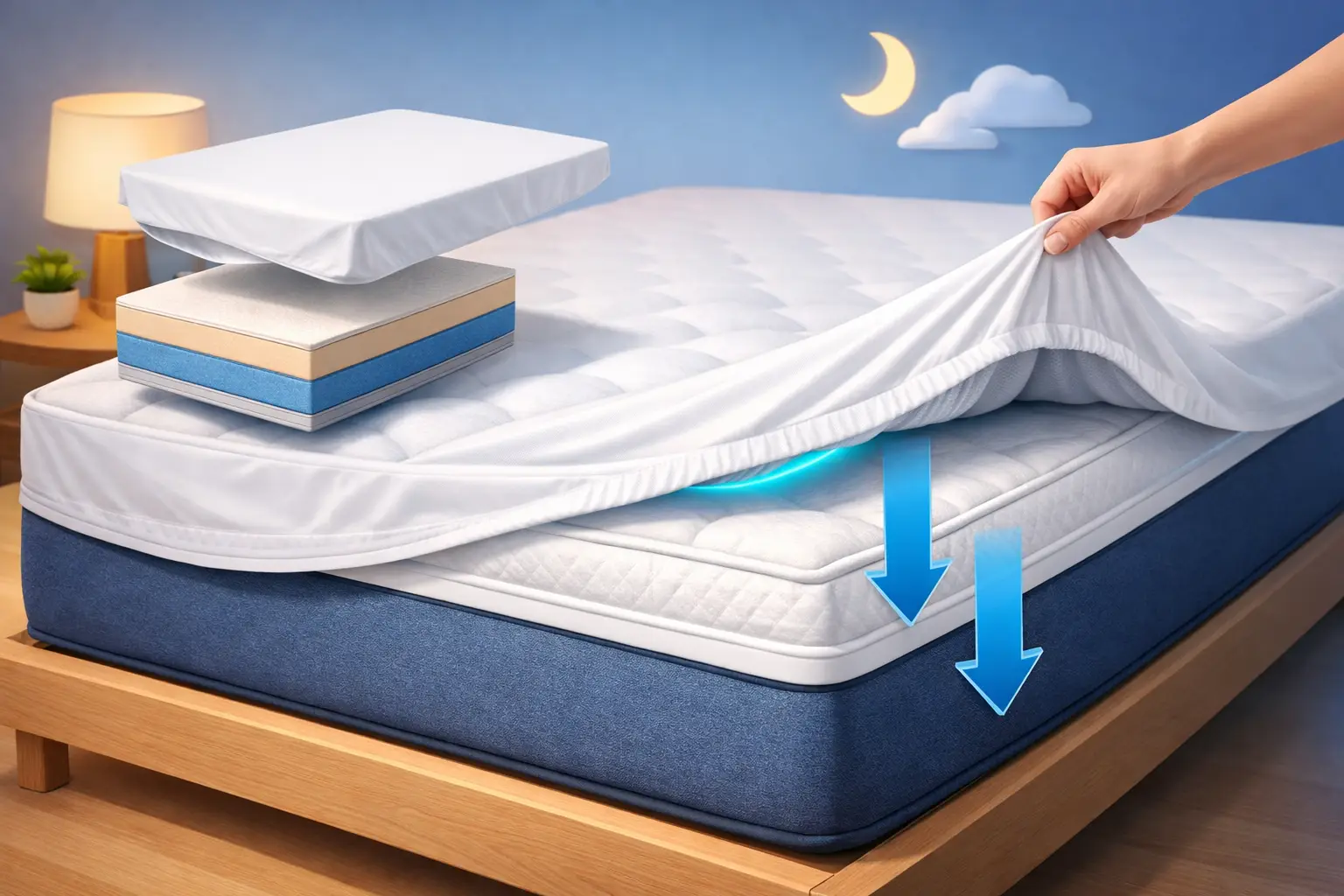
A protector that is too shallow can pull loose at the corners before the week is over. One that is far too deep can gather under the fitted sheet, affecting how smooth and comfortable the bed feels. Getting mattress protector size fit for deep pocket mattresses right starts with more than choosing Twin, Queen, or King. The mattress depth and the protector’s stated pocket range matter just as much.
For households investing in a thicker mattress, pillow top, or supportive foam design, a properly fitted protector keeps the sleep surface protected without turning bed-making into a daily struggle. It should sit securely, allow the mattress to perform as intended, and stay in place through normal movement at night.
A mattress protector is designed to create a barrier against everyday moisture, spills, dust, and general wear. Its protection is only dependable when it covers the mattress correctly. If the skirt rides up, exposed corners and side panels are left unprotected. If the fit is overly loose, the protector may shift, wrinkle, or make the fitted sheet feel uneven.
Deep-pocket fit is especially relevant for modern mattresses. Comfort layers in memory foam, gel memory foam, latex, and pillow-top spring mattresses can add meaningful height. Even mattresses with the same width and length may have very different depths, so choosing solely by standard bed size is not enough.
A close, secure fit also supports the look of the bed. The protector should lie flat beneath your sheet rather than creating visible bunching around the perimeter. For guest rooms, family homes, and hospitality settings, that clean finish is part of a well-prepared bed.
Use a tape measure and check three dimensions: width, length, and depth. Width and length confirm the standard mattress size. Depth tells you whether a regular, deep-pocket, or extra-deep-pocket protector is appropriate.
To measure depth, start at the lowest point of the mattress side and measure straight up to the highest point of the sleep surface. Include the full height of any built-in pillow top or Euro top. Do not measure from the bed frame, box spring, or base.
If you use a mattress topper under the protector, measure the mattress and topper together. This is a common source of fitting problems. A protector that fits a 10-inch mattress may not fit correctly once a 2-inch or 3-inch topper is added.
Protector labels often state a maximum mattress depth, such as “fits up to” a certain number of inches. That number is useful, but the best fit usually comes when your mattress depth sits comfortably within the stated range rather than exactly at its limit.
For example, if your mattress is 14 inches deep, a protector made for deep pockets up to 16 inches will generally give the elastic enough material to wrap beneath the mattress. A product rated only up to 14 inches may fit at first but can be under tension, especially after washing or when the mattress has a plush top.
At the other end, avoid selecting an extra-deep protector for a relatively slim mattress unless the product is specifically designed to adjust closely. Excess fabric can collect along the sides and corners. It may still cover the mattress, but it will not deliver the tidy, stable fit most customers expect.
Terms can vary between manufacturers, so always prioritize the actual pocket measurement on the product details. Still, these general categories can help narrow the selection.
A standard-pocket protector is usually best for lower-profile mattresses. It suits many traditional foam or spring models without a thick comfort top. A deep-pocket protector is intended for taller mattresses, including many pillow-top and premium comfort designs. An extra-deep-pocket option is made for very thick mattresses or a mattress-and-topper setup.
The right category depends on the finished bed height, not the material inside the mattress. A foam mattress can need a deep pocket if it is tall, while a spring mattress can use a standard pocket if its profile is lower. Construction affects comfort and support; measured depth determines the protector fit.
After placing the protector on the mattress, pull each corner down evenly. The elasticized skirt should wrap under the bottom edge without extreme stretching. Run your hand across the top surface. It should be smooth, with no loose fabric collecting near the corners or middle.
Once the fitted sheet is on, the bed should feel normal. You should not notice a hard edge, a folded area, or a protector that moves when you turn over. If the corners pop off while you are fitting the sheet, the pocket is probably too shallow. If the sides hang loosely or create folds beneath the sheet, the pocket may be too deep.
A few details make a real difference over time: strong elastic around the full skirt, enough sidewall material for the mattress depth, and fabric that holds its shape after washing. A waterproof layer should protect effectively while remaining comfortable beneath your regular bedding. The protector should not compromise the feel of the mattress you selected carefully.
The most frequent mistake is assuming that all Queen or King protectors have the same depth. Standard bed dimensions identify the surface area, but they do not account for mattress profile. Always compare the product’s fit specification with your own measurement.
Another mistake is measuring the mattress before adding a topper, then trying to stretch the protector over both. This can strain the elastic and cause the corners to lift. If the topper is part of your nightly setup, it belongs in the measurement.
It is also worth checking whether the mattress has a particularly rounded, pillow-top edge. A mattress may measure within the listed limit at the center yet require extra room around its plush perimeter. When the measurement is close to the protector’s maximum depth, moving up to the next pocket range is usually the safer choice.
Finally, do not judge fit only on the first night. Wash and dry the protector according to its care instructions, then refit it. Quality protectors are made for regular care, but improper high-heat drying can affect elastic and waterproof materials. Following the label helps preserve both the fit and protective function.
For a lower-profile Bonnell spring or foam mattress, a standard-pocket protector may offer the cleanest fit. For a thick pocket spring, latex, gel memory foam, or pillow-top mattress, deep-pocket coverage is often more suitable. Medical and health-focused mattresses may also need careful measurement, particularly when they include specialized comfort layers or are paired with a topper.
For children’s rooms and busy family beds, secure fit matters because the protector is more likely to be washed frequently. In guest rooms, choose a depth that will stay neat even when different people make the bed. For hospitality teams, confirm the depth of every mattress model before ordering protectors in volume. Consistent sizing helps housekeeping staff fit beds quickly and maintain a uniform appearance.
Towell Mattress ME can help customers match a protector to the mattress profile they have selected, including taller comfort constructions that need reliable deep-pocket coverage. A quick measurement before purchase can prevent the inconvenience of an ill-fitting protector later.
Choose the next deeper pocket range when your mattress depth is close to the protector’s maximum stated capacity, when you have added a topper, or when the mattress has a high, soft pillow top. A little extra allowance is useful when it helps the elastic reach beneath the mattress without strain.
Do not automatically size up if your mattress is significantly thinner than the deeper range. In that case, a correctly sized standard or adjustable deep-pocket protector will usually stay smoother and feel better under the sheet.
Your mattress is a long-term comfort purchase, and the protector is the layer that helps keep it ready for years of use. Measure the finished height of your bed, select a pocket range with sensible allowance, and fit it once before laundry day. That small check gives you a protected mattress and a bed that stays neat from corner to corner.
