
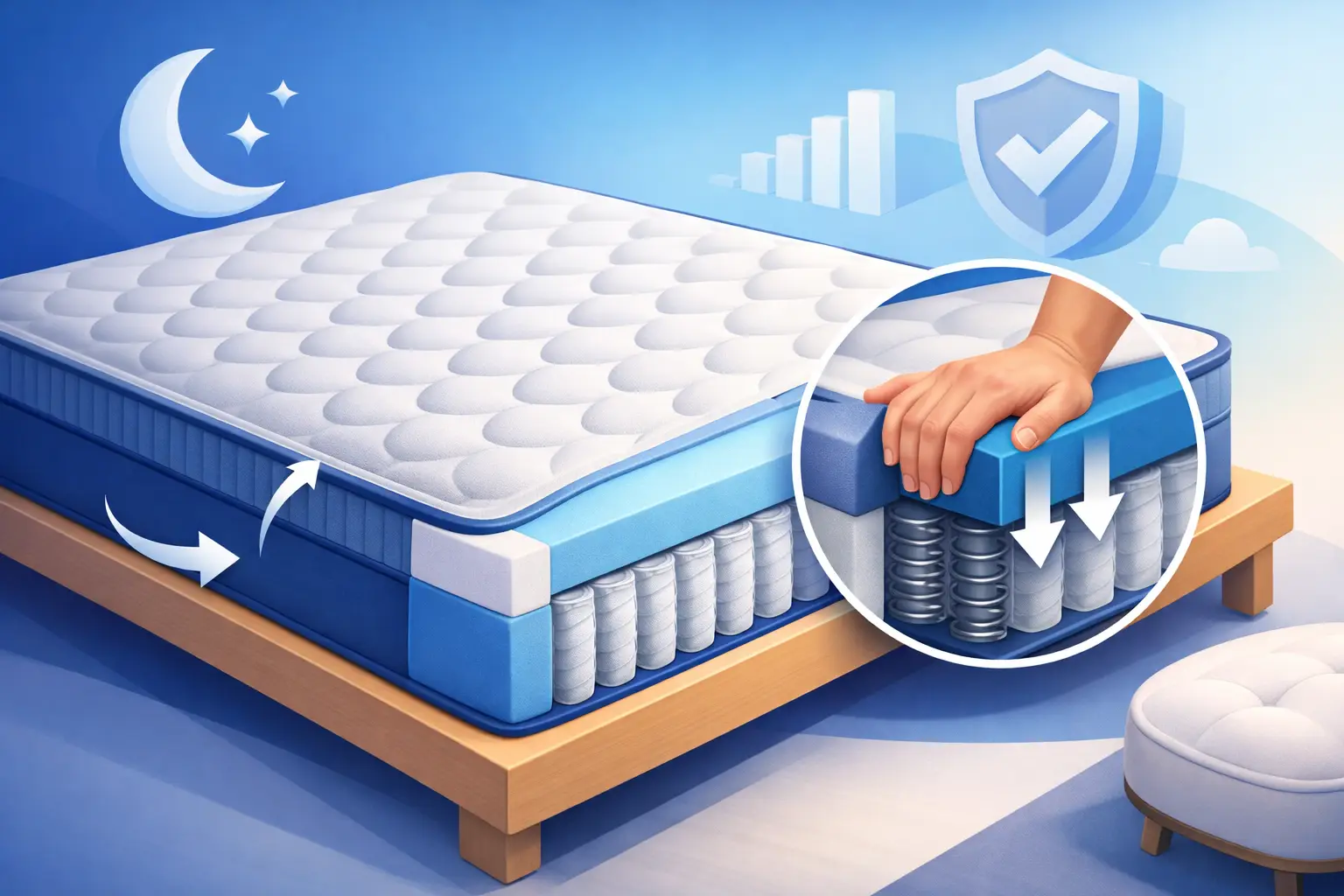
A mattress can feel comfortable in the center and still disappoint you every morning when you sit on the side to put on your shoes. That is where this guide to mattress edge support meaning becomes useful. Edge support describes how well a mattress holds its shape and stability around its perimeter, where people commonly sit, get in and out of bed, or sleep close to the edge.
For couples, families sharing a bed with a child, and anyone who needs a stable surface for getting up, edge support is more than a technical feature. It affects usable sleeping space, daily comfort, and how supported the mattress feels over time.
Edge support is the reinforcement built into the outside border of a mattress. Without it, the sides can compress more deeply than the middle when weight is applied. You may feel as though you are sliding outward, or notice that the mattress edge sinks sharply when you sit down.
A well-supported edge creates a firmer, more secure boundary. It does not mean the entire mattress will feel hard. The comfort layers can still offer cushioning, pressure relief, or a softer feel. The purpose of edge reinforcement is to keep the perimeter from collapsing excessively under normal use.
This feature matters because the edge is one of the most heavily used areas of a mattress. Even sleepers who stay near the center place repeated pressure on the border when entering and leaving the bed. Over years of use, an unsupported perimeter can show wear sooner than the rest of the sleep surface.
The most obvious benefit is stability. When you sit on a mattress with good edge support, it should provide a controlled amount of compression rather than dropping away beneath you. That can make a meaningful difference for older adults, people recovering from an injury, or anyone who finds it uncomfortable to push up from a low, sinking surface.
It also helps maximize the full width of the mattress. On a larger bed shared by two people, each sleeper may naturally use the outer portion of their side. A reinforced perimeter lets you rest closer to the edge with greater confidence. This can make the mattress feel more spacious without changing the bed size.
There is also a durability benefit. A structured edge can help the mattress retain a cleaner shape, especially when it is used frequently for sitting. However, edge support is not a substitute for overall quality. The core, comfort layers, cover, and proper foundation all influence how the mattress performs through its life.
Different mattress constructions use different methods to strengthen the perimeter. The right choice depends on the feel you prefer and how you plan to use the bed.
Many pocket spring and hybrid mattresses use high-density foam around the outer edge of the coil unit. This creates a supportive frame while allowing the springs in the center to respond independently to body weight.
Foam encasement often provides a balanced feel: stable enough for sitting and sleeping near the edge, without the rigid sensation some people notice with wire reinforcement. The quality and density of the foam matter. A lower-quality foam border may soften more quickly, while a well-designed high-density edge is better suited to regular use.
Some innerspring mattresses use stronger coils or heavier-gauge wire around the perimeter. This design can deliver a notably firm and responsive edge. It is common in traditional spring constructions and can be a practical choice for sleepers who prefer a more structured mattress feel.
The trade-off is that a reinforced coil edge may feel firmer than the center comfort area. That is not necessarily a problem, but it is worth testing if you like a very soft, plush sleep surface from edge to edge.
All-foam mattresses may rely on denser foam along the sides, a firmer base layer, or a combination of both. This can offer effective support, particularly in quality foam and memory foam designs. Still, foam generally has a different response than springs. It may feel more cushioned when sitting on the side, even when it is performing as intended.
For people who primarily sleep in the center and value pressure relief, this may be perfectly suitable. For those who sit on the edge every day or require a firmer push-off point, compare the perimeter carefully before selecting an all-foam model.
Latex mattresses are known for their resilient, buoyant response. A latex model with a supportive core can maintain its shape well, although edge performance varies by design. Hybrid mattresses combine foam or latex comfort layers with a spring support system, often adding dedicated edge reinforcement for a more stable border.
These constructions can suit shoppers who want pressure relief without giving up the easier movement and support associated with a spring-based foundation.
The best edge support is not always the firmest edge. It is the one that supports your everyday habits while matching your comfort preference.
If you share a mattress, stronger edge support is usually worth prioritizing. Each person can use more of the available surface, which is especially helpful when one or both sleepers move during the night. Couples choosing a queen or king mattress often benefit from testing how secure the outer edge feels in their normal sleeping position.
If you sit on the bed to dress, read, or help a child settle in, look for a mattress that remains stable under seated weight. Sit close to the border rather than several inches inward. Notice whether you feel supported or whether your hips sink and your body tilts toward the side.
If mobility is a concern, edge support deserves extra attention. A stable edge can make transfers in and out of bed feel more controlled. Mattress height also matters here. The combined height of the mattress, foundation, and bed frame should allow your feet to rest comfortably on the floor when sitting at the side.
If you prefer a soft mattress, do not assume you must accept weak edges. Many plush pocket spring, gel memory foam, and hybrid models use a supportive perimeter beneath softer comfort layers. The key is to distinguish a plush top layer, which should contour gently, from an edge that collapses too deeply.
Product descriptions can indicate whether a mattress includes foam encasement, reinforced coils, or a high-density support border. Those details are useful, but personal testing remains valuable whenever possible.
First, sit on the edge for at least a few seconds. A mattress should compress, but you should not feel as if you need to brace yourself to stay in place. Next, lie near the edge in your usual sleep position. Your body should feel supported rather than pulled toward the side.
Pay attention to the difference between the center and the perimeter. A slight change in firmness is normal, particularly in models with reinforced coil borders. A dramatic drop-off is a sign that the edge may not suit your needs.
Ask about the construction beneath the upholstery layers, not only the top feel. A mattress can look substantial because it has a thick quilted cover, yet its long-term performance depends on the support system underneath. A mattress consultant can explain whether the model uses pocket springs, Bonnell springs, foam, latex, or a hybrid structure, and how the edge is reinforced within that design.
Good edge support performs best when the mattress is used on an appropriate base. A weak, uneven, or poorly spaced foundation can affect support across the whole mattress, including the perimeter. Follow the manufacturer’s guidance for the recommended base and weight capacity.
Avoid repeatedly sitting in the exact same spot for long periods, especially on softer foam models. Rotating the mattress when recommended can help distribute everyday wear. Use a mattress protector to keep the surface clean and help preserve the materials from spills and moisture.
If a mattress develops visible sagging, a broken border, or a significant loss of support, review its warranty terms and speak with the retailer. Normal body impressions in comfort layers are different from a structural defect, so clear documentation and product guidance are helpful.
A mattress should support the way you actually live, not only the way it feels during a quick test. Before making your choice, spend a moment at the edge – it is often where comfort, confidence, and long-term practicality meet.
