
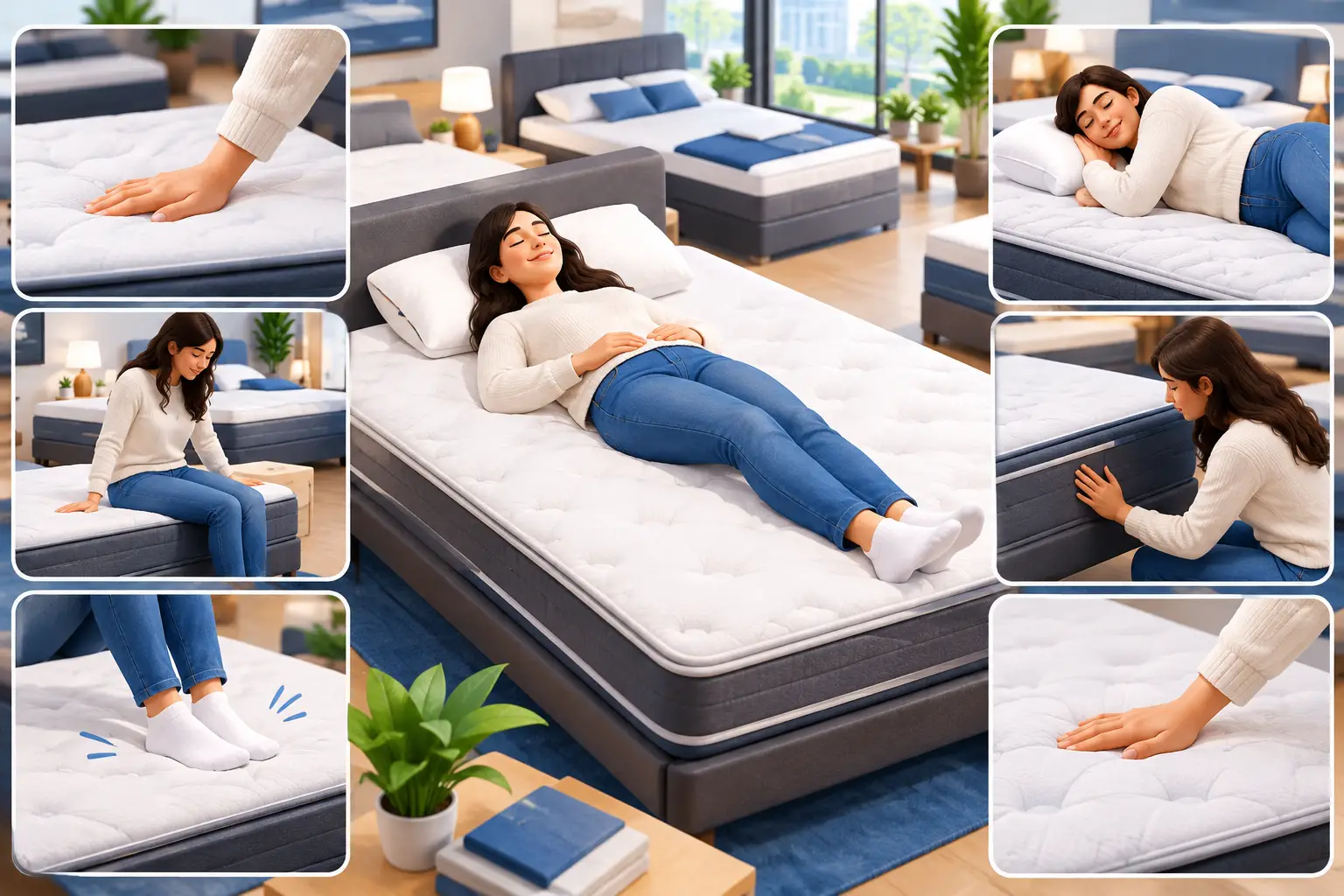
A mattress can feel excellent for the first 30 seconds, then reveal pressure at your shoulder or a lack of support at your lower back. That is why knowing how to test mattress in showroom conditions matters. A proper test is not a quick sit on the edge. It is a short, deliberate check of how the mattress supports your body in the positions you actually sleep in.
A showroom gives you the chance to compare constructions, comfort levels, and support systems side by side. Use that opportunity. Give each serious option enough time, wear comfortable clothing, and let a mattress consultant know how you sleep, whether you share the bed, and what feels uncomfortable on your current mattress.
Plan to spend at least 10 to 15 minutes on each mattress you are genuinely considering. Your body needs a few minutes to settle into the surface. The first impression tells you whether a mattress feels soft or firm. A longer test tells you whether it keeps your spine supported.
Remove bulky jackets, place your phone aside, and lie down rather than testing only while seated. If you use a pillow at home, ask for a pillow that is close to your usual height. Pillow height changes neck alignment and can make a suitable mattress feel wrong, or the reverse.
If you shop with a partner, test the mattress together. The right choice for one person can feel very different once two bodies, two preferred positions, and two sets of movement are involved.
Lie in the position where you spend most of the night. Side sleepers should rest on each side long enough to notice the shoulder and hip. Those areas should receive gentle cushioning without sinking so far that the waist feels unsupported.
Back sleepers should check whether the mattress fills the curve at the lower back without pushing the hips upward. Your body should feel level and relaxed, not as if you are being held in a hammock or pressed into an arch.
Stomach sleepers usually need a flatter, more supportive surface to help prevent the midsection from dipping. If your hips sink noticeably when lying on your stomach, the mattress may place extra strain on your lower back over time.
Do not choose only by labels such as plush, medium, or firm. These descriptions are useful starting points, but comfort is personal. A medium-feel pocket spring mattress may feel very different from a medium-feel foam or latex mattress because the materials respond differently to weight and pressure.
Ask your shopping partner or consultant to look at your body from the side while you lie in your normal position. On your side, your spine should appear reasonably straight from neck to tailbone. On your back, the mattress should support the natural curves of your body without allowing the hips to drop too low.
You should not need to tense your muscles to feel stable. If you find yourself repeatedly shifting to get comfortable, that is useful feedback. A mattress does not have to feel rigid to be supportive, but it should make it easy for your body to relax.
Softness and pressure relief are not the same thing. A very soft mattress may initially feel comfortable yet allow heavier areas to sink too deeply. A well-designed comfort layer cushions prominent areas while the support core helps keep the body aligned.
While on your side, pay attention to your shoulder, hip, and outer knee. Numbness, tingling, sharp pressure, or an urge to turn quickly may indicate that the surface is too firm for your build or sleeping style. On the other hand, if you feel swallowed by the mattress or struggle to change position, it may be too soft or too slow-responding for you.
Memory foam and visco memory foam are often chosen for contouring pressure relief. Gel-infused memory foam may appeal to shoppers who want that contouring feel with a fresher sleep surface. Latex generally offers buoyant cushioning with a quicker response, while spring mattresses can provide a more traditional, easier-to-move-on feel. None is automatically best. The better choice depends on how your body responds during the test.
Turn from your side to your back, then sit up and lie down again. Notice how much effort it takes. Some sleepers enjoy the close contour of foam, while others prefer a more responsive surface that makes movement easier.
This test matters especially if you are a combination sleeper, have limited mobility, or wake frequently during the night. You are looking for comfort without feeling stuck. A mattress should support easy movement rather than make every position change feel like work.
If you share a bed, have one person lie still while the other turns, gets in and out of bed, or changes position. Notice whether the movement travels across the surface.
Pocket spring mattresses and many foam designs can reduce motion transfer because they respond more independently than traditional connected spring systems. That can be helpful when one partner sleeps lightly or keeps a different schedule. However, some people prefer the livelier feel of a more connected spring surface. Test it together instead of assuming one construction will suit both of you.
Also discuss the compromise openly. A mattress that is ideal for one partner may not be ideal for the other. In many cases, the most successful shared-bed choice is a balanced feel with enough pressure relief for the lighter sleeper and enough support for the heavier sleeper.
Sit on the edge as you would when putting on shoes or getting ready in the morning. Then lie near the edge in your usual position. Good edge support helps the mattress feel usable across more of its width and can make getting in and out of bed feel steadier.
Some contouring mattresses naturally compress more at the perimeter than firmer spring designs. That is not always a concern, particularly if you sleep near the center, but it is worth checking if you share the bed, sit on the edge often, or want a more stable feel around the sides.
A mattress should not be selected by feel alone. Ask the consultant to explain its construction in clear terms: the comfort layers, the support system, the type of spring if applicable, and the cover materials. Knowing what is inside helps you compare two mattresses that may feel similar in the showroom.
For example, pocket springs are individually wrapped and can provide targeted support and reduced motion transfer. Bonnell springs have a more traditional connected design and a firmer, resilient response. Foam models vary widely in density and feel. Latex is known for responsive support, while medical or health-focused mattresses may be designed with particular comfort and support needs in mind.
Ask how the mattress is intended to perform for your primary sleeping position and whether it suits your preferred feel. A knowledgeable consultant should explain the trade-off plainly, not steer you toward a one-size-fits-all answer.
Touch the cover and lie still for several minutes. If you tend to sleep warm, ask about breathable fabrics, airflow through the construction, and gel-infused or temperature-conscious comfort layers. A cool-to-the-touch cover can feel pleasant in a showroom, but the overall construction and your bedding also affect overnight temperature.
If you use a mattress protector, mention it during your visit. Protectors are practical for hygiene and mattress care, yet they can slightly change the surface feel and airflow. The goal is to choose a mattress that works with the sleep setup you will actually use at home.
Before deciding, narrow your choices to two or three mattresses and repeat the same test on each one. Compare your shoulder comfort, lower-back support, ease of movement, edge stability, and partner disturbance. Taking a few notes on your phone can prevent the different feels from blending together after a long showroom visit.
At Towell Mattress ME, a mattress consultant can help translate what you felt into a suitable construction and comfort category, whether you are considering foam, pocket spring, latex, or a more specialized option. Ask about warranty coverage, delivery arrangements, and the care recommendations for your selected mattress.
The best showroom test ends with a simple feeling: your body has stopped searching for a better position. When your shoulders, hips, back, and sleep habits all point to the same mattress, you are much closer to a choice you will appreciate night after night.
