
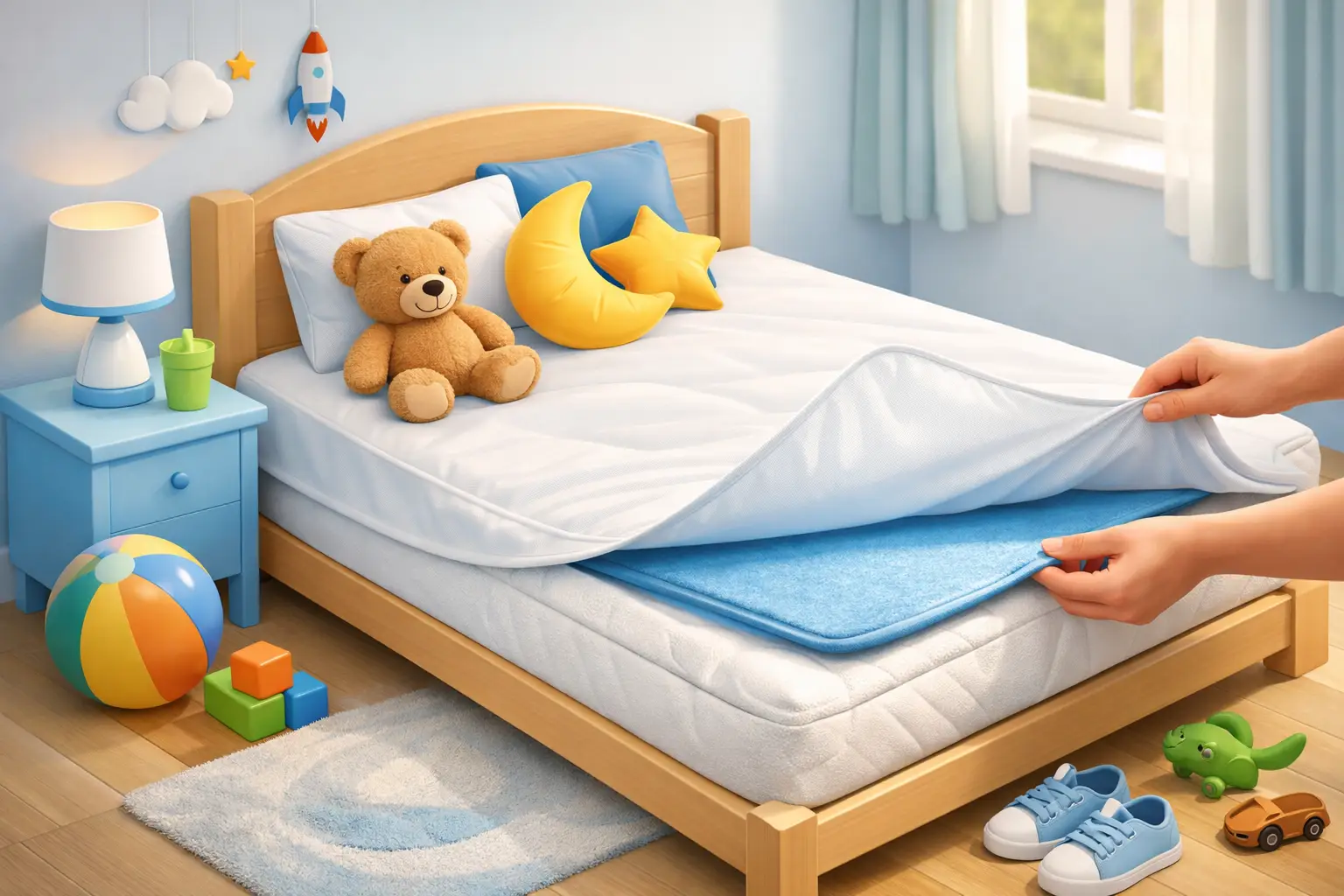
A spilled drink at bedtime, a stomach bug, or the transition away from nighttime pull-ups can put a child’s mattress through more than most parents expect. The best mattress protector for kids bed is not simply the thickest waterproof layer available. It needs to protect the mattress reliably while remaining comfortable, quiet, securely fitted, and easy to wash often.
A good protector helps keep the mattress cleaner and may support the conditions of its warranty, since stains and moisture damage can affect coverage. More importantly, it gives families one less thing to worry about when everyday accidents happen.
For a child’s bed, the core job is clear: stop liquid from reaching the mattress. But a protector that feels hot, shifts around at night, or takes too long to dry can create a new problem. The right choice balances waterproof performance with sleep comfort and practical care.
Look first for a protector with a waterproof barrier beneath a soft fabric surface. This construction allows the top layer to feel more like bedding than plastic while the lower layer blocks liquids, sweat, and small spills from soaking into the mattress. A fully waterproof protector is particularly helpful for younger children, potty training, frequent illness, or any child who enjoys a snack or drink in bed.
Breathability matters as much as waterproofing. Children can sleep warm, especially in rooms with heavier bedding or limited airflow. A breathable protector helps reduce the clammy feel often associated with older vinyl-style covers. It also allows the mattress to perform as intended, whether it has foam, memory foam, latex, or springs beneath it.
Mattress protectors come in several forms, and the best one depends on the child’s needs and the mattress being protected.
A fitted protector has elasticized sides that wrap around the mattress like a fitted sheet. For most children’s beds, this is the most practical option. It stays in place better than a flat pad, covers the sleep surface, and can usually be removed quickly on laundry day.
Check the pocket depth before buying. A protector with shallow sides may pull loose from a thicker mattress, while an oversized fit can bunch up and make the sleep surface less comfortable. Measure the mattress depth, including any topper that will remain on the bed.
An encasement protector surrounds the entire mattress and closes with a zipper. It offers more complete coverage from spills, dust, and everyday buildup. This style can be a sensible choice for a child with allergies or for families who want to protect all sides of the mattress during long-term use.
The trade-off is convenience. An encasement takes longer to remove and reinstall, so it is less ideal when frequent overnight accidents mean quick changes are likely. Many families use an encasement as the base layer and add a washable fitted waterproof protector on top.
Some protectors include light padding for a softer feel. This can work well over a firm mattress, particularly if a child prefers a little more cushioning. However, do not assume a padded layer is waterproof. Confirm that it includes a moisture barrier and review the care instructions before relying on it for accident protection.
The fabric against the child’s skin should feel comfortable enough for nightly use. Cotton or cotton-rich surfaces are popular because they are soft, familiar, and generally breathable. Terry-style cotton can absorb moisture on the surface before it spreads, while smoother knit fabrics may feel cooler and less textured.
Underneath, many quality protectors use a thin polyurethane barrier. This is usually quieter and more breathable than traditional vinyl. It should not make a crinkling sound whenever a child turns over, especially for light sleepers who are easily disturbed by changes in their bedding.
If your child has sensitive skin, avoid protectors with rough finishes, heavy fragrances, or treatments that are not clearly explained. A simple, washable design with a soft top fabric is often the safest starting point. If allergies are a concern, a full encasement may provide added reassurance, but it still needs to be comfortable and easy to maintain.
A mattress protector can have excellent waterproofing and still be the wrong choice if it shifts every night. Loose corners bunch beneath the fitted sheet, and wrinkles can be uncomfortable for children who move frequently in their sleep. Elastic all around the skirt, rather than only at the corners, generally creates a more secure fit.
Noise is another detail parents often notice only after the protector is on the bed. Plastic-like crackling can distract some children and make bedtime harder. A thin, flexible barrier paired with a fabric top is usually a better choice than a stiff, visibly plastic cover.
For bunk beds, trundle beds, or beds placed close to a wall, choose a protector that can be removed without having to lift and maneuver the entire mattress. This small convenience becomes valuable when bedding needs to be changed quickly in the middle of the night.
A children’s mattress protector should be made for regular washing, not occasional cleaning. Review the label for washing and drying instructions, then consider whether that routine fits your household. Some protectors can be machine washed and tumble dried on low heat, while others require air drying to protect the waterproof layer.
High heat, bleach, fabric softener, and harsh cleaning products can gradually damage waterproof membranes. A gentle wash cycle with mild detergent is usually the better approach. Always make sure the protector is fully dry before putting it back on the bed, as trapped moisture can lead to odors.
Having two protectors for each child’s bed is often the most practical arrangement. One stays on the mattress while the other is in the wash, so an accident does not create a last-minute bedding problem. This is especially useful during toilet training or periods when a child is unwell.
The mattress beneath the protector should guide your final choice. Memory foam and gel-infused foam mattresses benefit from a thin, breathable protector that does not interfere with contouring or retain extra heat. Latex mattresses also perform best with breathable layers that allow airflow. For spring mattresses, comfort and fit may be the main focus, though waterproofing remains essential for children.
Avoid very thick, heavily padded protectors if the child already has a mattress chosen for a specific comfort level. Extra padding can change how the mattress feels and may reduce the pressure-relieving benefits of foam or latex. When the mattress is already comfortable, a slim waterproof protector is usually the better match.
For a new mattress, use the protector from the first night. Waiting until an accident happens means the mattress has already been exposed to moisture, body oils, and spills. Early protection keeps the sleep surface fresher and helps preserve the mattress for longer use.
Before selecting a protector, confirm the mattress size and depth, then consider how often it may need to be washed. Think about whether the child sleeps hot, has sensitive skin, or needs extra help with nighttime accidents. These answers will point you toward a fitted waterproof protector, a full encasement, or a combination of both.
It is also worth checking whether the product is designed to remain quiet and whether its waterproof layer is breathable. A protector should solve a problem without making the bed feel noticeably different. If you are uncertain about material or fit, a mattress consultant can help match the protector to the mattress construction and your family’s daily needs.
Towell Mattress ME recommends treating a children’s protector as part of the mattress setup, not as an afterthought. The right fit protects the investment underneath while keeping bedtime comfortable and uncomplicated.
A well-chosen protector means a small spill stays a laundry task instead of becoming a mattress problem. Choose one that fits securely, washes easily, and lets your child sleep comfortably night after night.
