
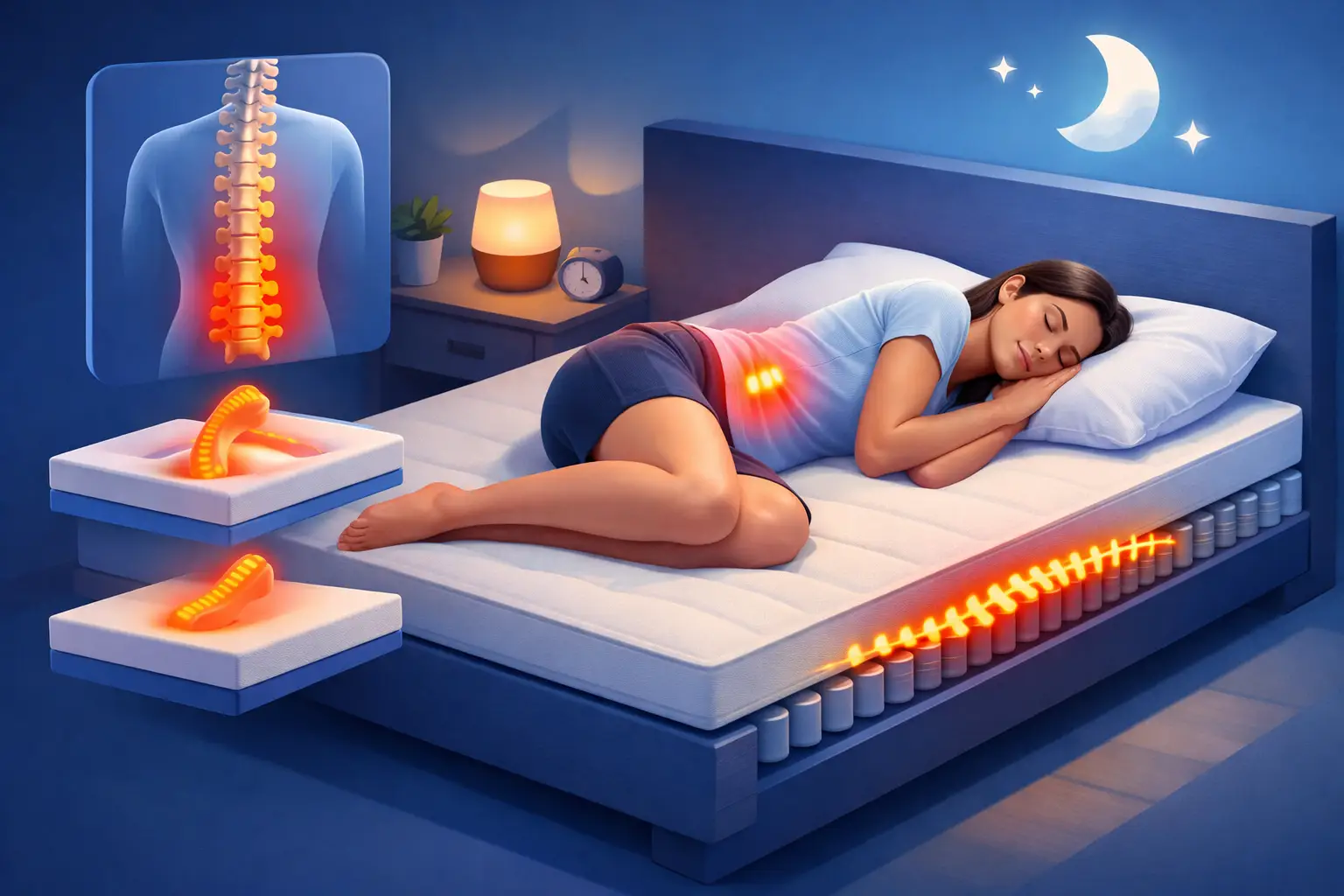
A mattress that feels firm in the showroom can seem like the obvious answer when you wake up with an aching lower back. But does a firmer mattress reduce back pain? Sometimes, yes – especially when your current mattress has lost support. Still, extra firmness is not a universal cure. The better goal is a sleep surface that keeps your spine comfortably aligned while relieving pressure where your body needs it.
For most people, that means looking beyond a simple firm-versus-soft label. Your sleep position, body weight, current mattress condition, and any existing back condition all influence what will feel supportive through the night.
A firmer mattress can reduce back discomfort when it prevents the hips and midsection from sinking too far into the bed. Excessive sink can pull the lower spine out of a neutral position, particularly for stomach sleepers and some back sleepers. If a mattress is worn, sagging, or uneven, moving to a more supportive model may make a noticeable difference.
However, a mattress that is too firm can create a different problem. It may place too much pressure on the shoulders, hips, and lower back, causing you to shift positions repeatedly. Side sleepers often experience this first: the shoulder cannot settle into the surface, while the waist remains unsupported.
For many adults, medium-firm is the practical starting point. It generally combines enough underlying support to limit sagging with enough comfort material to accommodate the body’s natural curves. That is not a rule for every sleeper, but it is a more useful direction than choosing the firmest mattress available.
Firmness describes the initial feel of a mattress. Support describes how well it holds your body in alignment. These are related, but they are not the same.
A mattress can feel plush at the top and still offer strong support underneath. Likewise, a very hard mattress can feel firm without properly supporting the curve of the lower back. The most suitable construction lets heavier areas, usually the hips and torso, settle just enough while keeping the spine in a relaxed, neutral line.
This is why mattress materials matter. Pocket spring mattresses can provide targeted support because the springs respond more independently to body weight. Foam and memory foam comfort layers can cushion pressure points, while gel-infused memory foam may feel more comfortable for sleepers who prefer a less heat-retaining surface. Latex is often chosen for its responsive feel and balanced support. A well-designed mattress may combine these materials rather than relying on one layer to do all the work.
When comparing options, do not judge the mattress only by pressing it with your hand. Lie on it in your normal sleeping position long enough for your body to settle. Your lower back should not feel forced upward, and your hips should not feel as if they are dropping into a hollow.
Your preferred sleep position is one of the clearest ways to narrow the selection.
Back sleepers usually need even support across the shoulders, hips, and lower back. A medium-firm or firm mattress may work well if it keeps the hips from sinking too deeply. The comfort layer should still fill the slight space at the waist rather than leaving the lower back unsupported.
A pillow also matters here. An overly high pillow can tilt the neck forward and contribute to morning stiffness, even if the mattress itself is well suited.
Side sleeping puts more direct pressure on the shoulder and hip. Many side sleepers are most comfortable on a medium to medium-firm mattress with pressure-relieving foam, memory foam, or latex near the surface. The mattress needs enough give for the shoulder and hip, while the core remains supportive enough to stop the waist from sagging.
A mattress that is too firm can leave side sleepers with numb arms, sore hips, or the feeling that they are sleeping on top of the bed instead of settling into it.
Stomach sleeping can increase strain on the lower back if the pelvis sinks too deeply. These sleepers often benefit from a firmer, flatter surface with controlled cushioning. A thinner pillow, or in some cases no head pillow if medically appropriate, can help avoid excessive neck rotation.
If you consistently wake with low-back discomfort while sleeping on your stomach, adjusting your position may help as much as changing your mattress.
If you switch positions during the night, look for balance and responsiveness. A medium-firm pocket spring, latex, or hybrid-style construction can make movement easier while providing reliable support in more than one position. Very soft memory foam may feel comfortable at first but can make repositioning harder for some sleepers.
Back pain has many possible causes, including work posture, activity level, injury, stress, and medical conditions. A mattress is not always the source. Still, it deserves attention if your discomfort is most noticeable on waking and eases after you move around.
Other signs include visible sagging, lumps, a permanent body impression, creaking springs, or needing to sleep in one narrow area to feel comfortable. If you sleep better in another bed but wake sore at home, that is also useful information. A mattress that no longer distributes weight evenly can make even a good sleep position feel uncomfortable.
Do not assume a new mattress must feel dramatically harder. If your current bed is too soft or worn out, the improvement may come from better support beneath a comfortable top layer.
A brief test can help, but it should be deliberate. Wear comfortable clothing, remove bulky items from your pockets, and lie down in the position you use most. Give yourself several minutes rather than making a decision in seconds.
Pay attention to three questions: Does your lower back feel supported? Do your shoulders and hips feel pressured? Can you turn without effort? If the answer to any of these is no, a different comfort level or construction may be a better match.
When shopping with a partner, remember that one firmness may not suit both people equally. A larger mattress can provide more personal space, and individually responsive pocket springs can reduce motion transfer. Couples with very different needs may also benefit from a solution that allows each sleeper to prioritize their own support.
A mattress works alongside the rest of your sleep setup. A supportive pillow helps maintain neck alignment, while a stable bed base helps the mattress perform as designed. An old or damaged foundation can allow a good mattress to sag prematurely.
Temperature can matter as well. If you wake frequently because you feel warm, you may change positions more often and sleep less deeply. Breathable covers, gel-infused comfort materials, and appropriate bedding can improve overall comfort without requiring you to choose an excessively firm mattress.
Give your body a reasonable adjustment period when moving from a worn mattress to a supportive new one. The first few nights can feel different simply because your body is no longer settling into familiar dips and soft spots. Persistent discomfort, however, is worth addressing rather than ignoring.
A mattress can support better sleep, but it cannot diagnose or treat a medical condition. Seek professional medical guidance for back pain that is severe, follows an injury, lasts for several weeks, or comes with symptoms such as leg weakness, numbness, fever, or changes in bladder or bowel control.
If your pain is mild and appears linked to sleep, consider both your mattress and your daily habits. Gentle movement, workstation adjustments, pillow height, and sleep position may all be part of the answer. A mattress consultant can help you compare support levels and materials, but medical concerns should always be discussed with a qualified health professional.
The most helpful choice is rarely the hardest mattress in the store. It is the one that lets your body settle comfortably, keeps your spine supported, and helps you wake ready to move through the day.
