
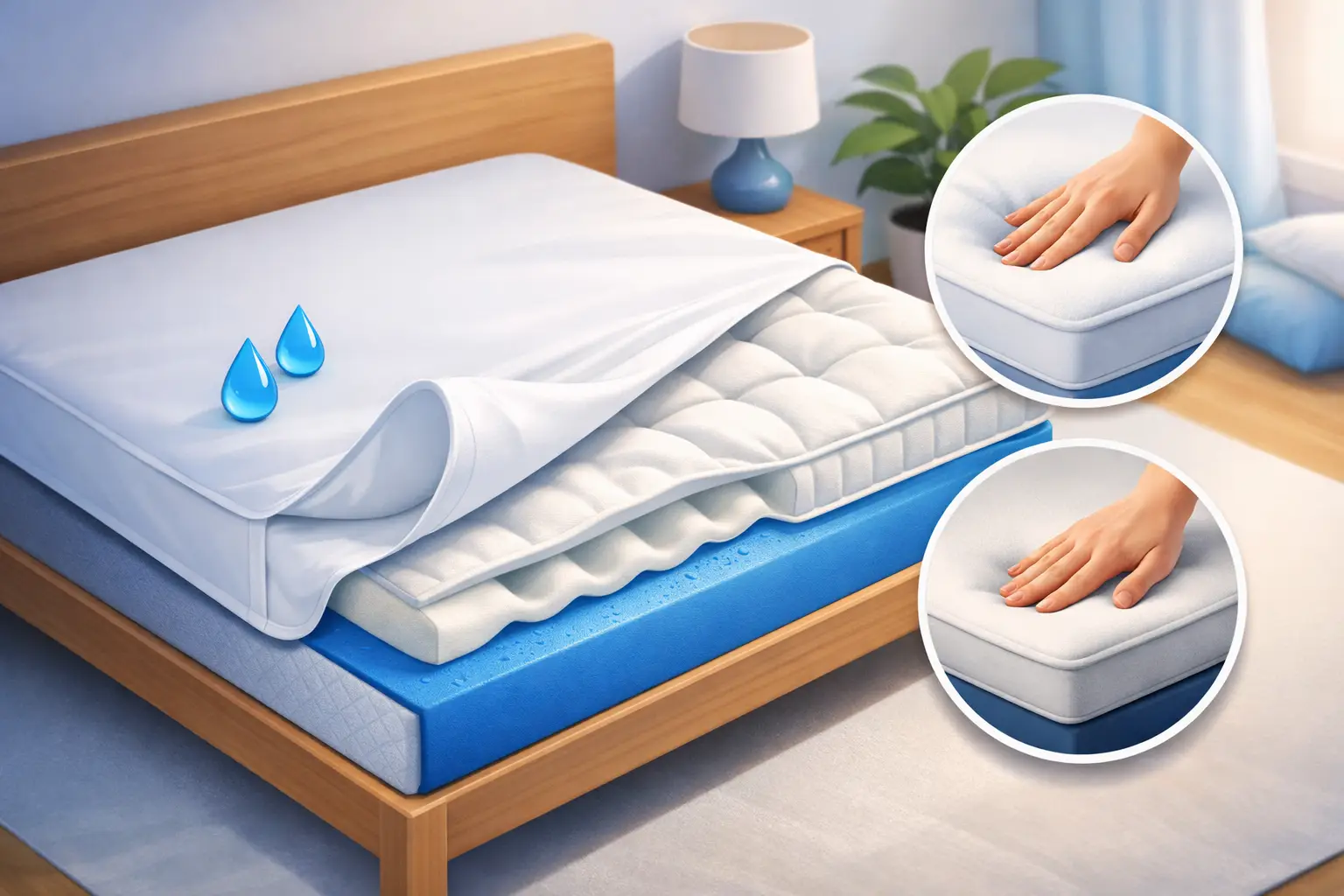
A mattress can feel exactly right in the showroom, then slightly different after a protector goes on. So, do mattress protectors change feel? They can, but the difference ranges from barely noticeable to significant depending on the protector’s material, thickness, waterproof layer, and fit. The right one protects your mattress without getting in the way of the comfort you chose.
For most sleepers, a well-made, fitted protector changes the surface feel far less than an extra comfort layer or a topper. However, if you have invested in the pressure relief of memory foam, the buoyant response of latex, or the contouring comfort of a plush mattress, choosing carefully matters. A protector is not just a practical accessory. It is part of the sleep surface.
A mattress protector sits directly between the mattress and your fitted sheet. That placement means it can affect the first sensation you notice when you lie down: smoothness, temperature, softness, and how easily your body settles into the surface.
The most common change comes from waterproof protection. Many protectors use a thin moisture barrier beneath a fabric top. When that barrier is breathable and flexible, it should have little effect on comfort. When it is thick, stiff, or poorly fitted, it may make the mattress feel firmer, less responsive, or warmer than expected.
Texture matters as well. A quilted protector adds a small amount of cushioning, which can make a firm mattress feel a touch softer. A smooth, thin protector tends to preserve the original feel more closely. Neither option is automatically better. The best choice depends on whether you want to maintain your mattress’s exact comfort level or add a subtle layer of softness.
Yes, because every mattress construction responds differently to an added layer. The effect may be more noticeable on a mattress designed for close body contouring than on one with a firmer, more resilient surface.
Memory foam responds to heat and pressure, gradually adapting around the body. A thick or less-breathable protector can slightly reduce that close-contouring sensation. It may also hold more warmth at the surface, particularly if the protector has a dense fabric or non-breathable backing.
For memory foam and gel memory foam mattresses, look for a thin, stretchable protector with a breathable waterproof membrane. Stretch fabric moves with the foam as it contours, helping you retain the pressure-relieving feel of the mattress rather than creating a tighter layer across it.
Latex is naturally responsive, springy, and often well ventilated. A heavy protector can mute some of that lively, buoyant response. It will not change the mattress construction, but it can make the surface feel less immediate when you move or change positions.
A lightweight protector is usually the better match for latex. Choose one that stays smooth and fitted, so it does not bunch beneath the sheet or interfere with the mattress’s natural airflow.
Spring mattresses generally have a more resilient surface, so a thin protector often makes little noticeable difference. A quilted option may even be welcome on a firmer spring mattress, where the small extra layer can make the surface feel more inviting.
That said, protectors with loose corners or an oversized skirt can shift during the night. If the protector moves, it can create wrinkles and disturb comfort regardless of the mattress type. A secure fit is just as important as the fabric itself.
When a mattress is selected for stable support, alignment, or a firmer sleep surface, avoid adding excessive padding unless you specifically want to soften it. A thick padded protector may change the immediate feel, even though the mattress underneath still provides the same support.
A thin waterproof protector is usually the practical choice here. It provides a hygienic barrier while allowing the intended support profile to remain more noticeable.
The label may tell you whether a protector is waterproof, but it does not always explain how it will feel. Consider the materials and construction together.
A cotton or cotton-rich top typically feels familiar and soft beneath a sheet. Tencel-style fibers and other moisture-managing fabrics can feel smooth and help with surface moisture. Polyester blends are often durable and easy to care for, though the feel varies widely by fabric weight and finish.
The waterproof layer deserves the closest attention. Modern breathable membranes are designed to block liquid while allowing air and water vapor to pass through. They are generally quieter and more flexible than older plastic-like layers. A protector should not crinkle loudly when you move, nor should it feel like a stiff sheet stretched over the mattress.
Padding is another decision point. Light quilting may add comfort and help create a more cushioned surface. More substantial padding can noticeably soften a mattress, but it can also reduce the distinct feel of a plush, responsive, or cooling model. If you love your mattress exactly as it is, choose a non-padded or lightly padded option.
Even a premium protector can affect comfort if it does not fit the mattress depth correctly. A protector that is too small pulls tightly across the surface. On a softer mattress, this tension can make the bed feel firmer and restrict how freely the comfort layers respond.
A protector that is too large may gather at the corners or wrinkle under the sheet. Those folds become much more noticeable to side sleepers, light sleepers, and anyone with shoulder or hip sensitivity.
Before choosing, measure the full height of your mattress, including any attached pillow top. Then select a protector with a fitted skirt designed to accommodate that depth. Once it is on the bed, the surface should lie flat without pulling at the corners.
A protector can influence temperature, but it is rarely the only reason a bed sleeps warm. The mattress materials, sheets, blanket, room temperature, and the sleeper’s own preferences all play a role.
Still, if you tend to sleep hot, avoid overly thick padded protectors and look for breathable construction. A thin protector with a moisture-managing top is generally less likely to trap heat than a dense quilted model. This is especially relevant for memory foam mattresses, since their close-conforming comfort can already retain more warmth around the body.
Noise is also a comfort issue. If a protector makes a noticeable rustling sound when you turn over, it can make the bed feel less relaxing even if the cushioning is fine. Quality fabric and a flexible membrane help minimize that problem. It is worth checking the protector immediately after fitting it, before assuming the mattress itself is responsible for a change in comfort.
For most households, mattress protection is a sensible trade-off. A protector helps shield the mattress from spills, perspiration, body oils, dust, and everyday accidents. Since a mattress is much harder to wash than a protector, this simple layer can help keep the sleep surface cleaner and support the mattress’s long-term condition.
Families with children, pet owners, allergy-conscious sleepers, and hospitality properties often benefit most from waterproof protection. But it is also useful for any sleeper who wants to keep a new mattress in better condition. The key is not to skip protection because of comfort concerns. It is to choose a protector that matches the mattress and the sleeper.
Towell Mattress ME recommends treating the protector as part of your mattress setup, not an afterthought. If your mattress is soft and contouring, prioritize stretch and breathability. If it is firm and you want a little more surface comfort, light quilting may suit you well. If protection is the priority, select a breathable waterproof design with a secure fitted skirt.
Start with the feel you want to preserve. If your current mattress feels ideal, select the thinnest breathable protector that offers the level of protection you need. If the mattress feels slightly too firm, a lightly quilted protector can add a modest cushion without committing to a full topper.
Then check the practical details: mattress depth, fabric feel, waterproof construction, care instructions, and whether the protector stays quiet when you move. These features often matter more than a thick, heavily padded design.
Your mattress should still feel like your mattress after the protector is fitted. Choose the layer that keeps it clean, sits smoothly, and lets the comfort you selected do its job night after night.
