
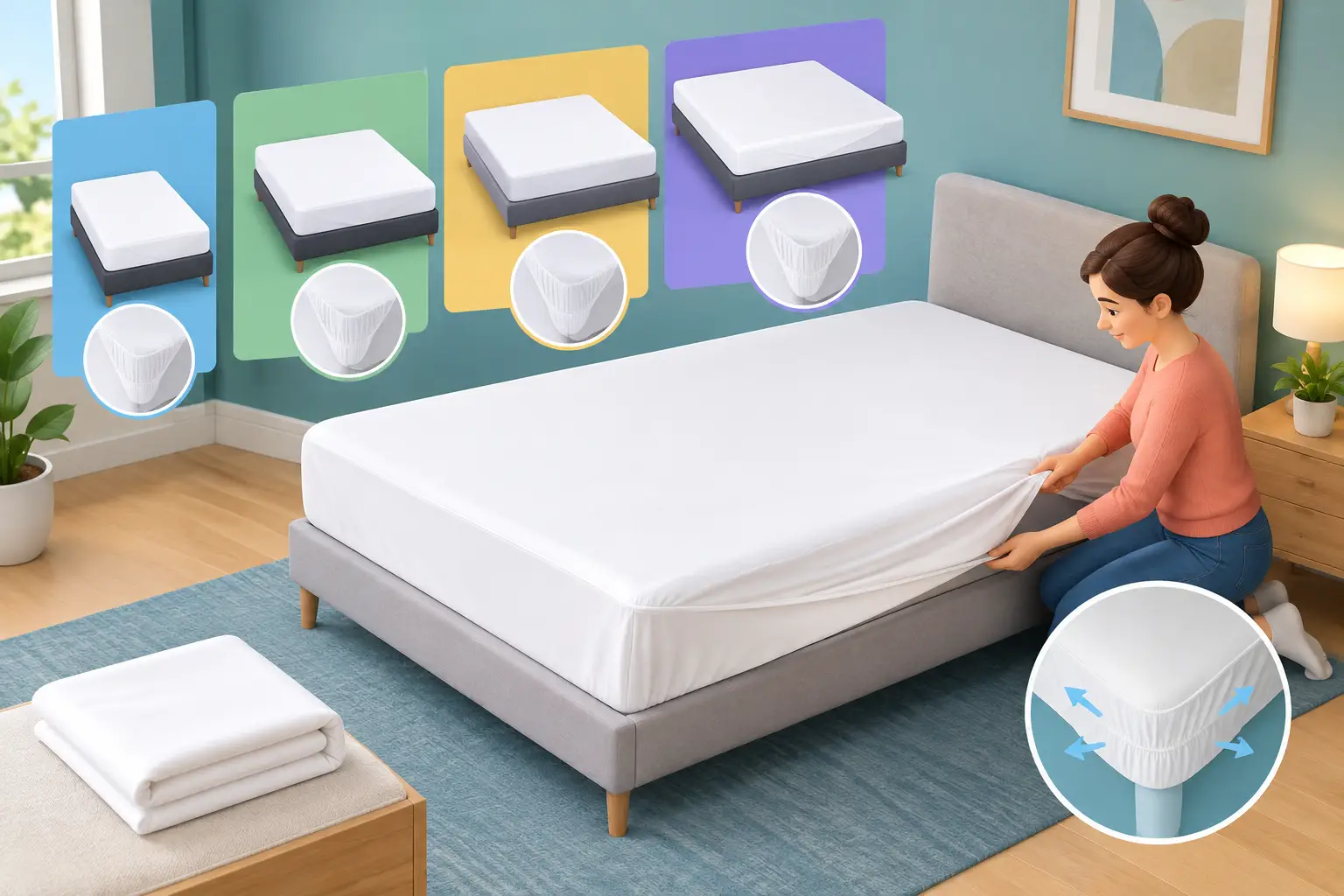
A mattress protector can look like a simple purchase until it starts pulling off the corners, bunching under the sheets, or leaving part of the mattress exposed. Knowing how to choose mattress protector size means looking beyond the label on the packaging. Your mattress width, length, depth, topper, and even the protector style all affect the fit.
The right protector should sit securely around the mattress, stay smooth beneath your fitted sheet, and provide reliable coverage night after night. A few careful measurements before you buy can prevent the most common fit problems.
The mattress size name is your first reference point. A twin protector is designed for a twin mattress, a queen protector for a queen mattress, and so on. However, standard labels alone do not tell the full story. Mattresses can vary slightly by manufacturer, and the depth can vary significantly between a basic foam mattress and a deep pillow-top or luxury model.
Measure your mattress directly rather than relying only on an old product label. Use a tape measure to check the width from side to side, the length from head to foot, and the full depth from the base to the highest point of the sleeping surface.
For the most accurate result, measure after the mattress is fully set up on the bed. If you use a mattress topper, measure the mattress and topper together. The protector needs to fit the bed as you sleep on it, not just the mattress underneath.
Depth is where many buyers make the wrong choice. A protector may match your mattress in width and length but still be too shallow to stay in place. If the side skirts cannot reach under the mattress corners, they may pop off when you move during sleep or when changing sheets.
Measure from the bottom edge of the mattress to its highest point. Include any built-in pillow top, Euro top, or attached comfort layer. If you add a removable topper, include that as well.
Choose a protector with a pocket depth that meets or exceeds your measured mattress depth. For example, if your mattress measures 13 inches deep, a protector designed for a 15-inch pocket will usually offer a more secure fit than one with a 12-inch pocket. Extra depth is helpful, but an excessively oversized pocket can create loose fabric at the sides.
Not every mattress protector fits in the same way. Before selecting a size, check whether you are buying a fitted protector, an encasement, or a pad-style design.
A fitted protector has elasticized corners or a fitted skirt, much like a fitted sheet. It covers the top and sides of the mattress while leaving the underside open. This is a practical choice for everyday protection because it is easier to remove and wash.
For this style, match the width and length to your mattress size, then focus closely on pocket depth. The elastic should sit beneath the mattress edge without straining. Once installed, the top surface should be smooth, with no tension pulling the protector away from the corners.
An encasement surrounds the entire mattress and usually closes with a zipper. It is designed for more complete coverage, including the bottom and side panels. This style can be useful when you want all-around protection for the mattress.
With an encasement, width, length, and depth must all be accurate. A protector that is too small can put pressure on the zipper and seams. One that is too large can shift inside your bedding and create wrinkles. Check the stated dimensions, not only the general mattress category.
Some protectors include extra quilting or padding for a slightly softer sleeping surface. These can be comfortable, but the added material may affect the fit under a fitted sheet. If your mattress already has a tall pillow top, a padded protector can increase the total depth further.
Measure the combined height and make sure both the protector and your fitted sheet have enough pocket depth. Protectors should enhance your bed’s comfort without making bedding difficult to secure.
A mattress topper can change the size you need more than expected. Even a relatively slim topper increases the bed depth, while thicker foam, memory foam, latex, or gel layers can add several inches. If you use a topper, do not buy a protector based on the mattress measurements alone.
Most sleepers place the protector over both the mattress and topper. This helps keep the topper clean and prevents it from shifting as much under the sheets. In that case, measure the complete setup and choose a deeper pocket.
If you use an adjustable base, a close but flexible fit becomes especially important. The protector needs enough stretch to move with the mattress as the head or foot section raises. A protector that is tight across the surface can pull at the corners when the bed changes position. Look for secure elastic edging and fabric designed to accommodate movement without slipping.
It may seem safer to choose a larger protector, but sizing up is not always the right answer. A king protector on a queen mattress, for example, leaves excess material that can wrinkle, shift, and reduce the smooth feel of the bed. Loose fabric may also make it harder for your fitted sheet to stay neat.
The goal is not the biggest protector that can cover the mattress. The goal is the correct width and length, paired with enough depth for your specific mattress profile. If your mattress is unusually deep, choose a deep-pocket version in the same mattress size rather than moving up to a larger bed size.
This is also true for split mattresses. A split king consists of two separate twin XL mattresses, so it generally requires two twin XL protectors rather than one king protector. Each side needs to move independently, particularly on an adjustable base.
Once you have the measurements, read the protector specifications carefully. Look for the listed dimensions and the maximum pocket depth. Terms such as “deep pocket” can be helpful, but the actual inch measurement is more reliable.
Pay attention to how the protector is secured. A full elastic skirt generally provides better hold than elastic only at the corners, especially for thicker mattresses. Stretchable side panels can also make installation easier while maintaining a snug fit.
Material matters as well. Waterproof layers, quilted tops, and cooling fabrics can affect the protector’s thickness and flexibility. A quality protector should protect the mattress while remaining comfortable and quiet under your sheets. If a protector feels stiff or fits too tightly, it can affect the overall sleep experience.
Install the protector before washing it, if the care label allows, so you can confirm the fit. Start by placing it over the top corners, then pull the skirt evenly down each side. The elastic should reach beneath the mattress without excessive force.
Run your hand across the surface. It should lie flat, with no large wrinkles or lifted corners. Then place your fitted sheet over it and check that the bed still feels smooth and secure. If the protector pulls upward, exposes the sides, or makes the fitted sheet difficult to apply, the pocket depth may be too shallow.
A properly fitted protector should not need constant adjustment. It should stay in place through normal sleep movement, regular sheet changes, and routine washing.
If your mattress has an extra-deep profile, a custom size, a removable topper, or an adjustable base, asking for guidance can save time. A mattress consultant can help you compare your exact measurements with a protector’s stated fit range and recommend an option that will remain secure.
Towell Mattress ME offers protectors alongside mattresses and bedding, making it easier to select a fit that suits your complete sleep setup. Bring your mattress measurements when you shop, especially the depth, and you can make a more confident choice.
A mattress protector should disappear into the background once it is on the bed: smooth under the sheets, secure at every corner, and ready to help keep your mattress in good condition for years of comfortable sleep.
