
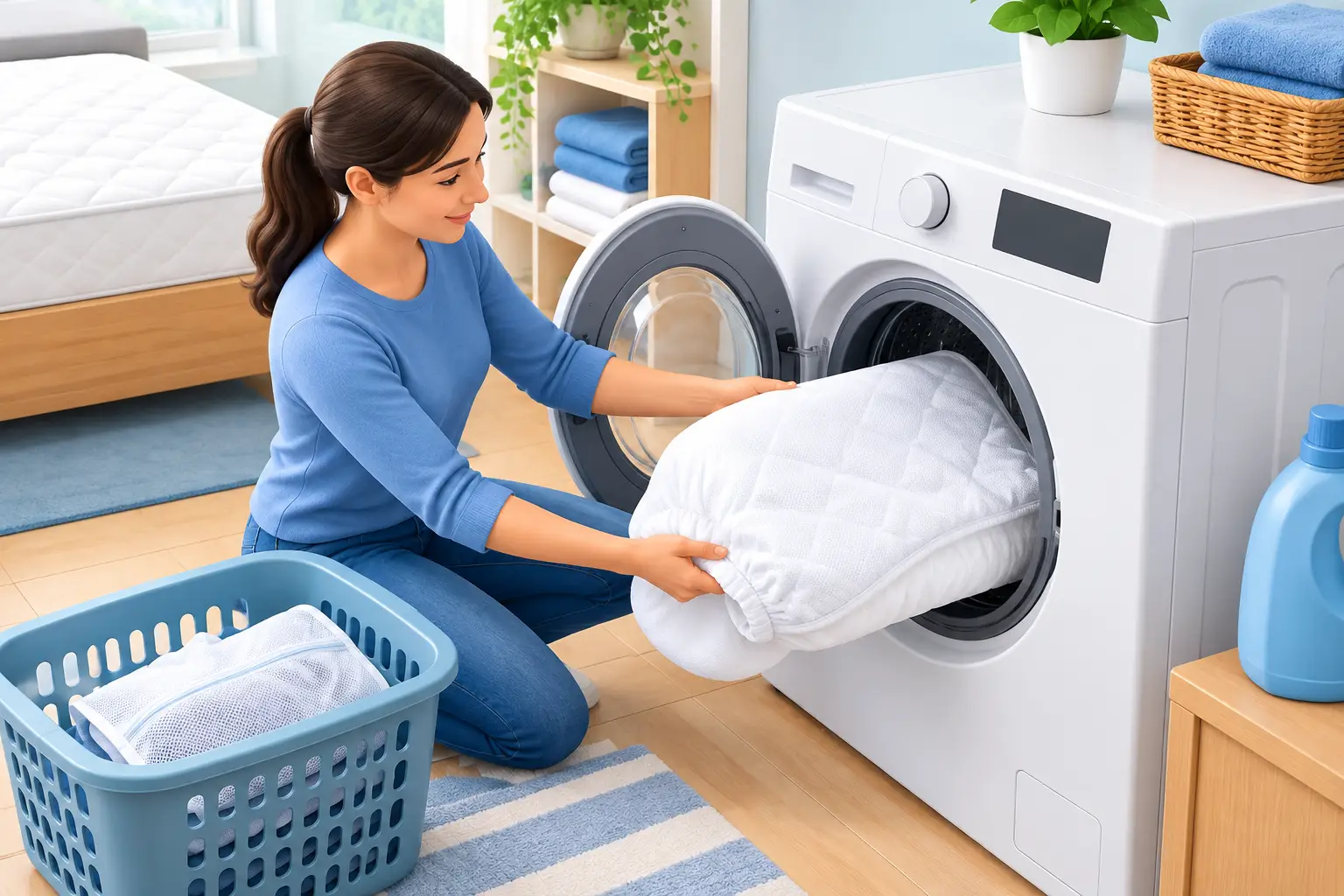
A mattress protector does its best work quietly. It takes on perspiration, body oils, dust, and the occasional spill so your mattress does not have to. Knowing how to wash mattress protector properly helps it stay fresh without damaging the waterproof layer that makes it valuable in the first place.
For most households, the right routine is simple: wash gently, use mild detergent, avoid high heat, and let the care label make the final decision. The details matter, particularly with waterproof protectors, because harsh washing habits can cause the backing to crack, peel, or lose its protective performance over time.
Before placing the protector in the washing machine, check its sewn-in care label. This is the most reliable guide because materials vary. A quilted cotton protector, a cooling protector, and a waterproof protector with a polyurethane backing may all require different water temperatures and drying methods.
Most mattress protectors can be machine washed in cold or warm water on a gentle cycle. Hot water may seem like the stronger cleaning choice, but repeated exposure can weaken elastic skirt panels and damage waterproof membranes. If the label permits warm water, use it for regular cleaning. Reserve hotter washes only for products specifically labeled as safe for high-temperature laundering.
If the label has faded or is missing, choose the cautious option: cold water, gentle cycle, mild liquid detergent, and low-heat or air drying. This approach suits most fitted mattress protectors and reduces the risk of shortening their usable life.
Remove the protector from the bed and shake it out lightly before washing. This clears loose dust, hair, and small debris that could remain trapped in the fabric. If there is a fresh spill or stain, deal with it before the full wash rather than allowing it to set.
Wash the protector on its own or with a small load of lightweight bedding, such as sheets. Do not pack the machine tightly. A crowded drum prevents water and detergent from moving through the fabric properly, and the protector may come out with residue still on it.
Use a gentle or delicate cycle with cold or warm water, based on the label. Add a small amount of mild liquid laundry detergent. Powder detergents can sometimes leave behind particles, especially when washed in cooler water. More detergent is not better – excess soap may stay in the fabric and make the surface feel stiff or less breathable.
Avoid fabric softener, bleach, and strong stain-removing additives unless the manufacturer clearly allows them. Fabric softener can leave a coating on waterproof materials, while chlorine bleach may weaken fibers and damage the protective backing. Even products marketed as gentle may not be suitable for every protector, so the label remains the deciding factor.
After the cycle, run an extra rinse if you notice soap residue or if anyone in the household has sensitive skin. A thorough rinse helps preserve comfort and prevents detergent buildup from transferring to sheets.
For a dependable wash routine, keep these points in mind:
These steps may sound conservative, but they protect the features you bought the protector for: a clean sleep surface, a secure fit, and a functioning moisture barrier.
A washable mattress protector is designed to handle everyday accidents, but prompt treatment makes cleaning easier. Blot fresh liquid with a clean towel first. Do not rub aggressively, as this can push the stain deeper into the fibers.
For common food, drink, or body-oil marks, apply a small amount of mild liquid detergent to the affected area and gently work it in with your fingers or a soft cloth. Let it sit for about 10 to 15 minutes, then wash as directed. For protein-based stains, including sweat or other bodily fluids, cold water is generally the safer starting point. Heat can make these stains more difficult to remove.
Do not use a stiff brush or abrasive scrubber on the waterproof side of a protector. It can scratch or weaken the membrane. If a stain remains after washing, repeat the gentle treatment before drying. Once a stain is exposed to dryer heat, it can become harder to lift.
Drying is where many mattress protectors are accidentally damaged. High dryer heat can affect polyurethane waterproof backings, elastic edges, and padded layers. Even when the protector looks fine after one hot cycle, repeated heat exposure can make it less flexible and less effective.
If the care label allows tumble drying, select low heat or the delicate setting. Remove the protector as soon as it is dry. Leaving it in a hot dryer longer than necessary adds unnecessary stress to the material.
Air drying is another good option, especially for waterproof protectors. Hang it over a drying rack or clothesline in a well-ventilated area. Keep it out of intense direct sunlight for extended periods, as strong sun can gradually affect some fabrics and elastic components. Make sure both the fabric side and waterproof side are fully dry before putting it back on the bed.
A protector that feels slightly cool or damp should not go back onto the mattress. Trapped moisture can create odor and may affect the mattress surface over time. If needed, allow it a little more time to dry indoors before remaking the bed.
For most homes, washing a mattress protector every one to two months is a practical schedule. This keeps it cleaner than the mattress itself while avoiding unnecessary laundering. Wash it sooner after spills, illness, heavy sweating, pet accidents, or a period of allergy symptoms.
Households with young children, pets that sleep on the bed, or people managing allergies may prefer to wash protectors monthly. In warmer climates or during humid months, a more frequent routine can also help control odor and buildup. The right frequency depends on how the bed is used, not on a fixed rule.
Sheets should still be washed weekly or every other week, depending on personal preference and use. The protector is a separate layer of defense, not a replacement for regular sheet care.
The most common mistake is using high heat because it feels like the fastest way to sanitize bedding. For a standard cotton sheet, that may be acceptable if its label allows it. For a waterproof mattress protector, high heat can be the wrong choice. The same applies to ironing, which should generally be avoided unless the label specifically says otherwise.
Another issue is washing the protector with heavy items such as towels, jeans, or bulky blankets. These items create friction and can pull at the fitted skirt or waterproof layer. They also make it harder for the machine to rinse and spin the protector evenly.
Finally, do not assume that a protector can be washed indefinitely just because it is washable. Over time, elastic can relax, quilting can flatten, and waterproof barriers can wear down. If liquid begins passing through, the backing is peeling, or the protector no longer fits securely, replacement is the sensible choice.
Let the protector do its job by ensuring it fits the mattress depth correctly. A loose protector can shift during the night, while one that is too tight may strain the elastic corners. Smooth it across the surface before adding your fitted sheet so the protective layer sits evenly.
When selecting a replacement, consider more than size alone. Look at whether you need waterproof protection, added cushioning, cooling properties, allergy-conscious materials, or a protector suited to a deeper mattress profile. A mattress protector should support the comfort of your sleep setup, not change it in an unwanted way.
A well-cared-for protector is one of the simplest ways to extend the clean, comfortable life of a mattress. Give it the gentle wash and low-heat drying it needs, and it can continue protecting the sleep surface you rely on every night.
