
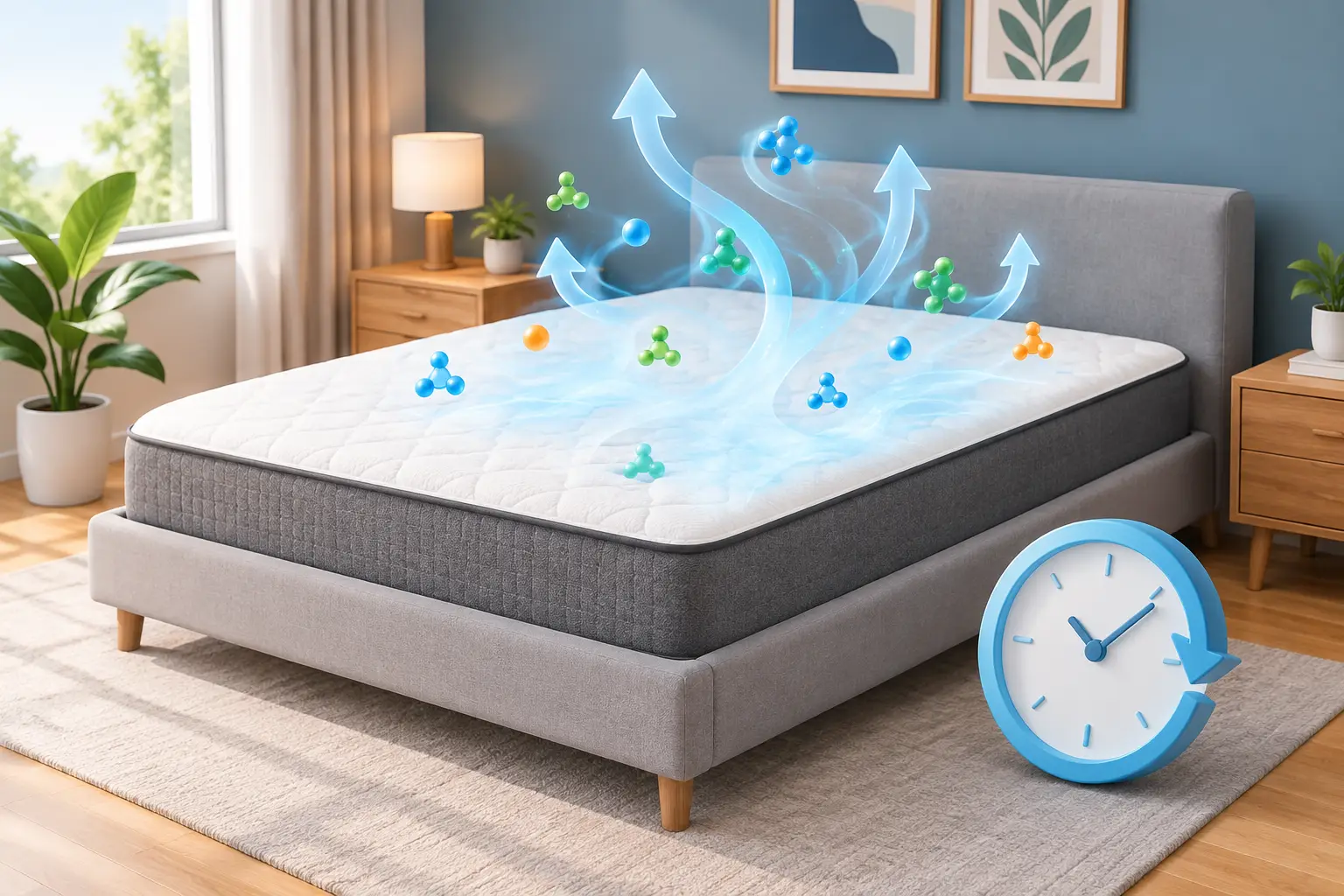
A newly delivered mattress can have a noticeable smell when you first remove its packaging, particularly if it contains foam and has been tightly wrapped for transport. New mattress off gassing duration is usually short, but it varies by material, packaging method, room ventilation, and personal sensitivity to odors. The practical goal is simple: give the mattress fresh air before making up the bed, then judge any remaining odor by how quickly it fades and how it affects the room.
Off-gassing is the release of low levels of volatile compounds from materials and manufacturing components. In a mattress, the odor may come from polyurethane foam, memory foam, adhesives, fabric finishes, or the plastic packaging itself. It is often described as a “new product” or chemical smell.
An odor does not automatically mean there is a defect or that a mattress is unsuitable. Mattresses may smell stronger immediately after unboxing because the materials have been enclosed in plastic, sometimes under compression, for days or weeks. Once the mattress is opened and placed in a ventilated room, that concentrated smell normally disperses.
The smell and the adjustment period are not the same thing. A mattress can need time to expand to its intended shape, especially after compression, while its odor may fade much sooner. Follow the product care guidance for the specific mattress rather than assuming every construction behaves the same way.
For many new foam and memory foam mattresses, the strongest smell improves substantially within 24 to 72 hours. A mild residual scent can last for several days and, in some situations, up to a few weeks. A closed bedroom, humid conditions, limited airflow, and a mattress that remained compressed for a long time can all make the odor seem more persistent.
Pocket spring and Bonnell spring mattresses may have less noticeable off-gassing because the core is primarily metal springs. However, they can still include foam comfort layers, quilting, adhesives, or fabric treatments that produce a temporary new-mattress smell.
Latex mattresses can have a distinct scent that is different from foam off-gassing. Some people notice a mild rubber-like or earthy odor, particularly with natural latex. It should lessen with airing out, but it may not smell completely neutral on day one.
Gel-infused memory foam follows a similar pattern to standard memory foam. The gel infusion may affect temperature feel and pressure relief, but it does not guarantee that there will be no initial smell. Medical and health-focused mattresses also vary because their comfort layers and protective covers differ from model to model.
There is no single number that applies to every bed. A well-ventilated room and a mattress with a breathable cover may be ready for comfortable use quickly. A more densely layered foam mattress in a tightly sealed room may need longer. The direction matters most: the odor should steadily become less noticeable, not stay equally strong.
Start by opening the mattress in the room where it will be used, provided you can increase airflow. Remove all plastic wrapping completely, including any film tucked underneath the mattress. Do not leave packaging beneath the bed, as it can hold onto odors and restrict air circulation.
Place the mattress on its intended base or a clean, flat, well-supported surface. Open windows when weather and security allow, and keep the bedroom door open. A fan can help move room air, but position it so air circulates across the room rather than blowing continuously into one small area of the mattress.
If possible, let the mattress air out for a full day before adding sheets, a mattress protector, pillows, and bedding. This is especially useful for foam models. A quality protector is still a sensible part of mattress care once the initial airing period is complete, since it helps keep the sleep surface clean without changing the mattress support.
Avoid trying to speed up the process with direct high heat, a hair dryer, strong fragrances, or cleaning chemicals. Heat can affect foam and adhesives, while perfume sprays can combine with the original smell and make the room less comfortable. Fresh air and normal room circulation are the reliable approach.
If the first night cannot wait, you can sleep on the mattress after it has expanded and the odor has reduced to a comfortable level. Continue ventilating the room during the day. For most households, this is a more realistic solution than leaving a new mattress unused for an extended period.
A mattress is not the only source of a new-bedroom smell. The box, plastic wrap, bed base, newly assembled furniture, fresh paint, and even a closed closet can contribute. Before deciding the mattress is the problem, remove packaging from the room and air out the full space.
Room conditions matter, too. Air-conditioned spaces can feel fresh but may have limited exchange with outdoor air if windows remain closed. Running ventilation, opening a door to a larger living space, or using a fan can make a meaningful difference. In humid environments, consistent airflow is generally more useful than occasional airing.
The mattress cover can also retain a little odor after unboxing. Unless the care label says otherwise, do not remove a non-removable cover or wash components that are not designed to be washed. Give the product time and follow its care instructions to protect its comfort layers and warranty coverage.
Individual sensitivity varies. One person may stop noticing a faint smell after a few hours, while another may find it distracting for several days. That does not necessarily indicate a problem with the mattress, but it does mean the room should be ventilated until everyone can sleep comfortably.
A temporary, fading odor is expected with many newly packaged mattresses. Contact the seller or mattress consultant if the smell is exceptionally strong, does not improve after several days of proper airing, becomes worse, or is accompanied by visible staining, moisture, damaged packaging, or a concern that the mattress was stored improperly.
You should also seek support if anyone experiences headaches, eye irritation, nausea, breathing discomfort, or another physical reaction while in the room. Move to fresh air and consider speaking with a qualified health professional, particularly for people with asthma, allergies, or known chemical sensitivities. Do not try to mask symptoms by adding room fragrance.
When you call, have the mattress model, delivery date, and a clear description of the odor and ventilation steps already taken. This helps the service team assess whether the situation is normal for the construction, whether more airing time is appropriate, or whether the mattress needs inspection.
If odor sensitivity is a priority, discuss it before purchase rather than after delivery. A mattress consultant can explain the difference between spring, foam, memory foam, gel, and latex constructions, as well as the role of comfort layers and covers. The right choice is not simply the mattress with the least initial smell. It must also provide the support, pressure relief, durability, and comfort level your body needs.
Ask about material certifications and product specifications where available. Certifications can provide information about tested components and emissions standards, but they should be considered alongside the entire mattress design, the warranty, and your comfort preference. A mattress that feels wrong after a few weeks is not made right by a short off-gassing period.
Towell Mattress ME helps customers compare construction types so they can balance these practical considerations before delivery. For a household with children, odor sensitivity, or a move-in deadline, that guidance can prevent an avoidable last-minute decision.
A new mattress should begin feeling like part of your bedroom, not like a project to manage. Give it clean airflow, allow a reasonable settling period, and pay attention to steady improvement. If the smell does not follow that pattern, asking for professional product support is the right next step.
