
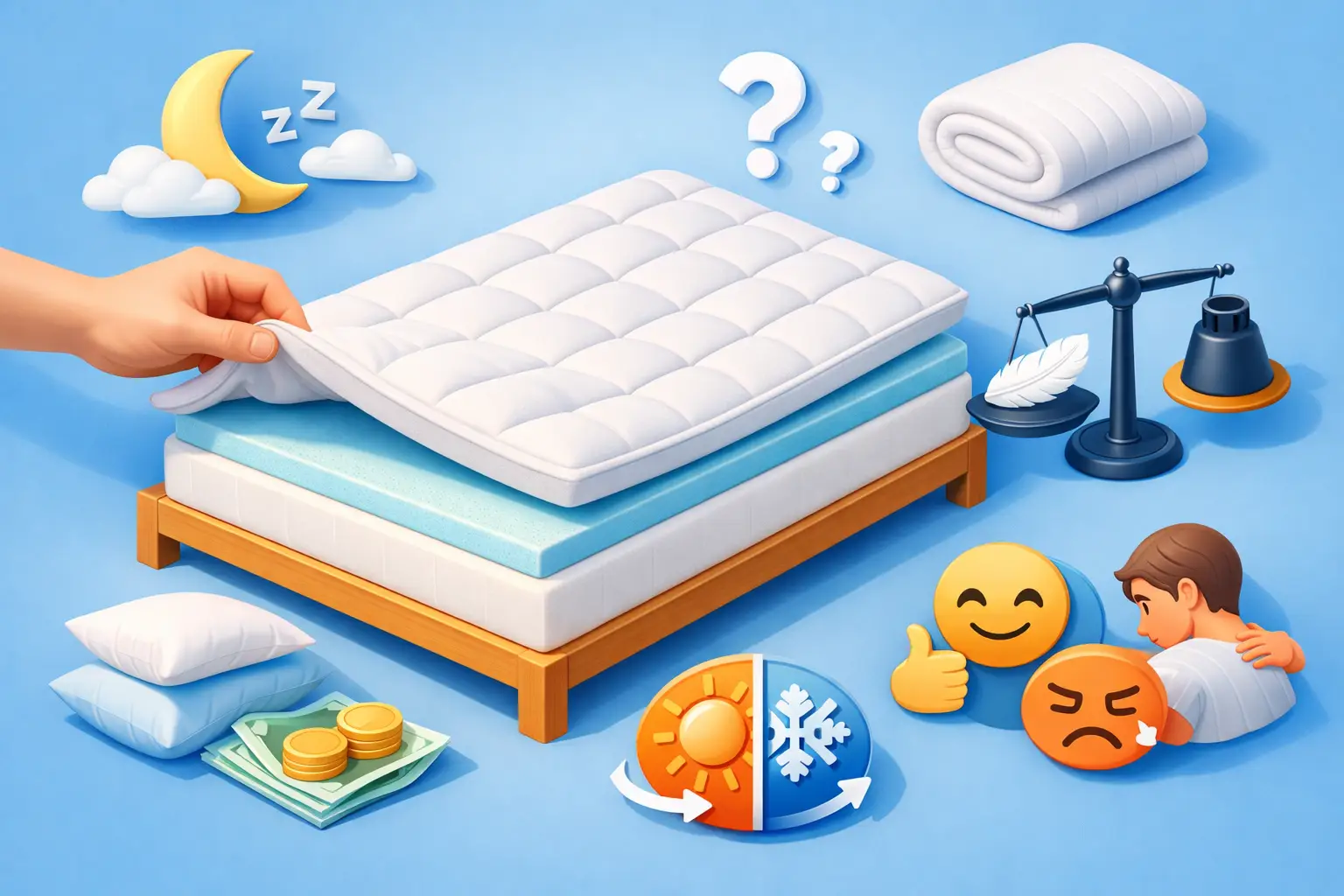
A mattress that feels almost right can be one of the most frustrating sleep problems. Maybe it is too firm at the shoulders, too warm through the night, or no longer feels comfortable enough for consistent rest. That is usually when the question comes up: is mattress topper worth it, or is it just a temporary fix?
The honest answer is that a mattress topper can be absolutely worth it, but only in the right situation. A topper can improve comfort, change surface feel, and help you get more use out of a mattress that is still structurally sound. What it cannot do is repair a mattress that has already lost support, developed deep sagging, or no longer keeps your spine aligned.
For many sleepers, yes. A mattress topper is often worth it when the main issue is comfort rather than core support. If your mattress feels too firm, a topper can add cushioning at the pressure points. If the surface feels flat or slightly tired, the right topper can make the bed feel more inviting again.
This matters because comfort and support are not the same thing. The mattress underneath handles the deeper job of holding your body in alignment. The topper changes what you feel first – softness, contouring, pressure relief, and in some cases temperature response. When those surface-level issues are the real problem, a topper can be a practical solution.
It is also a lower-risk way to fine-tune a sleep setup. Some households are not ready to replace a mattress immediately. Others have a mattress that still performs well but could benefit from a comfort adjustment. In those cases, a topper makes sense.
A topper tends to deliver the best results when your mattress is still supportive but not quite comfortable enough. That includes a bed that feels too hard, especially for side sleepers who need more give around the shoulders and hips. It can also help when one partner wants a softer surface feel without changing the entire mattress.
Another common case is a guest room or secondary bedroom. If the mattress is in decent condition but could feel more welcoming, a topper can improve the experience without a full replacement. For property owners and family buyers, this can be a sensible upgrade when the base mattress does not need to be changed yet.
A topper may also help extend the useful comfort life of a newer mattress that has become less pleasant to sleep on but still has a stable support core. This is especially true when the issue is minor surface firmness rather than visible wear or structural breakdown.
The most noticeable benefit is pressure relief. Memory foam and similar contouring materials can reduce the sharp feeling of sleeping on a surface that is too firm. For back sleepers, that can mean a more comfortable lower back and shoulder area. For side sleepers, it can mean less pressure on the hips.
A topper can also slightly improve motion comfort. If the surface of the mattress feels reactive or bouncy in a way that disturbs sleep, a topper can create a more buffered feel. It will not transform the entire mattress construction, but it can soften the sensation enough to matter.
Some toppers also help with temperature feel, depending on materials. That said, buyers should keep realistic expectations. If your mattress sleeps hot because of room conditions, bedding choices, or a heat-retaining comfort system underneath, a topper may help only modestly.
A topper is not the right answer for every mattress problem. If your mattress has a deep body impression, uneven support, obvious sagging, or edge breakdown, adding more material on top usually does not solve the real issue. In fact, it can sometimes make the problem feel worse by following the shape of the sag underneath.
The same applies if you wake up with persistent aches because your mattress no longer supports proper alignment. A topper can change softness, but it cannot rebuild a failed support system. If the mattress core has broken down, the better decision is to replace the mattress rather than layering a comfort product over a support problem.
This is where shoppers often lose time and confidence. They hope a topper will rescue a mattress that has already reached the end of its useful life. Sometimes it offers a small short-term improvement, but it rarely delivers the stable comfort people are looking for.
If you can see visible sagging, feel yourself rolling into the center, notice uneven firmness from one side to the other, or wake up feeling less supported than before, the mattress itself deserves a closer look. A topper may hide the issue briefly, but it will not correct it.
For adult household buyers, this distinction matters. Spending on the wrong fix can delay the right decision and prolong poor sleep. A mattress consultant will usually separate the question into two parts: does the mattress still support you well, and is the issue mainly about surface comfort? If the answer to the first question is no, the topper is probably not worth it.
Start by identifying what feels wrong. If your mattress is too firm but otherwise flat, level, and supportive, a topper is a reasonable next step. If your back feels out of line, the surface dips, or the mattress has become uneven, focus on replacement instead.
Your sleeping position matters too. Side sleepers usually benefit most from added cushioning because they create sharper pressure points. Back sleepers can also benefit, but they often need a balanced topper that adds comfort without allowing the hips to sink too far. Stomach sleepers need the most caution, since too much softness on top can reduce alignment.
Body type also affects results. A lighter sleeper may notice a big comfort difference from a moderate topper, while a heavier sleeper may compress softer materials more quickly and need a more supportive feel. That is why guided selection matters. The best topper is not simply the softest one. It is the one that solves the specific comfort issue without creating a new support problem.
Not all toppers feel the same. Memory foam is popular because it contours closely and relieves pressure well. It suits sleepers who want a more cushioning, body-hugging surface. Latex generally feels more buoyant and responsive, with less sink and a more lifted sensation. That can work well for shoppers who want comfort without too much softness.
There are also foam variations designed to feel cooler or more balanced on the surface. These can be helpful for sleepers who want comfort adjustment without a heavy, dense feel. The key is to match the topper to the complaint. If the problem is pressure, contouring matters. If the problem is surface feel but you still want easy movement, a more responsive material may be the better choice.
Thickness matters as well. Too thin, and the topper may not change much. Too thick, and it can interfere with alignment, especially on a mattress that is already soft. This is another reason why an expert recommendation is often more useful than choosing by description alone.
It depends on what stage your current mattress is in. If the mattress is still in good condition and just needs a comfort adjustment, a topper can be a smart, practical move. If the mattress is clearly worn out, replacing it is the better long-term solution.
Think of a topper as a comfort layer, not a structural repair. It works best when the foundation underneath is still doing its job. If the mattress still supports your body properly, a topper can help refine the feel. If the mattress has stopped supporting you, the topper becomes a compromise rather than a solution.
That is why many buyers benefit from a consultative approach. A good sleep product decision is not about buying more. It is about choosing the product that solves the actual problem with the least guesswork.
For shoppers who want a clear answer, here it is: a mattress topper is worth it when your mattress is supportive but not comfortable enough. It is not worth it when your mattress has already lost shape, balance, or support. Knowing that difference can save time, reduce frustration, and lead you to a sleep setup that actually feels right night after night.
If you are unsure which category your mattress falls into, the best next step is simple – evaluate support first, then adjust comfort second.
