
You can test two mattresses for five minutes each and still miss the real difference between them. The feel on top matters, but what sits underneath often decides whether a mattress stays comfortable over time. This guide to mattress materials and layers is designed to make that structure easier to understand, so you can choose with more confidence and less guesswork.
When customers compare mattresses, they usually start with softness or firmness. That makes sense, but comfort is only one part of the picture. The materials inside a mattress affect pressure relief, airflow, motion control, support, and how the mattress performs after months and years of use. Once you know what each layer does, product descriptions become much clearer.
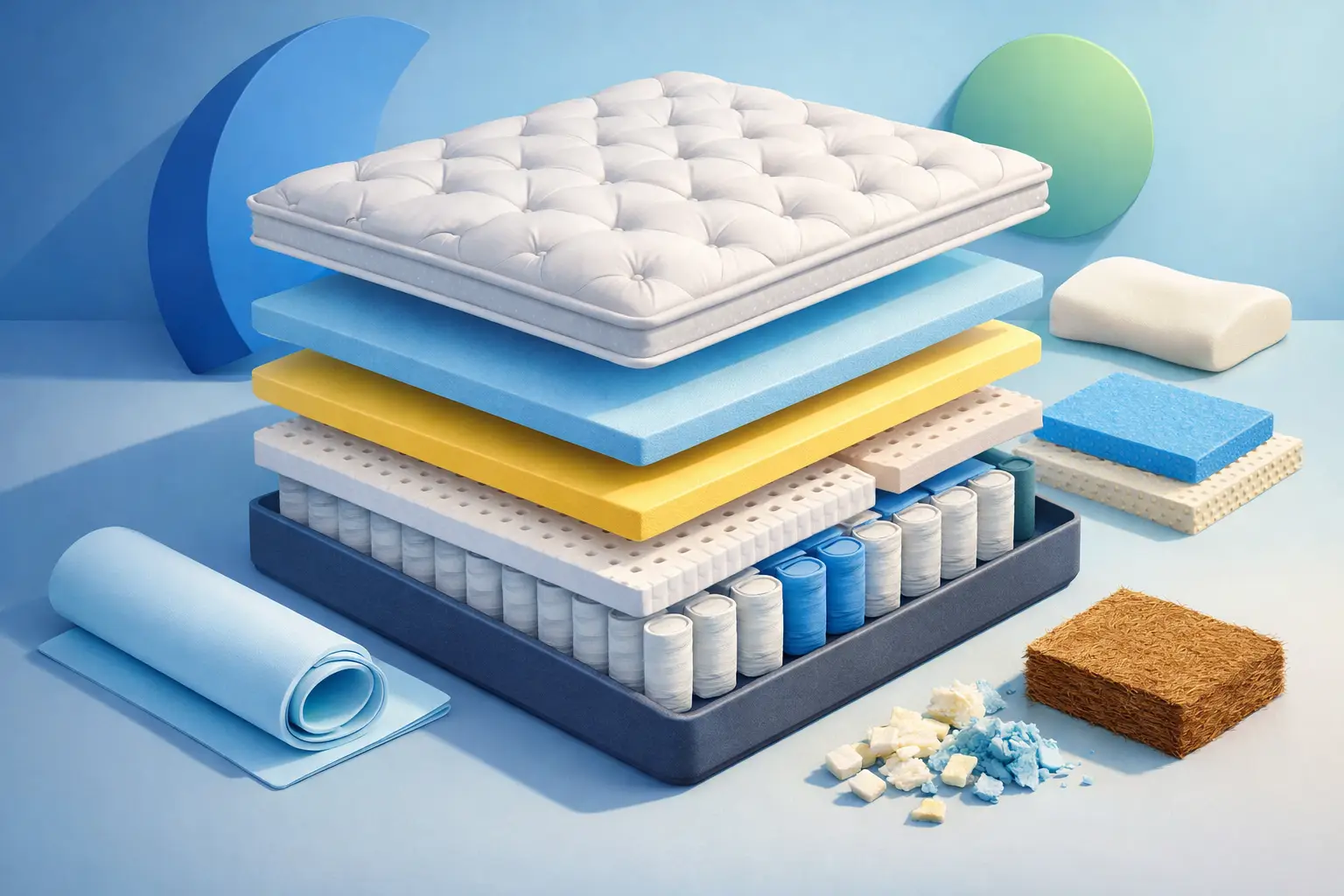
A mattress is not one single block of comfort. It is a system of layers, and each layer has a job. The top section usually shapes your first impression. The middle helps manage pressure and keeps the body from sinking too far. The base provides the underlying support that holds the mattress together.
This is why two mattresses can both be labeled medium yet feel very different. One may use memory foam over pocket springs for a more contouring feel, while another may use standard foam over Bonnell springs for a more traditional response. The label gives you a starting point. The construction tells you more about how the mattress will behave in real use.
Most mattresses are built in three main zones: comfort layers, transition layers, and support core. Around that, there may also be quilting, fabric covers, edge support components, and protective finishes.
The cover is the surface you touch first. It may include soft fabric, quilting foam, or fiber padding stitched into the top panel. This layer adds initial softness and can help with temperature feel, surface smoothness, and moisture handling.
A thicker quilted top can make a mattress feel more cushioned right away. A tighter, flatter cover often gives a cleaner, more direct feel of the layers underneath. This does not automatically make one better than the other. It depends on whether you want a plush surface or a more supportive, close-to-the-mattress feel.
Comfort layers sit just below the cover and are responsible for cushioning the body. This is where materials like foam, memory foam, gel-infused memory foam, and latex usually appear.
Standard foam gives straightforward cushioning and can create a balanced feel without too much sink. It works well in many value and mid-value mattress builds because it is practical and familiar. The trade-off is that lower-density foam may not hold its shape as long as more advanced materials.
Memory foam is designed to contour more closely to the body. It can help with pressure relief around the shoulders, hips, and other heavier contact points. Many people like it because it absorbs movement well, which is useful for couples. On the other hand, some sleepers find traditional memory foam slower to respond when changing position.
Gel-infused memory foam aims to keep the contouring benefits of memory foam while improving heat management. The exact performance depends on the full mattress design, not just the gel itself, but many shoppers prefer it when they want body-hugging comfort without an overly warm feel.
Latex has a different character. It is responsive, supportive, and generally more buoyant than memory foam. Instead of letting you sink in deeply, it tends to support you more on the surface while still relieving pressure. That makes it a strong option for shoppers who want comfort with a quicker response.
Not every mattress clearly labels this section, but it plays an important role. Transition layers sit between the soft upper materials and the firmer support base. They help distribute weight more evenly and prevent the feeling of dropping too suddenly into the mattress.
In all-foam models, this may be a firmer foam layer. In hybrid-style constructions, it might be a denser foam pad placed above the spring unit. A well-designed transition layer often makes the mattress feel more stable and better balanced.
The support core is the foundation of the mattress. This is usually where you find springs or high-density support foam.
Pocket spring systems use individually wrapped coils that respond more independently. This helps the mattress adapt to different pressure points and can reduce motion transfer across the bed. For many shoppers, pocket spring mattresses offer a good mix of support, comfort, and reduced partner disturbance.
Bonnell spring systems use interconnected coils in a more traditional structure. They often deliver a familiar, supportive feel and can be a practical choice for guest rooms, everyday use, or shoppers who prefer a classic spring mattress response. Because the coils are linked, movement may be felt more across the surface than in a pocket spring design.
High-density support foam is used in many foam mattresses. It provides the stable base that allows upper comfort layers to perform properly. A foam mattress can feel very comfortable and supportive when the base density is appropriate, but the quality of this lower layer matters more than many buyers realize.
The most useful way to compare mattress materials is not to ask which one is best overall. It is to ask which material best suits your sleep habits, body type, and comfort preference.
Foam mattresses are often chosen for simplicity and value. They can work well for children, guest rooms, and everyday home use, especially when the build uses reliable support foam and sensible comfort layering. Foam also tends to provide quieter performance because there are no springs inside.
If you want a mattress with a straightforward feel and easy maintenance, foam is often a practical place to start. Just remember that foam quality varies. A well-made foam mattress and an entry-level foam mattress can perform very differently over time.
These materials are often selected by sleepers who want more pressure relief and less motion transfer. Side sleepers frequently appreciate the way memory foam cushions the shoulder and hip area. Couples also tend to notice fewer sleep disruptions when one person moves.
The trade-off is responsiveness. If you prefer a lifted, springier feel, memory foam may feel too slow or too enveloping. Gel memory foam can help adjust that experience, but the overall construction still determines the final feel.
Latex suits shoppers who want comfort with resilience. It supports the body without the deep contour of memory foam and usually feels more responsive when turning or getting out of bed. It can be a strong fit for combination sleepers who shift positions during the night.
Because latex has a more distinctive feel, it is worth trying if possible. Some customers love the balanced support immediately. Others prefer the softer cradle of memory foam or the familiar pushback of a spring mattress.
Spring systems remain popular because many sleepers want a supportive mattress with airflow and a more traditional sleep surface. Pocket springs are typically the more adaptive option, especially for couples and sleepers with targeted pressure concerns. Bonnell springs remain relevant because they deliver dependable support in a straightforward construction many customers already know and trust.
Some mattresses are designed with an emphasis on orthopedic support, pressure management, or back-care positioning. These are often chosen by shoppers looking for a firmer or more structured feel. That said, “supportive” does not always mean “extra hard.” The right mattress should support spinal alignment while still offering enough comfort for the body’s pressure points.
If you sleep on your side, softer comfort layers such as memory foam, gel memory foam, or pressure-relieving latex may help reduce stress on the shoulders and hips. If you sleep on your back, a balanced build with stable support underneath is usually more important than extreme softness. If you sleep on your stomach, too much sink can pull the midsection out of alignment, so firmer support often works better.
Couples often do well with pocket spring or memory foam constructions because movement tends to stay more controlled. For a child’s room, guest space, or frequent turnover environment, a simpler foam or Bonnell spring mattress may be a sensible choice if comfort and durability are matched properly.
If you tend to sleep warm, focus on the full construction rather than one cooling claim. Breathable covers, spring support cores, open-cell foams, and gel-infused layers can all contribute, but no single feature works alone.
A mattress description should do more than list foam, springs, or latex. Look for how the layers are arranged and what each one is intended to do. Thickness, layer order, edge support, and quilting all affect the final result.
This is where guided selection matters. A mattress consultant should be able to explain not just what is inside, but why that combination suits a certain sleeper. Towell Mattress ME builds that process around clear categories and consultant-led support, which helps narrow a broad mattress range into options that match comfort preference and intended use.
The best mattress is usually not the one with the longest list of materials. It is the one where the layers work together properly for your body, your sleep position, and the way you want the bed to feel night after night. Start with the inside, and the decision usually gets much easier.
