
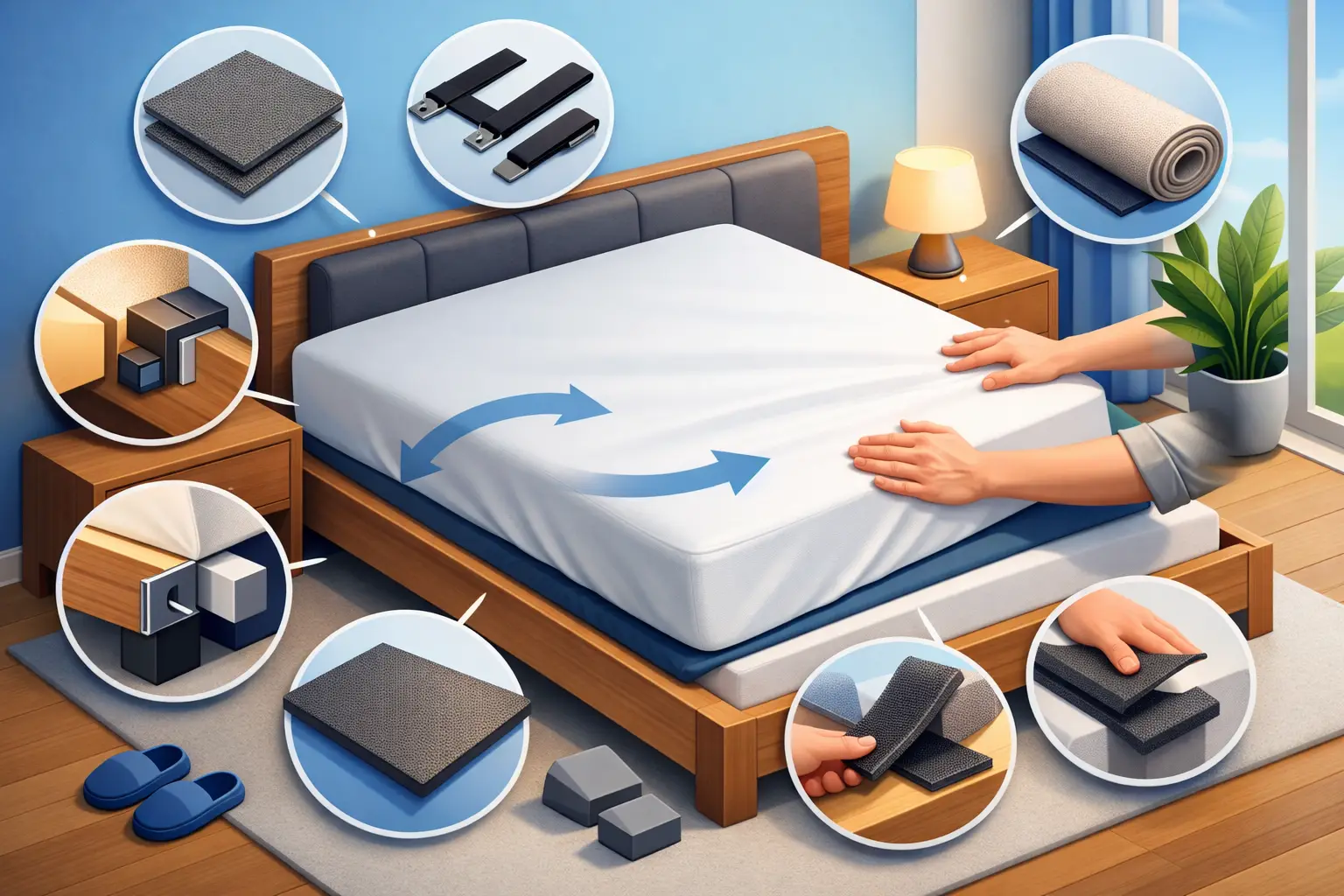
A mattress that shifts every time you sit down, turn over, or make the bed is more than an annoyance. It can leave the bed looking uneven, create gaps at the headboard, and affect how securely your mattress is supported. If you are wondering how to stop mattress from sliding, start by identifying whether the mattress, foundation, or entire bed frame is moving. The right fix depends on the source.
Most mattress movement comes from a smooth surface meeting another smooth surface. A foam, memory foam, latex, or hybrid mattress may have a fabric bottom that does not grip a polished platform, metal slats, or a box spring cover. The mattress can then gradually move as you get in and out of bed.
A bed that is too large for the mattress can also cause sliding. A queen mattress on a frame designed for a slightly wider size, for example, has room to shift from side to side. Missing rails, loose brackets, bent center supports, and worn slats can create the same problem even when the mattress size is correct.
Before buying an accessory, remove the bedding and look at the bed from all sides. Check whether the mattress is moving over the base, the base is moving inside the frame, or the frame itself is sliding across the floor. This simple check prevents you from solving the wrong problem.
Platform beds are popular because they provide a clean, supportive surface without needing a traditional box spring. Their smooth surfaces can also make mattresses more likely to slide, particularly when the bed has no raised edge around it.
A non-slip mattress pad, often called a mattress gripper, is one of the simplest solutions. It sits between the mattress and the platform and adds friction without changing the feel of the mattress. Choose a pad that covers most of the sleeping surface rather than a few small corner pieces. Full coverage distributes grip more evenly and helps prevent the mattress from creeping forward over time.
Trim the pad only if necessary, and make sure it lies flat with no folds. A bunched pad can create an uneven area beneath the mattress and may reduce support in that spot.
Some mattress protectors have a textured underside that can provide modest grip. This is helpful if the movement is slight, but a protector alone is rarely enough for a mattress that moves several inches. Its main role should remain protecting the mattress from spills, moisture, and everyday wear.
For a more reliable result, pair a quality mattress protector with a non-slip pad beneath the mattress. This protects your sleep surface while addressing movement at its source.
Dust, debris, or moisture can affect how the mattress sits. Wipe the platform with a dry cloth and let it air fully before replacing the mattress. If the surface is cracked, warped, or unusually slick, a gripper pad is especially useful.
Avoid attaching adhesive directly to the mattress fabric. Strong tape can damage the bottom cover, leave residue, and make future rotation or replacement difficult.
A box spring or foundation can shift inside a metal frame, which may make it look as though the mattress is the problem. First, push the foundation squarely into the frame and confirm that the side rails, brackets, and center support are secure.
If the foundation moves independently, place a non-slip pad between the frame and foundation. If the mattress moves on top of the foundation, use another pad between those two layers. You may need both when each surface is smooth.
Check that your mattress and foundation are the same size. A mattress should sit flush without a noticeable gap around the edges. A mismatched foundation may not give the mattress the consistent support it needs, and it can lead to premature wear as well as movement.
Even a high-quality mattress will slide when its frame has excess space. Measure the inside dimensions of the frame, not just the outside edges or the headboard width. Compare those measurements with the mattress size listed on its label.
A small amount of clearance is normal, especially with upholstered rails. Large gaps are not. If the mattress can easily be pushed several inches in any direction, consider adding foam side rails designed for the frame or changing to a correctly sized base.
Do not force a mattress into a frame that is too small. Compressing the side panels can distort the mattress shape and may affect edge support. A proper fit should feel secure without squeezing the mattress.
Some platform beds and adjustable bases include mattress retainers at the foot of the bed. These low-profile bars hold the mattress in place while allowing it to sit naturally on the base. They are particularly useful for adjustable bases, where raising the head or feet creates more opportunity for the mattress to shift.
If your bed has removable rails or corner brackets, inspect them for looseness. Tighten hardware according to the manufacturer instructions, but do not overtighten bolts in wood, as this can strip the fastening point. Replace visibly bent or damaged hardware rather than trying to bend it back into place.
For beds without a built-in retainer, a bed-frame-compatible footboard or a fitted mattress retainer may be appropriate. Make sure any added component does not press hard against the mattress edge or interfere with the adjustable base movement.
Mattress sliding sometimes begins with an unstable base. Slats that are spaced too far apart, missing, bowed, or unsecured can allow the mattress to shift and sag. Many foam and hybrid mattresses require closely spaced, supportive slats or a solid platform. Follow the mattress manufacturer guidance for the required support system to protect comfort and warranty coverage.
A larger mattress also needs reliable center support. On a queen, king, or California king bed, inspect the center beam and its legs. If a center leg is not touching the floor because of an uneven surface, the frame can flex and move under weight.
If the entire bed slides across tile, wood, or laminate flooring, place non-slip furniture pads beneath the bed legs. This will not stop a mattress from moving on its base, but it will stabilize the frame and reduce noise and floor scratches.
An adjustable base changes the angle of the mattress, so it needs a different approach from a flat platform bed. A mattress retainer bar at the foot is usually the first item to check. Confirm that it is installed correctly and is firmly secured.
The mattress must also be flexible enough for an adjustable base. Most foam, memory foam, latex, and many pocket spring hybrid mattresses work well when designed for adjustable use. A mattress that is too rigid can resist the base movement, which can increase shifting and place unnecessary stress on the mattress and base.
Do not use thick blocks, raised rails, or adhesives that prevent the mattress from flexing. The goal is to keep the mattress aligned, not lock it so tightly that it cannot move naturally with the base.
A non-slip pad is a practical solution for a sound bed. It cannot correct a worn-out foundation or damaged frame. Consider replacing the support system if you notice recurring squeaks, broken slats, a visibly bowed center beam, cracked platform panels, or a foundation that no longer sits level.
You should also inspect the bottom of the mattress. Torn fabric, exposed staples, or a damaged cover can reduce grip and may indicate that the mattress has been dragged or used on an unsuitable base. Address the support issue before it affects the mattress further.
Start with the easiest checks: confirm the mattress size, tighten the frame hardware, and inspect the slats or foundation. Next, add a full-size non-slip pad where movement actually occurs. If the bed uses an adjustable base, check the retainer bar and mattress compatibility. This order keeps you from adding unnecessary products while overlooking a structural issue.
A secure bed should feel stable when you sit at the edge and stay aligned after a full night’s sleep. If you are selecting a new mattress, foundation, or bed base and want confidence that the pieces will work together, a Towell Mattress ME consultant can help match the right support system to your mattress type. The best fix is the one that keeps your mattress level, properly supported, and comfortable night after night.
