
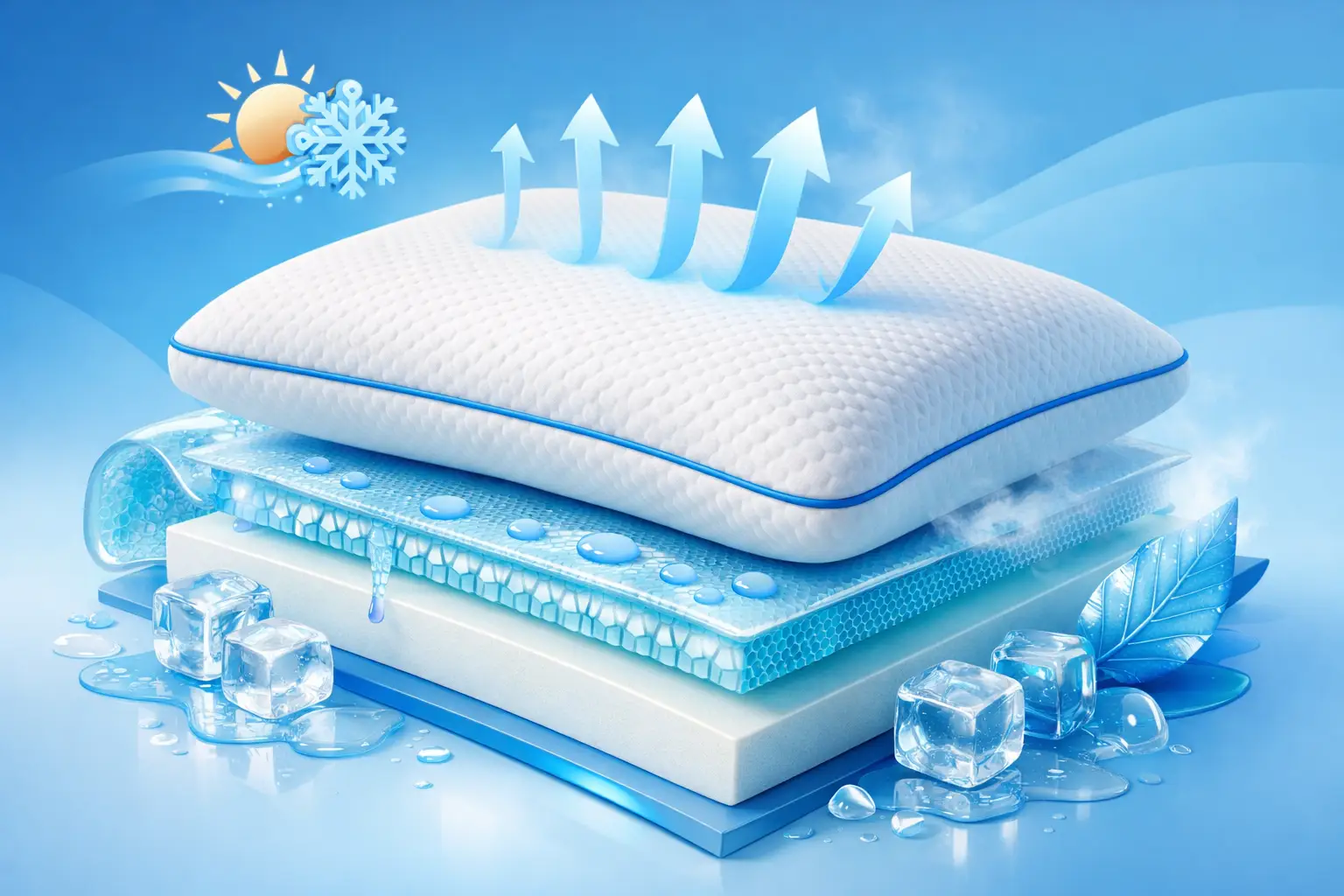
If you wake up with a warm neck, damp hairline, or the urge to flip your pillow to the cool side, the issue is often not your mattress. It is your pillow. Choosing a pillow for hot sleepers cooling materials can make a real difference because the wrong fill holds heat close to your head, while the right one improves airflow and moisture control through the night.
For most people, the biggest mistake is assuming every “cooling” pillow works the same way. It does not. Some materials feel cool only when you first lie down. Others are better at releasing heat over several hours. That distinction matters, especially in warmer homes, humid conditions, or for sleepers who naturally run hot.
A cooler pillow does not create cold air. What it does is manage heat buildup more effectively than standard materials. The best options either let air move through the pillow, pull moisture away from the skin, or reduce the amount of heat trapped around the head and neck.
This is why pillow construction matters just as much as the label on the packaging. A cool-touch outer fabric can feel pleasant at first contact, but if the inner fill is dense and heat-retaining, that cooler surface effect will not last long. On the other hand, a breathable fill with a standard cover may sleep cooler over the full night, even if it does not feel chilled at the start.
When customers ask which pillow material sleeps coolest, the answer depends on both body temperature and sleep position. Still, a few materials consistently perform better than others.
Latex is one of the strongest choices for hot sleepers because it is naturally more breathable than traditional solid foam. Many latex pillows are made with pinhole ventilation, which helps air circulate through the core instead of trapping warmth in one dense block.
Latex also holds its shape well, so the head does not sink too deeply into the pillow. That matters because less sink often means less heat buildup around the face and scalp. The trade-off is feel. Latex tends to be more responsive and slightly springy, which some sleepers enjoy and others need time to adjust to.
Gel-infused memory foam is designed to address one of classic memory foam’s common drawbacks – heat retention. The gel component can help disperse heat, and in many cases it creates a cooler sleep surface than standard memory foam.
That said, not all gel memory foam performs equally. If the pillow is still very dense, airflow may remain limited. This type of pillow can work well for people who want contouring support but also need some temperature regulation. It is usually a better fit than traditional memory foam for side sleepers who need pressure relief around the neck and shoulders.
Shredded fills tend to allow better airflow than one-piece foam cores because there is more space for air to move between pieces. A shredded latex or shredded memory foam pillow can be a practical middle ground for sleepers who want shape, support, and less heat buildup.
Another advantage is adjustability. Some shredded-fill pillows let you remove or add fill to get the right height. That is useful because a pillow that is too high or too low can create neck strain, and discomfort often feels worse when you are already sleeping hot.
Not every hot sleeper wants foam or latex. A well-made down alternative pillow with a breathable shell can feel lighter and airier, especially for back and stomach sleepers who prefer a softer loft.
The key here is construction. If the fiber fill is packed too tightly, it can still trap warmth. If it is designed to stay lofted and allow airflow, it may sleep noticeably cooler. This option is often chosen by shoppers who want a familiar, easy-to-maintain pillow without a dense feel.
The cover matters more than many people expect. Cotton, Tencel, and bamboo-derived fabrics are often used in cooling pillow covers because they are breathable and better at moisture management than many synthetic fabrics.
A smooth, moisture-wicking cover helps reduce that sticky, overheated feeling around the face. It will not completely offset a heat-retaining core, but it can improve overall comfort. For hot sleepers, the best performance usually comes from a breathable cover paired with a cooler inner material.
Traditional memory foam is the most common example. It offers pressure relief and contouring, but dense foam can hold body heat, especially if the pillow has little ventilation. For some sleepers, the support is worth it. For others, the warmth becomes the reason they replace the pillow.
Microfiber and heavily packed fiberfill can also sleep warmer than expected. These materials are not always a problem, but if airflow is limited and the pillow compresses around the head, heat tends to collect faster.
This does not mean these materials are poor quality. It simply means they may not be the right fit for someone actively searching for cooling performance.
Cooling is only one part of pillow selection. If the pillow does not support your sleep position properly, you may still wake up uncomfortable.
Side sleepers usually need a higher loft and more structure to keep the head and neck aligned. Latex, gel-infused memory foam, and adjustable shredded fills often work well here because they combine support with better heat management.
Back sleepers often do best with a medium-loft pillow that supports the neck without pushing the head too far forward. A breathable foam or latex design can work well, as can a lofted down alternative pillow with enough structure.
Stomach sleepers typically need a lower, softer pillow to avoid neck strain. In this case, a lightweight breathable fiber pillow may feel cooler and more comfortable than a firm foam option.
When comparing a pillow for hot sleepers cooling materials, it helps to look past the front label and check how the pillow is built. Ventilation channels, perforated latex, shredded fill, moisture-wicking covers, and removable washable covers all add value.
It is also worth paying attention to loft and firmness. A pillow that keeps your face buried deeply in the surface may feel warmer, even if it uses cooling fabric. Better alignment and better airflow often go together.
For households buying multiple pillows, consistency matters too. One person may want contouring support, while another may prioritize a softer feel. This is where guided selection helps. The best choice is not the coolest-sounding material on the tag. It is the one that matches the sleeper’s body type, preferred position, and heat sensitivity.
One common misunderstanding is that cooling gel means the pillow will stay cold all night. In reality, gel helps with heat distribution, but it is not the same as active temperature control. Performance still depends on the pillow’s full design.
Another misconception is that firmer pillows sleep hotter by default. Sometimes they do, but not always. A ventilated latex pillow can feel firmer than a fiber pillow and still sleep cooler because the airflow is better.
There is also a tendency to focus only on the pillow and ignore the pillow protector or pillowcase. If you cover a breathable pillow with a heavy, less breathable fabric, you can reduce much of its cooling benefit.
Start with your main complaint. If you feel heat trapped around your head and neck, breathable latex or shredded fill is often a strong place to start. If you like contouring support but standard foam feels too warm, gel-infused memory foam may be the better direction. If you prefer a lighter, softer pillow, a breathable down alternative design with a moisture-managing cover can be a sensible choice.
Then consider how you sleep. Side sleepers usually need more structure. Back sleepers need balanced support. Stomach sleepers need low loft. Cooling matters, but support still decides whether the pillow helps you sleep through the night.
For shoppers who want reassurance before making a bedding decision, this is where expert guidance can save time. Towell Mattress ME approaches sleep products the same way customers are guided in mattress selection – by matching material, comfort preference, and practical need rather than pushing a one-size-fits-all option.
A cooler pillow should help you settle faster, wake less often, and stop searching for the cool side at 3 a.m. The right material will not just feel different in the showroom or on day one. It will keep proving its value night after night.
