
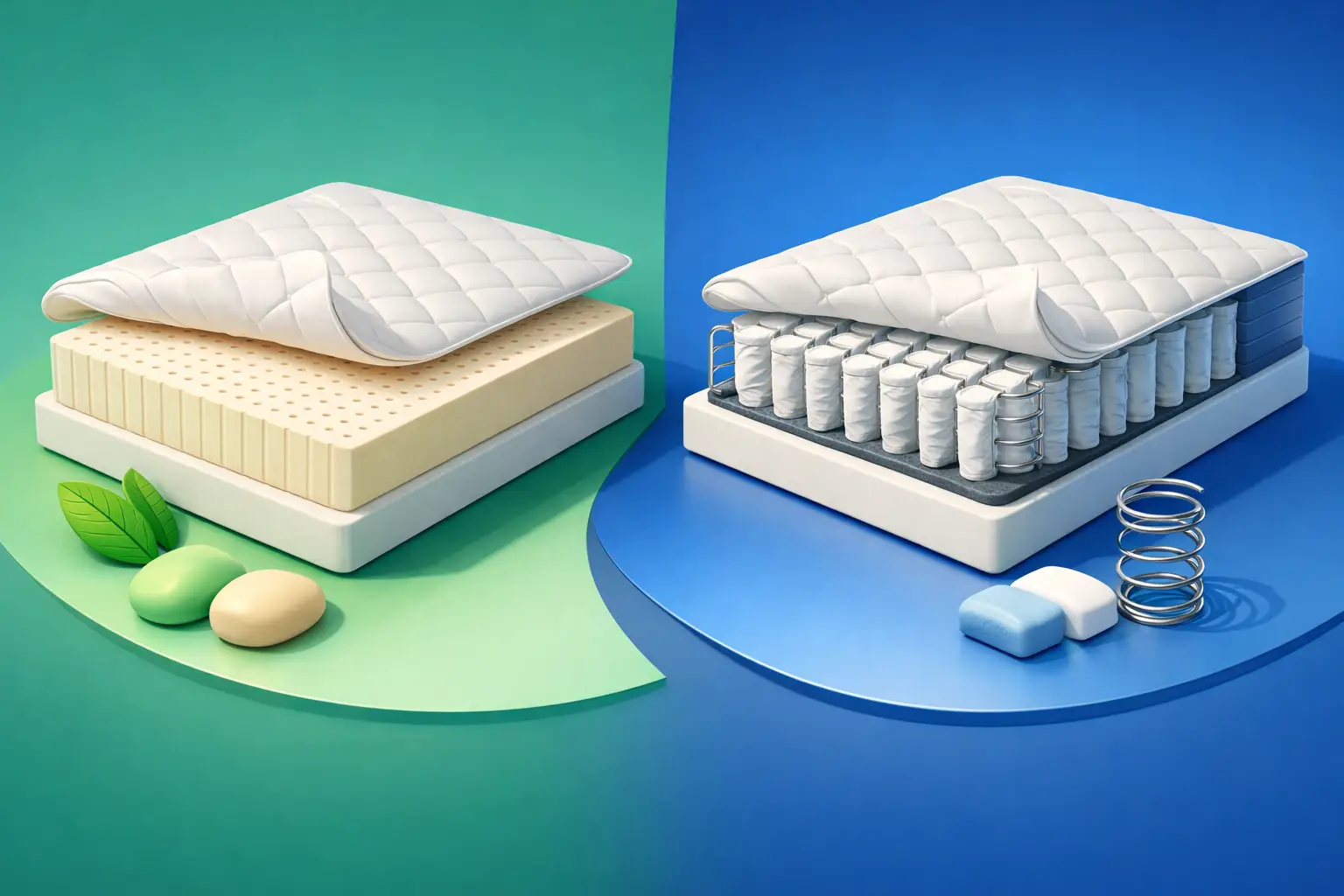
If you are comparing a latex mattress vs pocket spring, you are already looking at two of the most dependable mattress types on the market. The real question is not which one is better in general. It is which one fits your body, sleep position, comfort preference, and long-term expectations better.
This is where many buyers get stuck. A mattress can feel comfortable for five minutes in a showroom and still be the wrong choice after a full week of sleep. The construction inside matters. Latex and pocket spring mattresses solve comfort and support in different ways, and those differences affect pressure relief, motion transfer, temperature, and overall feel.
A latex mattress uses latex foam as its main comfort and support material. Depending on the build, it may use natural latex, synthetic latex, or a blend. What most sleepers notice first is the feel – responsive, supportive, and gently cushioned without the deep sink of memory foam.
A pocket spring mattress uses individually wrapped coils that move more independently than traditional open-coil systems. That independent movement helps the mattress respond to different pressure points across the body and usually gives it a more familiar spring-supported feel.
In simple terms, latex tends to feel more buoyant and uniform, while pocket spring tends to feel more structured and adaptive through the coil system. Neither is automatically right for everyone.
Feel is often the deciding factor because it influences whether your body relaxes or keeps adjusting through the night. Latex usually gives a floating sensation. You sleep more on the mattress than in it. It contours, but it pushes back quickly, which many people describe as easier to move on.
Pocket spring mattresses can vary more depending on the comfort layers above the coils. Some feel plush on top with strong underlying support. Others feel firmer and more lifted. The pocketed coils add a bit of bounce and localized response, which can be especially appealing if you like a traditional mattress feel with better motion isolation than older spring designs.
If you dislike the sensation of sinking too much, latex often feels more controlled. If you prefer a balanced mix of cushioning and spring support, pocket spring may feel more natural right away.
Support is not just about firmness. It is about whether the mattress keeps your spine aligned in your normal sleep position.
Back sleepers often do well on either option, provided the firmness level is appropriate. Latex can hold the hips up well while still cushioning the lower back. Pocket spring mattresses can also perform very well here because the coils support the heavier areas of the body without making the surface feel flat or hard.
Side sleepers usually need better pressure relief around the shoulders and hips. Latex can work very well if the comfort layer has enough give. Pocket spring mattresses can also be excellent for side sleepers, especially when paired with a softer comfort layer over the coils.
Stomach sleepers usually need a surface that keeps the midsection from dipping too deeply. Firmer latex models often suit this well. Firmer pocket spring models can do the same, but the top layers matter. If the comfort layer is too plush, stomach sleepers may lose alignment.
If one partner turns often or gets in and out of bed at a different time, motion control matters.
Latex absorbs some movement, but because it is responsive, it can still pass a bit of motion across the surface. Pocket spring mattresses reduce motion better than older interconnected spring systems because each coil moves more independently. Still, a pocket spring mattress with bouncier top layers may transfer more motion than an all-latex design.
This is one of those areas where the full mattress build matters more than the label alone. Couples should pay attention not only to the support core but also to the comfort materials on top.
In a warm climate, or for sleepers who naturally run hot, mattress temperature is a practical concern.
Latex is generally considered a more breathable foam option than traditional memory foam. It does not hug the body in the same way, and its structure can allow for better airflow. That said, latex is still a foam-based material, so the exact design and cover will influence temperature performance.
Pocket spring mattresses usually have a natural advantage in airflow because the coil core creates open space inside the mattress. Air can move more freely through that structure, which often helps the bed feel fresher and less heat-retentive over time.
If cooling is one of your top priorities, pocket spring often has the edge, but a well-designed latex mattress can still be a strong choice.
Pressure relief is where shoppers often expect latex and pocket spring to behave the same, but they do not.
Latex spreads weight evenly and responds quickly to pressure. For many sleepers, that creates a comfortable, lifted kind of relief. It supports the body without the stuck feeling some foams create. This can be useful if you change position frequently and want cushioning without resistance.
Pocket spring mattresses relieve pressure through a combination of coil response and the upper comfort layers. The coils compress where needed, while the top materials soften contact points. When done well, this creates a balanced feel that suits a wide range of body types.
For people with sensitive shoulders, hips, or lower back concerns, the right choice depends on whether they prefer a more buoyant surface or a more layered, spring-backed cradle.
A mattress is not just a comfort purchase. It is a long-term use product, so durability matters.
Latex has a strong reputation for resilience. It tends to hold its shape well and resist body impressions better than many softer foam materials. That does not mean every latex mattress performs the same, but high-quality latex is generally associated with long-lasting support.
Pocket spring mattresses can also be very durable, especially when the coil system is well made and the comfort layers are matched properly. The main variable is the quality of the materials above the springs. A strong coil unit paired with weaker top layers may lose comfort before the support system fails.
This is why construction transparency matters. A mattress should be judged by the full build, not only by whether it says latex or pocket spring.
Some sleepers adjust to a new mattress immediately. Others need time. In general, pocket spring mattresses often feel more familiar because many people have slept on some version of a spring mattress before.
Latex can take a little adjustment if you are used to deeper cushioning or slower-response foams. Its pushback is more noticeable, and some sleepers love that from the first night while others need a short period to get used to it.
If you want a mattress that feels instantly recognizable, pocket spring may have the advantage. If you want a more distinctly supportive and responsive feel, latex may be worth that adjustment period.
Choose latex if you want a responsive surface, strong support, easier movement, and a more buoyant feel. It often suits sleepers who dislike sinking, want consistent support across the mattress, or value material resilience over time.
Choose pocket spring if you want breathable support, a more classic mattress feel, and flexibility across a wide range of comfort preferences. It often suits couples, mixed sleep positions, and buyers who want support from coils with cushioning layered on top.
If you are furnishing a family home, guest room, or hospitality setting, pocket spring can be a very practical all-around option because of its broad comfort appeal. If the priority is a more distinctive pressure-relieving feel with responsive support, latex can be a very strong fit.
At Towell Mattress ME, this is exactly why guided mattress selection matters. Two mattresses can both feel supportive in a quick test, yet perform very differently over months of real use.
There is no universal winner in the latex mattress vs pocket spring decision. Your body weight, sleep position, heat sensitivity, movement during sleep, and comfort preference all shape the right answer.
A mattress should not only feel good at first touch. It should support you consistently, stay comfortable through the night, and continue performing well over time. If you focus on that instead of chasing a single “best” material, you are much more likely to choose well.
The best next step is simple: look past the category name and pay attention to how the mattress is built, how it supports your usual sleep position, and how it feels after more than a few minutes. That is where the right choice becomes clear.
