
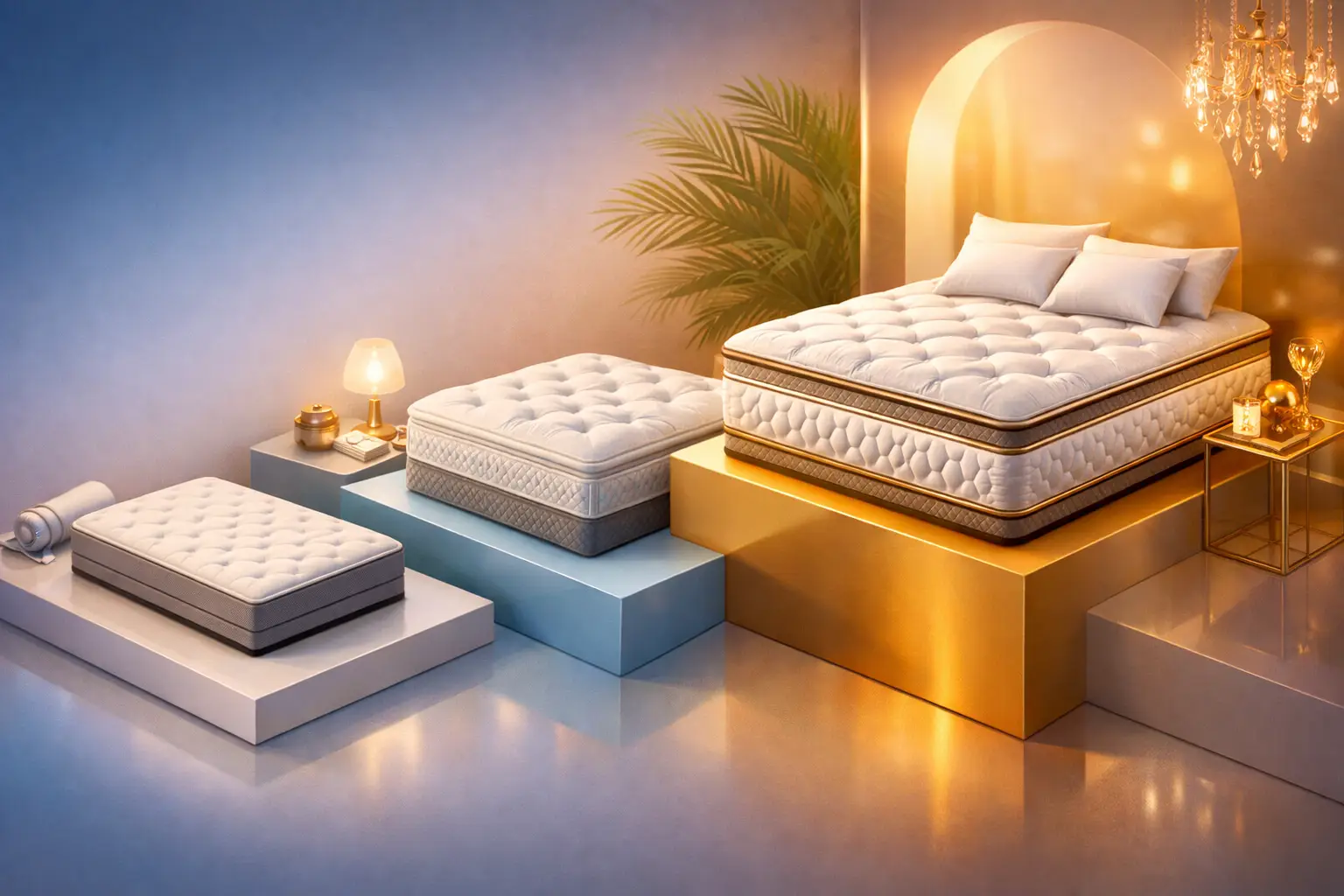
A mattress can look impressive in a showroom or on a product page and still be the wrong fit for your home. The real question is not whether one model is “better” than another. It is whether the construction, comfort level, and expected lifespan make sense for how you sleep and what you need from it. That is where mattress value tiers explained luxury premium becomes useful. It gives you a practical way to compare options without getting lost in brand names or surface details.
For most buyers, value tiers are less about status and more about matching performance to expectations. If you understand what changes as you move from Value to Mid Value, Premium, and Luxury, the shopping process becomes much clearer. You can focus on support, comfort, durability, and intended use rather than guessing from marketing terms.
A value tier is a simple way to group mattresses by the quality of materials, the complexity of construction, the comfort experience, and the level of long-term performance you can reasonably expect. It is not a strict rule that every mattress in one tier will feel the same. A firmer Premium mattress may suit one sleeper better than a softer Luxury model. What the tier does tell you is how much engineering, layering, and material refinement typically go into the build.
This matters because mattresses are not judged on one feature alone. Coil count, foam type, latex content, edge support, cooling materials, quilting, and pressure relief all work together. A tier helps set expectations before you compare individual models.
The clearest way to understand mattress categories is to start from the bottom of the ladder and move up. That shows not just what you gain, but why those differences matter in daily use.
Value mattresses are built for practical comfort and accessible everyday use. In this category, you will often see simpler foam constructions or traditional spring systems such as Bonnell units. These mattresses can work well for guest rooms, children, temporary setups, rental properties, or shoppers who want straightforward support without extra design features.
The strength of the Value tier is simplicity. If your needs are basic and you prefer a firmer, more direct feel, this category may be enough. The trade-off is that pressure relief, motion isolation, and contouring are usually more limited than in higher tiers. You may also see fewer advanced comfort materials and less sophisticated support zoning.
Mid Value mattresses usually offer a noticeable step up in comfort balance and material quality. You may find better foam layering, improved quilting, stronger support units, or comfort systems that reduce pressure points more effectively. For many households, this tier is where everyday comfort and reasonable long-term performance meet.
This is often a good fit for main bedrooms when the buyer wants reliability without moving into more specialized builds. It can also suit family buyers who want a mattress that feels more refined than entry-level models but still remains practical in its design. The difference compared with Value is often not dramatic at first touch, but it tends to become clearer over time through more stable support and more consistent comfort.
Premium mattresses move into a more advanced level of sleep performance. This is where pocket spring systems, memory foam, gel-infused memory foam, and more carefully layered hybrid builds become especially relevant. In many cases, Premium models provide stronger motion isolation, improved pressure relief, better edge support, and a more tailored comfort feel.
For couples, combination sleepers, and anyone who notices shoulder, back, or hip pressure during the night, Premium can be a meaningful upgrade. The materials are often selected not just to feel comfortable in the first week, but to hold that comfort more consistently. You may also see more breathable fabrics, better transition layers, and support structures designed to keep the body in more even alignment.
Still, Premium is not automatically the right choice for everyone. If you prefer a very basic, firm sleep surface and do not care about advanced contouring, you may not benefit fully from what this tier adds. The point is not to move upward for its own sake. It is to match the mattress to the sleeper.
Luxury mattresses are built for buyers who want the highest level of material refinement, comfort design, and sleep experience within a retailer’s range. This category often includes advanced hybrids, high-grade latex, dense specialty foams, premium quilting, and more detailed attention to comfort engineering. Luxury models tend to feel more substantial, more responsive, and more balanced across pressure relief and support.
What sets Luxury apart is often the total package rather than one standout feature. The support core may be more responsive. The comfort layers may adapt more precisely to body shape. The surface materials may feel cooler, smoother, or more resilient over repeated use. For primary bedrooms, long-term daily use, and buyers who are highly sensitive to sleep quality, those refinements can make a real difference.
Luxury is also common for hospitality settings where guest comfort and product consistency matter. But even here, it depends on the application. Not every room or sleeper profile requires the most advanced build. Sometimes a Premium mattress offers the better balance for the intended use.
This is the comparison many shoppers care about most. Premium and Luxury can appear close on paper, especially if both use quality foams or pocket spring support. The difference usually shows up in the depth of comfort, the sophistication of layering, and the overall finish of the mattress.
A Premium mattress often delivers very good support, pressure relief, and reduced partner disturbance. A Luxury mattress usually goes further by refining how those features work together. You may notice a smoother transition between comfort and support layers, more stable edge performance, or a more breathable and balanced surface feel. In practical terms, Luxury tends to feel less one-dimensional. It is designed to perform well across multiple comfort priorities at once.
That said, body type and sleep position still matter. A back sleeper who likes a firmer, more straightforward feel might prefer a Premium model over a softer or more contouring Luxury mattress. Higher tier does not mean universally better. It means more advanced construction and, often, a broader comfort experience.
The best starting point is usage. If the mattress is for occasional sleep, a Value or Mid Value model may be entirely appropriate. If it is for your main bedroom and used every night, Premium or Luxury may offer the support consistency and comfort depth that become more important over time.
Next, consider your comfort sensitivity. Some sleepers adjust easily and can rest well on many mattress types. Others immediately notice heat buildup, movement from a partner, uneven support, or pressure around the shoulders and hips. The more sensitive you are to those factors, the more likely you are to appreciate what the upper tiers provide.
Construction also matters. Pocket spring and hybrid designs can offer a different support feel than all-foam models. Memory foam can improve contouring and motion control, while latex often appeals to buyers who want responsive comfort and durability. There is no single best material for every sleeper, which is why guided selection matters.
For family buyers, the safest route is to think in terms of fit rather than labels. Ask what the mattress needs to do every night. Support a side sleeper with pressure relief? Reduce partner disturbance? Offer a more breathable sleep surface? Hold up well in a frequently used guest room? Once that need is clear, the right tier becomes easier to identify.
A tier should simplify your decision, not make it feel more complicated. The strongest buying experience comes from combining category guidance with mattress-specific advice. That is especially true when comparing foam, spring, memory foam, gel, latex, and health-focused options across one showroom or catalog.
An experienced mattress consultant can help narrow the field quickly by connecting your sleep habits to the right construction and tier. That saves time and reduces the risk of choosing based on appearance alone. Towell Mattress ME organizes this process clearly, which helps buyers compare options with more confidence and less second-guessing.
The goal is not to persuade every shopper toward Luxury. The goal is to place each buyer in the tier that genuinely suits their comfort preferences, use case, and expectations for long-term performance.
A good mattress should feel like the right decision long after delivery day. When you understand the role of each value tier, you can choose with a clearer head and sleep on something built for the way you actually live.
