
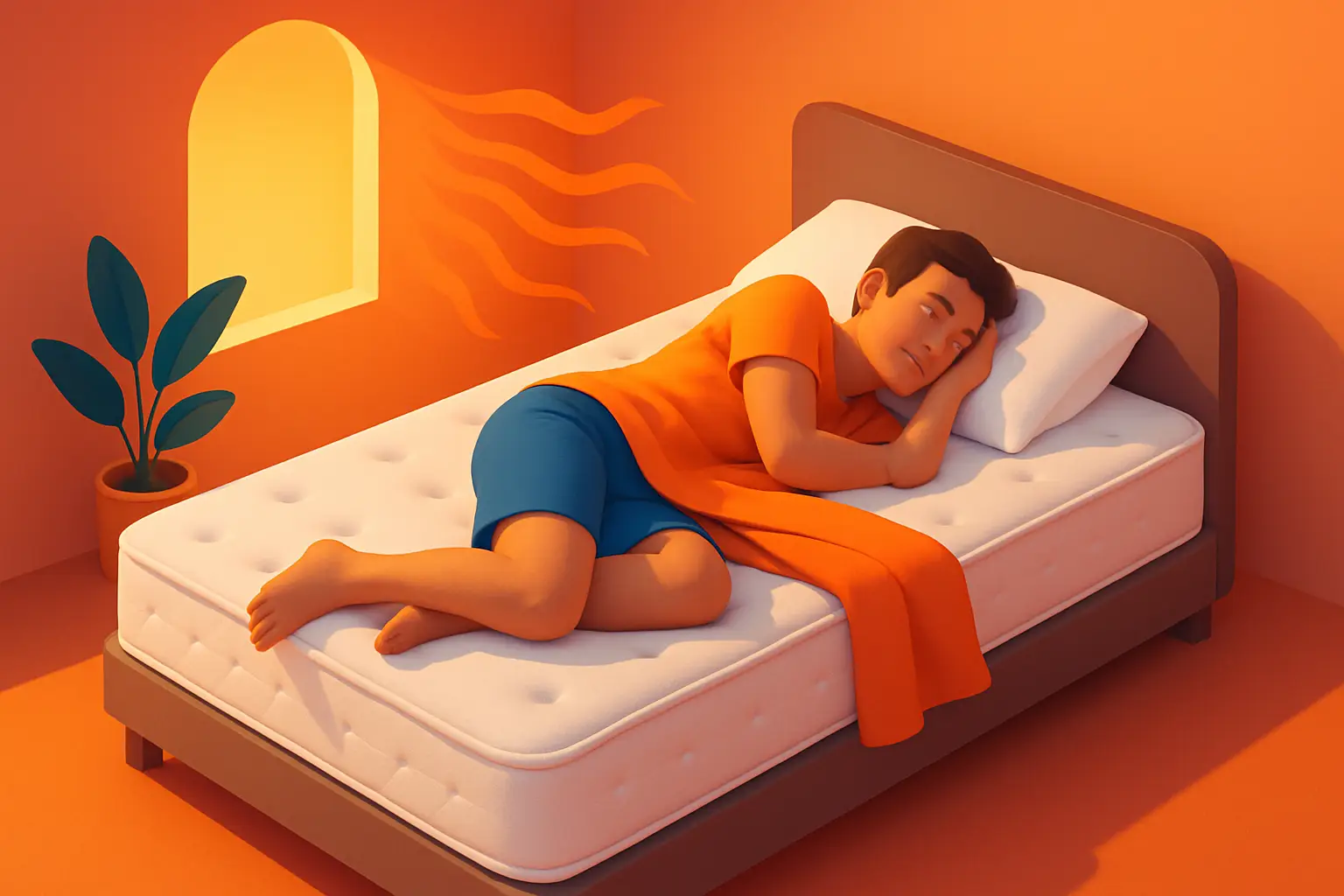
You know the feeling – you fall asleep fine, then wake up at 2:00 a.m. on a warm, slightly damp “heat pocket” that makes you flip the pillow and hunt for a cool spot. In the UAE, that problem is common even with strong AC because the real issue is often the sleep surface itself: how much heat your mattress holds, how much airflow it allows, and whether it lets moisture escape.
If you’re searching for the best mattress for hot sleepers uae, the goal is simple: reduce heat retention without sacrificing support. The best choice depends on your body type, sleeping position, and how “hot” you actually sleep. Below is a practical way to narrow it down, plus the trade-offs that matter so you don’t end up with a mattress that feels cool for five minutes and uncomfortable all night.
Most overheating comes from a combination of contouring and trapped air. Materials that hug closely can block ventilation around your body. Add a protector that doesn’t breathe, heavier bedding, or a sleeper who naturally runs warm, and you get that stuck-heat sensation.
Humidity also plays a role. Even when your room is cool, if moisture can’t evaporate away from the mattress surface, you’ll feel warmer. That’s why two mattresses can be the same “firmness” but feel very different at 3:00 a.m.
Cooling isn’t one single feature. It’s a mix of airflow, heat capacity, and how quickly the surface releases warmth. Here’s how common constructions usually perform for hot sleepers.
Latex is often a top pick for hot sleepers because it doesn’t cradle as deeply as traditional memory foam and it has an open, buoyant feel. That combination helps air move and reduces the “stuck” sensation.
Trade-off: latex can feel springier and more responsive than people expect. If you love a slow-melting memory foam hug, latex may feel too bouncy. It also tends to transmit a bit more motion than dense foams, depending on the build.
Pocket spring mattresses are a strong option in the UAE because the coil core naturally promotes ventilation. Air can circulate through the internal structure instead of getting trapped in a solid foam block. The best versions also pair springs with comfort layers that don’t over-insulate.
Trade-off: the comfort layer still matters. A pocket spring core with thick, low-quality foam on top can still sleep warm. Also, if you’re very sensitive to pressure points, you may need a plusher top layer, which can reduce airflow.
Gel-infused memory foam can help manage surface temperature, especially right when you lie down. For many hot sleepers, that first-contact coolness is a real improvement.
Trade-off: gel isn’t magic. If the mattress uses thick, dense visco foam with limited ventilation, it can still trap heat over the night. Gel can slow heat buildup, but it doesn’t always prevent it.
Classic memory foam is great for contouring and pressure relief, but it’s also the material most likely to hold heat – especially for side sleepers who sink in more.
Trade-off: if you have shoulder or hip pressure pain, memory foam may be the most comfortable option. The workaround is choosing a design with cooling elements (gel, airflow channels, breathable cover) and avoiding overly thick comfort layers.
Bonnell spring mattresses can be more breathable than all-foam designs and can feel less heat-trapping for some sleepers.
Trade-off: support is less “zoned” than pocket spring, and motion transfer is typically higher. For couples, that can be a deal-breaker.
Cooling claims are everywhere, so it helps to focus on features that actually change airflow and heat retention.
If you sleep hot and you’re deciding between an all-foam core and a spring core, springs usually win on ventilation. Pocket springs tend to offer the best balance of airflow and body support.
If you prefer foam, look for a construction that’s designed to breathe: layered foams with airflow channels, not just a thick slab of slow-response visco.
The more you sink, the less air reaches your skin. That’s why many hot sleepers do better with medium or medium-firm comfort rather than ultra-plush.
This is especially true in the UAE, where “cool at first touch” can turn into “warm by midnight” if the surface hugs too tightly.
A mattress can have a great core and still sleep warm if the top panel is heavy and padded. Look for breathable knit covers and avoid excessively thick quilting if overheating is your main issue.
If you use a mattress protector, make sure it’s designed to be breathable. A fully waterproof, non-breathing layer can undo the cooling benefits of the mattress underneath.
Hot sleepers sometimes buy too soft because they want comfort, then sink deeper and get warmer. Matching support to your sleep position helps you stay more “on” the mattress than “in” it.
Side sleepers usually need more pressure relief at the shoulders and hips, so consider latex or a pocket spring with a modest comfort layer rather than very thick memory foam.
Back sleepers often do well with medium-firm pocket spring or latex, which keeps the spine aligned while staying breathable.
Stomach sleepers typically need a firmer surface to prevent midsection sink. Firmer also tends to sleep cooler because there’s less body contact and less trapped heat.
If you want a simple decision rule, start with how sensitive you are to heat.
If you routinely wake up sweating or you feel “stuck” in the bed, prioritize latex or pocket spring first. If you only feel warm occasionally, gel-infused memory foam can be a comfortable compromise, especially if you want pressure relief.
If you love the feel of memory foam but hate the temperature, don’t assume you have to give it up. You may just need less of it. A design with a thinner memory foam comfort layer over a more breathable support core can change the experience.
Most hot-sleep fixes fail because the mattress is only half the system.
First, your pillow matters. A pillow that holds heat under your head can make your whole body feel warmer. Latex or gel-infused pillows often feel cooler than dense, traditional foam because they don’t trap as much warmth.
Second, your protector and sheets matter. If you use a protector, pick one made to breathe while still guarding the mattress. Then pair it with light, breathable sheets. It sounds basic, but it’s the difference between a mattress that “sleeps cool” in a showroom and one that stays comfortable through the night.
Cooling is personal, so the safest way to buy is to narrow to two or three builds that match your comfort needs, then choose based on how you sleep.
Start by deciding whether you want a spring feel, a buoyant latex feel, or a contouring foam feel. Then choose firmness based on position and body type, because support affects temperature more than most people expect.
If you want guided help with the best mattress for hot sleepers uae, Towell Mattress ME organizes options across multiple constructions and comfort tiers, with consultant support to match your sleep style and reduce the risk of guessing wrong.
It can help, especially with initial surface temperature, but it’s not always enough on its own. If the mattress still cradles deeply with limited airflow, heat can build up after a few hours.
Not necessarily. If you need pressure relief, memory foam can be the most comfortable choice. The key is choosing a build with breathable elements and not overdoing the thickness of slow-response foam.
Often, yes, because you stay more on top of the surface and there’s less heat trapped around your body. But too firm can create pressure points, which can disrupt sleep. The best result is usually “supportive medium” rather than “extra firm at all costs.”
A cooler mattress is great. A cooler mattress that also keeps your back, shoulders, and hips comfortable is what actually keeps you asleep – and that’s the standard worth shopping for.
